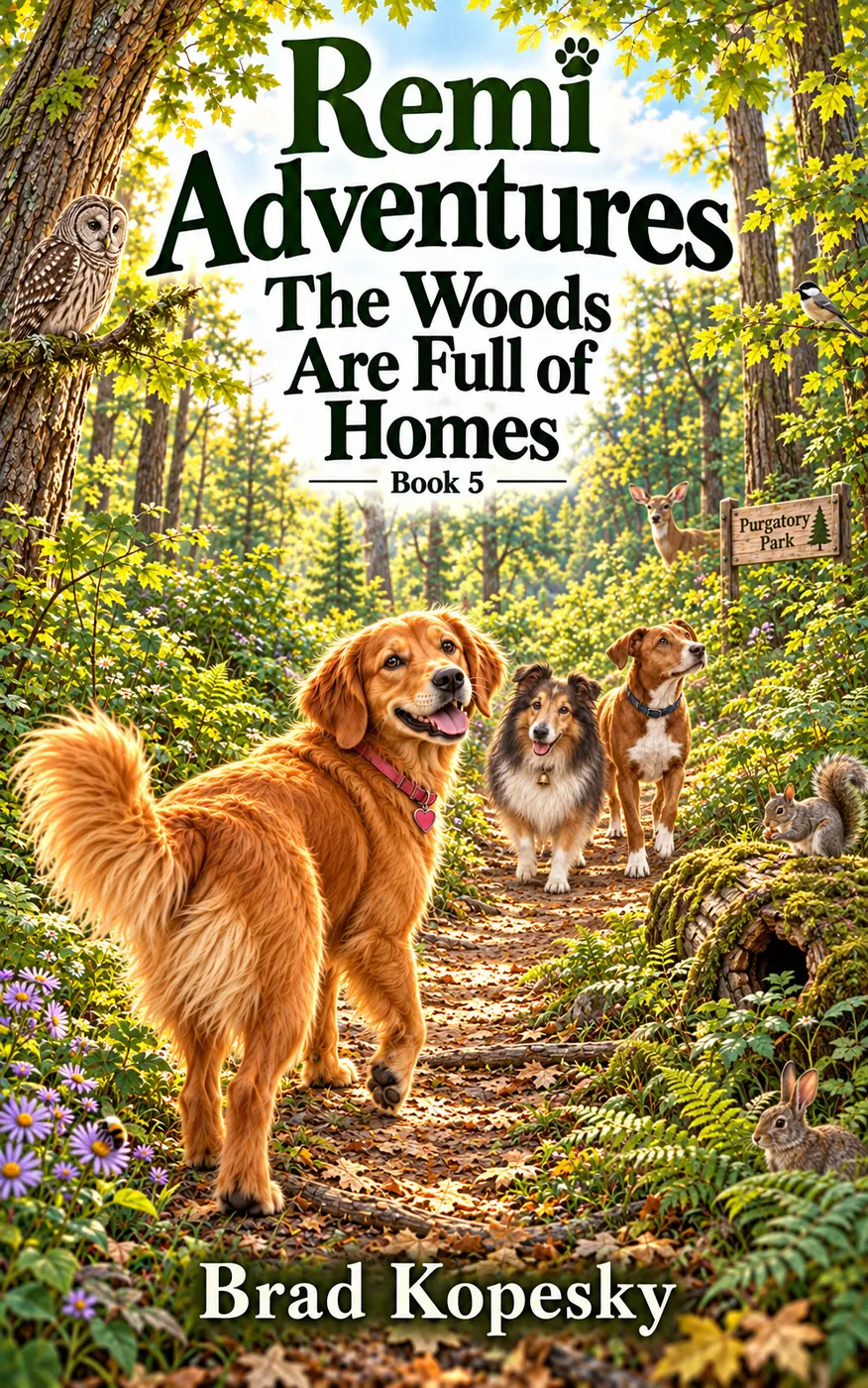
REMI ADVENTURES
Book Five
The Woods Are
Full of Homes
Brad Kopesky
A nature walk with Remi and her friends
About This Adventure
Remi Adventures Book Five
The Woods Are Full of Homes
© 2026 Brad Kopesky
For every child who has wondered what lives behind the leaves.
Remi and her friends are inspired by the Purgatory Park character collection. Their conversations and the wildlife encounters in this story are imagined. Wildlife illustrations are interpretations, not records of individual animals or nest locations.
The story begins with a late-spring walk and returns in later seasons. Its wildlife includes familiar Minnesota animals and birds discussed as comparisons in a field guide. A species appearing here does not establish that it lives or nests at a particular place.
The nature guide at the back explains foods, nesting places, habitat layers, and seasonal changes. Nest heights are examples and usual ranges, not rules for every bird.
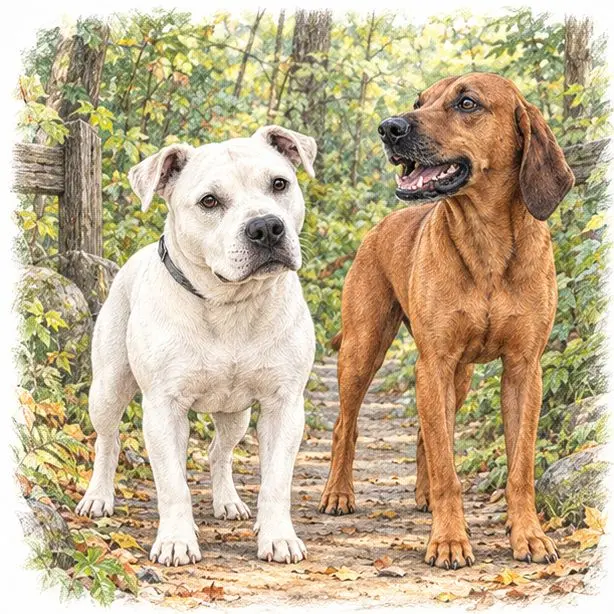
The labeled dog portraits throughout this book come from the Purgatory Park Image Bible, review v52. Portrait frames are fitted individually and do not compare the dogs’ sizes. With thanks to Lisa Avolaz, Purgatory Park photographer, and the other contributors whose photographs and descriptions help keep the characters recognizable.
CHAPTER 1
Everybody Bring Your Ears
I had invited everybody on a nature walk, and already somebody had brought a ball.
It was me.
In my defense, a ball is very useful if nature takes a little while to get started.
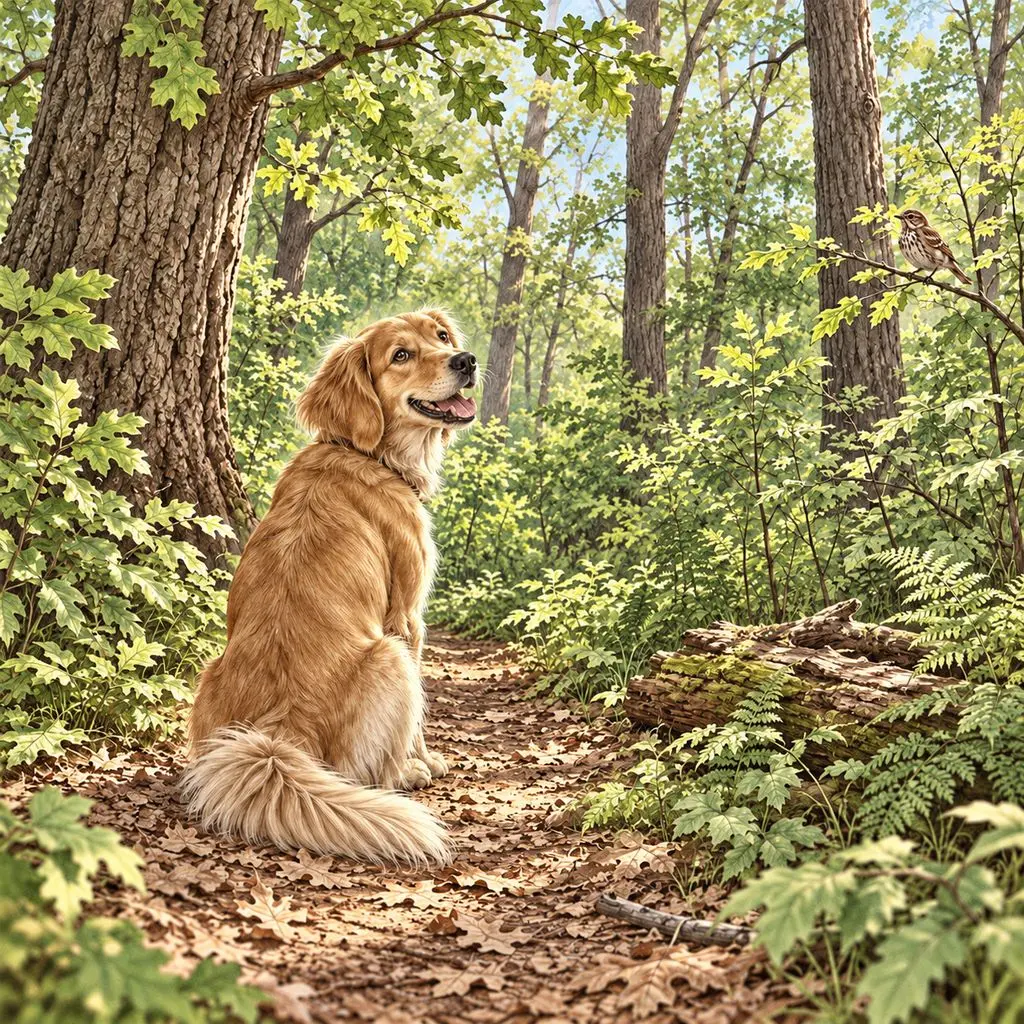
My name is Remi. I am a miniature Golden Retriever, and Purgatory Park is my favorite place to find out what happened while I was at home. Most of the news arrives through my nose. That morning, the air smelled of damp leaves, fresh grass, and friends coming down the trail.
Mocha reached me first. She was the sweet brown-and-white dog I saw in the woods in the mornings. Her white-tipped tail moved behind her like a little flag.
“What are we looking for?” she asked.
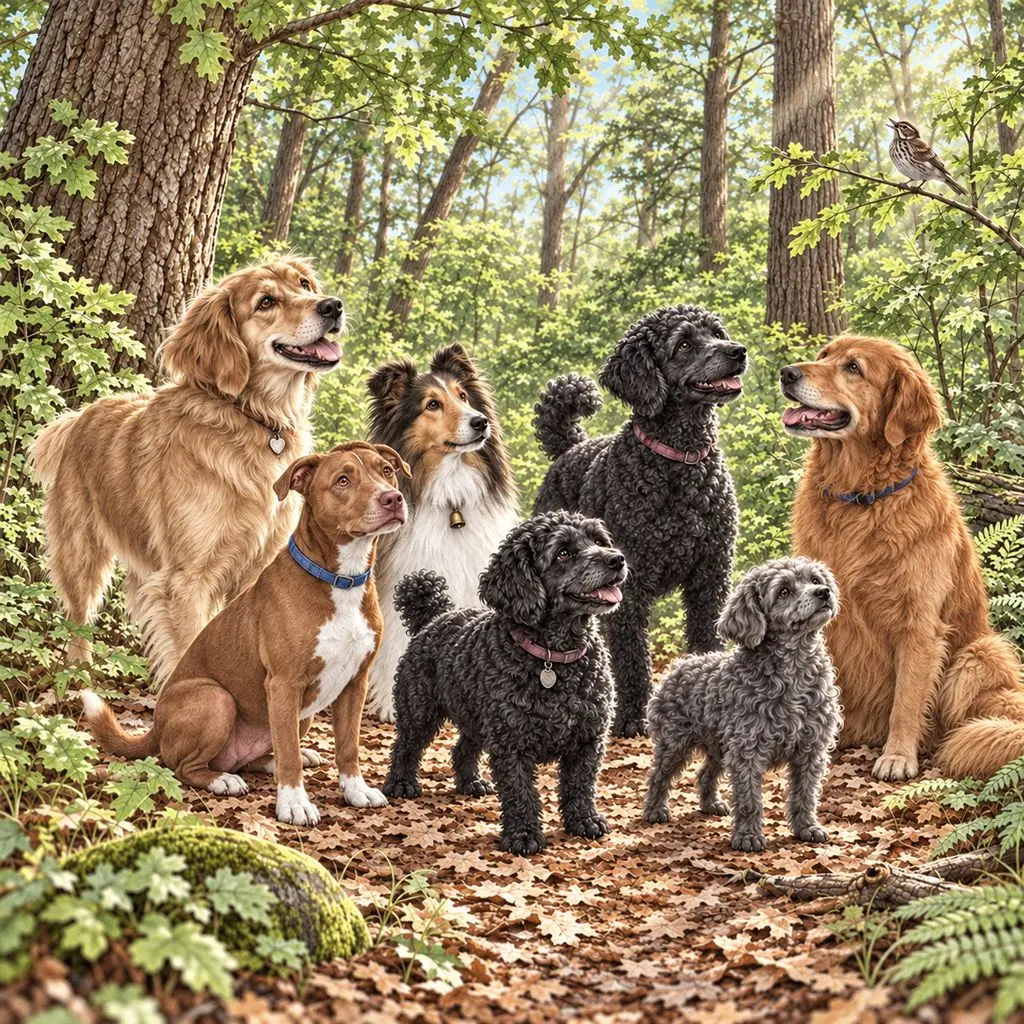
Friends on This Walk
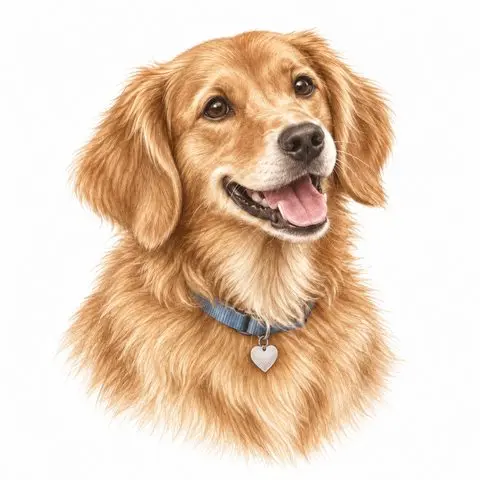
Remi
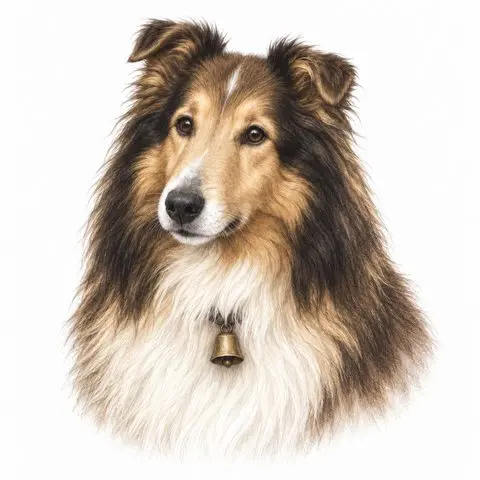
Pippin
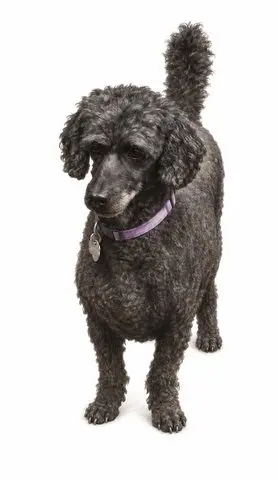
Jasper
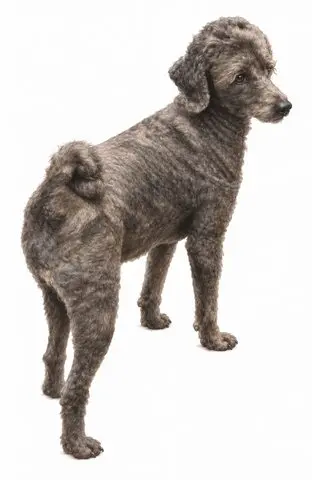
Lexi
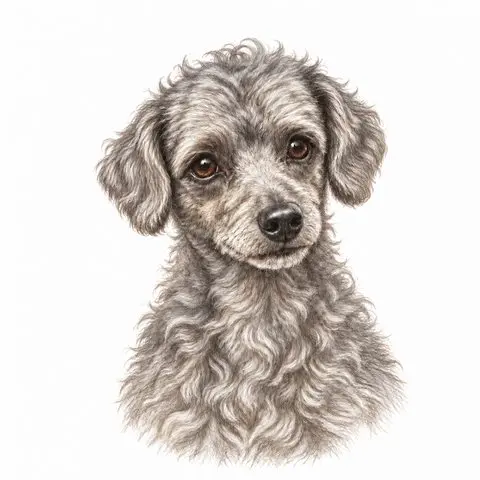
Pepper
Pippin’s friend
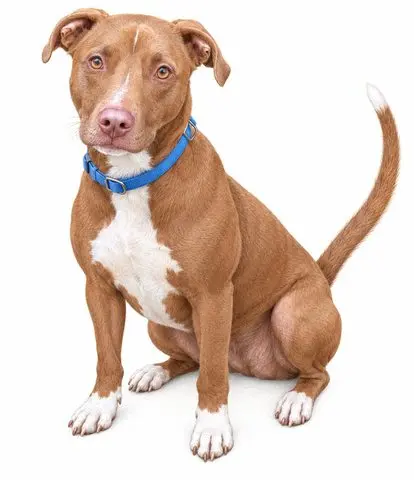
Mocha
Brown-and-white coat
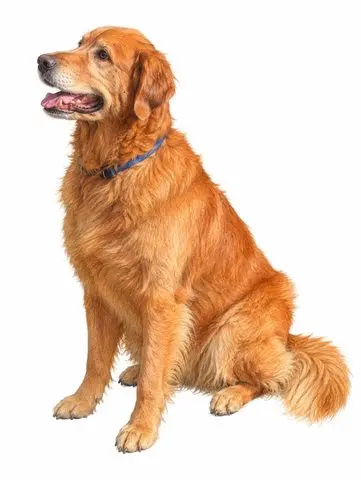
Humphrey
“Everybody’s homes,” I said.
Humphrey sat beside us, reddish-gold fur catching the early light. “Everybody everybody?”
“Birds. Rabbits. Squirrels. Whoever lives here.”
“Do we knock?”
That was an excellent question. I had organized the walking part more carefully than the visiting part.
A soft ring came up the path. Pippin was arriving with Jasper, Lexi, and little Pepper. Pippin knew a great deal about welcoming visitors. He also knew that being older sometimes meant choosing a shorter route and a particularly good place to rest.
“Perhaps,” he said, “we can learn about their homes without going inside them.”
I looked past him. Between the tall trees stood a jumble of leaves, little branches, and low plants. Behind that jumble was another jumble.
“It will be hard to see,” I said.
“If you were a rabbit,” Pippin asked, “would you want everybody to see your bedroom?”
I considered the place under my human’s table. It was an excellent place to sleep because very few visitors thought to look there first.
“Probably not.”
We made a new plan. Friends could join for a little piece of the walk, then trade places with the next group. That way, the woods would not receive an entire parade at once. The older dogs could take the easy stretch. Nobody had to walk farther than felt good.
Our humans had water and leashes. We would stay with them, keep to the trail, and give wild families room. I gave the ball to my human for safekeeping. He put it in his bag.
I watched carefully to remember which bag.
“Bring your eyes,” I told Humphrey. “Bring your nose. And everybody bring your ears.”
Jasper tilted his head. “I never go anywhere without mine.”
We stepped beneath the trees. A bird sang above us. Something scratched below us. A leaf trembled where no wind seemed to be blowing.
I had thought we would have to find where the nature walk began.
We were standing in it.
CHAPTER 2
The Upstairs and the Downstairs
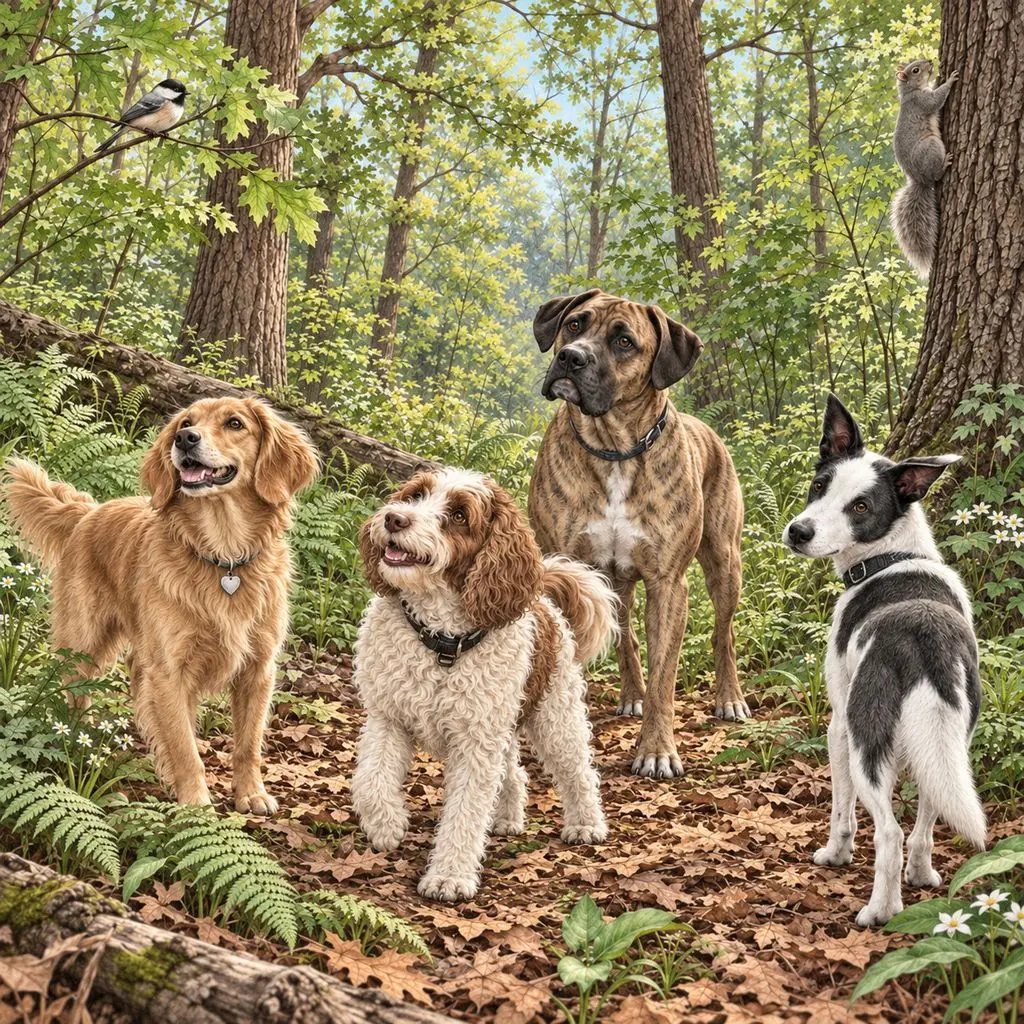
Toby was looking up. Moose was looking straight ahead. Luther was folded into a wonderfully bendy shape, looking around his own shoulder.
“Which way is the nature?” Toby asked.
“We may need all three directions,” I said.
Toby’s curly white coat had soft brown patches. People had once called him Toby the Tank when he was first adopted. Lots of walks with his human had helped him become slimmer. Today he was interested in taking a walk that had many interesting stops.
I approved of those.
Moose stood beside him, dark brindle stripes crossing a short fawn coat. Luther’s white face, framed by gray patches, appeared between them. Luther was young enough to find almost every arrangement of legs worth trying.
Friends on This Walk
Remi
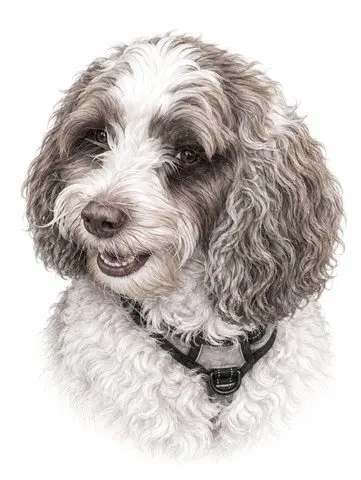
Toby
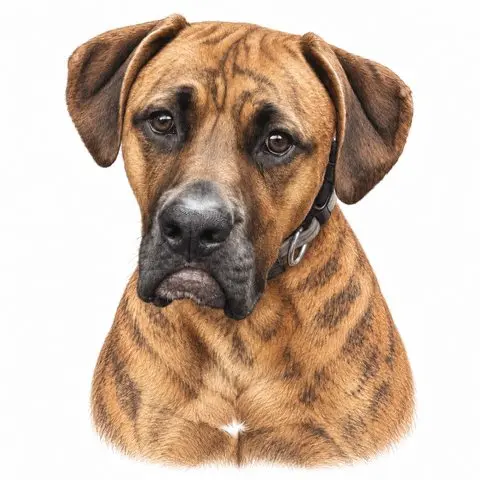
Moose
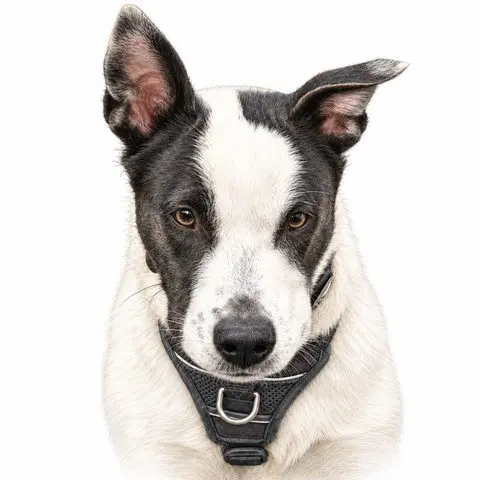
Luther
Our humans stopped where the path passed a big tree. My human pointed upward.
“The canopy,” he said.
I looked at the spreading crown of leaves. Branches from neighboring trees met overhead, making a roof with little windows of sky.
Below that roof were smaller trees, still growing toward the light. Below them were shrubs, leafy tangles, and stems just tall enough to disappear behind. Near my paws grew grasses and ferns. Under those lay last autumn’s leaves, slowly becoming part of the soil.
“Upstairs,” Toby said. “Downstairs. Under-downstairs.”
“The understory,” my human told the other people.
Toby looked pleased. His word had been fairly close.
A chickadee landed high on a twig, fluttered to a lower branch, and picked at a leaf. It crossed more than one floor without using stairs.
“Does every animal have its own level?” Moose asked.
I was about to say yes. Then the bird moved again.
“I think some have several.”
A squirrel came down a trunk, crossed the ground, and climbed another tree. Somewhere inside the low growth, a bird gave a quick little note.
The trees were easy to admire. They were tall and impressive. The low plants took more noticing. From the path, they could look like something between us and a better view.
But a better view for us might be a worse hiding place for somebody small.
Luther lowered himself until his chin almost touched his paws. “From here, the ferns are enormous.”
Toby tried looking from a lower angle, too. Moose stayed standing and watched a gap between two branches. Each of them could see something different.
I began to understand why the woods needed so many shapes. A tiny bird could tuck among thin stems. A deer could stand behind taller shrubs. A strong tree could hold a nest much too heavy for a twig.
“Can we make a map?” Toby asked.
“Yes,” I said. “A map of the rooms.”
He looked at the squirrel climbing out of sight.
“Put in a very long staircase.”
CHAPTER 3
The Leaf That Was Working
Djungo stopped beside an old brown leaf.
“This one is finished,” he said.
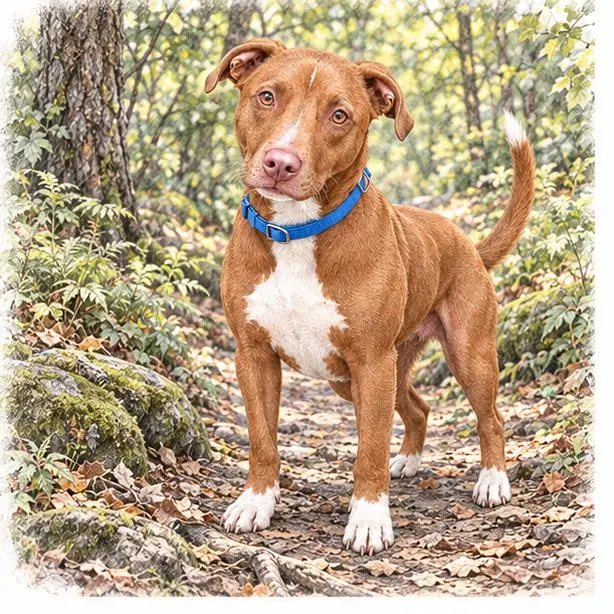
Rue put a nose near it without touching. Henry stood beside Rue. They lived with the same family, while Djungo had come with his own human. Djungo’s blue collar showed against his short reddish-tan coat.
The leaf certainly looked finished. It had holes, a curled edge, and none of the shiny green that leaves wore upstairs.
Then something tiny moved beneath it.
“It appears to be occupied,” I said.
Friends on This Walk
Remi
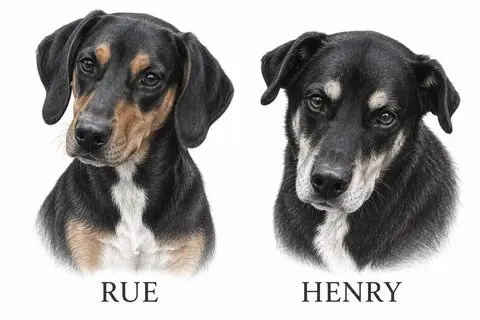
Rue and Henry
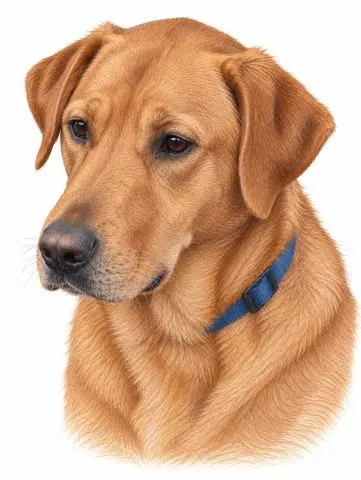
Djungo
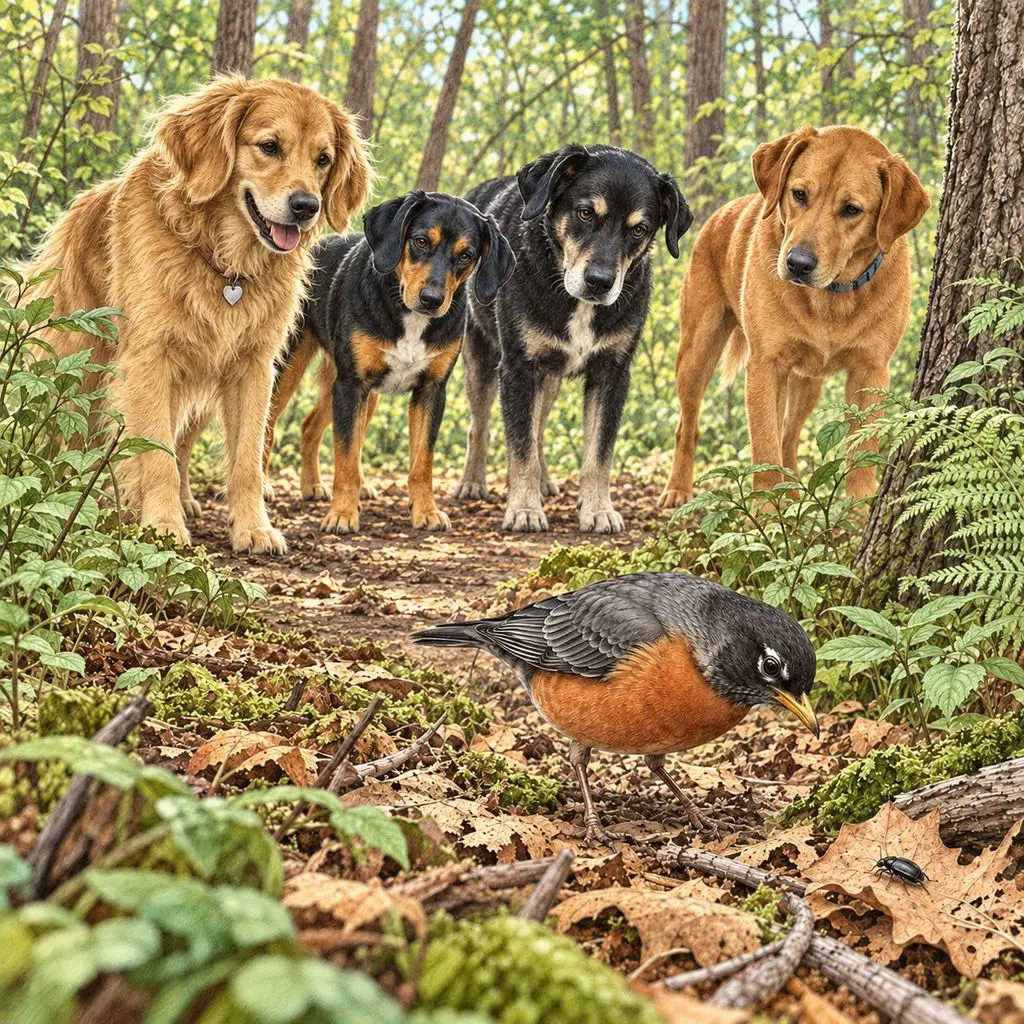
An ant hurried along the curled edge. A beetle disappeared under a nearby twig. A robin landed farther down the path, tipped its head, and began searching among the leaves.
The robin was not looking for a comfortable place to sit. It was looking for breakfast.
Our humans talked about leaf litter. I disliked the name immediately. Litter was something my human picked up and put in a bin. These leaves belonged here.
“A blanket of fallen leaves,” he explained to a child walking with the next family.
That was better.
The blanket shaded the soil and helped it hold moisture. Tiny creatures lived in and beneath it. Fungi and other decomposers slowly broke the old material down, returning nutrients to the soil. Growing plants could use those nutrients again.
Henry looked up at the living leaves, then down at the old ones.
“The tree drops them, and the forest uses them?”
“Apparently the leaf has another job,” I said.
Rue noticed pale threads on a piece of fallen wood. My human said fungi could spread through wood in fine threads. The small mushrooms we sometimes saw were only one visible part of a much larger process.
Djungo looked respectfully at the brown leaf.
“I apologize for calling you finished.”
The leaf did not answer. It was busy being a roof.
I heard another rustle. My nose leaned toward it before the rest of me had decided what to do. My human quietly called me back. I stepped onto the middle of the path again.
That was difficult. I wanted to know exactly who had moved.
But if a giant nose lifted the roof off my resting place, I would probably have an opinion.
The robin found something small and swallowed it. Then it flew into a tree. Whatever it had eaten had been feeding among the leaves. The leaves had come from the branches. The branches held the robin now.
Our map was becoming complicated.
“Draw an arrow from the leaves to the bird,” Henry suggested.
“And from the tree to the leaves,” Rue said.
Djungo studied the path ahead, where hundreds of brown leaves lay tucked between the plants.
“We are going to need a great many arrows.”
CHAPTER 4
The Log with Many Doors
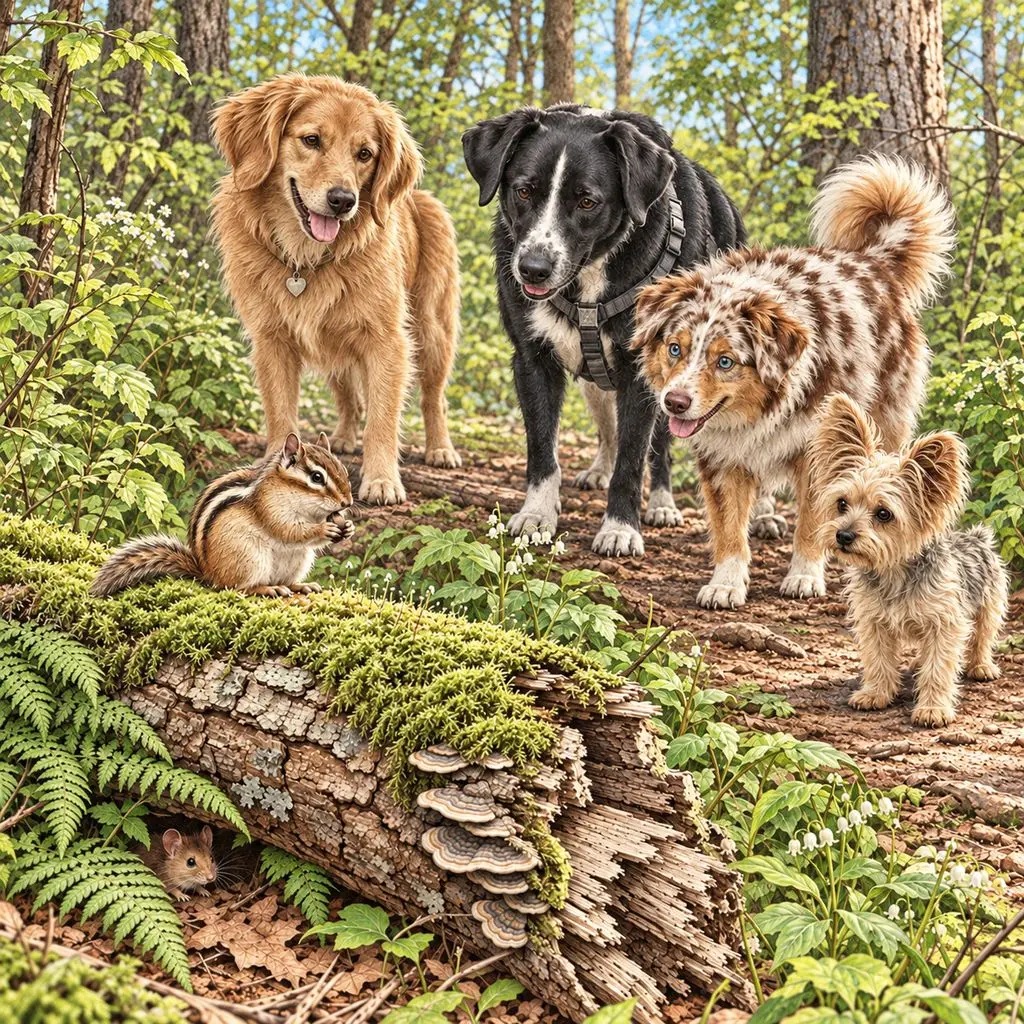
Bowie noticed the chipmunk before I did.
This was reasonable. Bowie spent a great deal of time in the woods, and the chipmunk was in an especially woody place.
It stood on a fallen log, striped back straight, cheeks looking as though breakfast had become a complicated storage problem.
Fluffy Mocha watched beside us. This was our other Mocha, with the fluffy merle coat and bright blue eyes. Morning Mocha had a smooth brown-and-white coat. Two Mochas meant twice as many friends and a little more explaining.
Millie’s large fringed ears pointed toward the log.
“Is that a door?” Millie asked.
Friends on This Walk
Remi
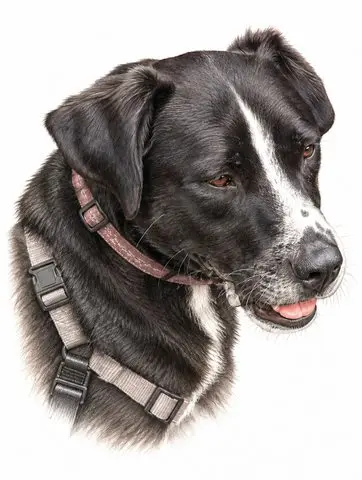
Bowie
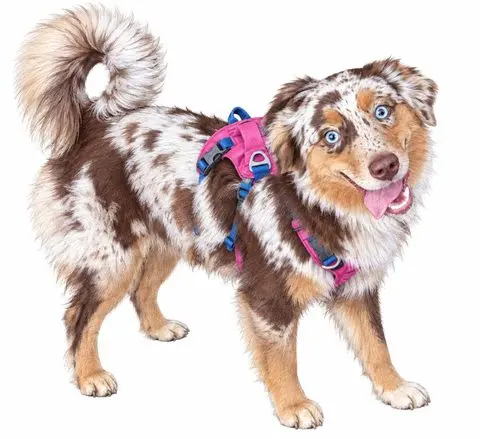
Mocha
Fluffy merle coat
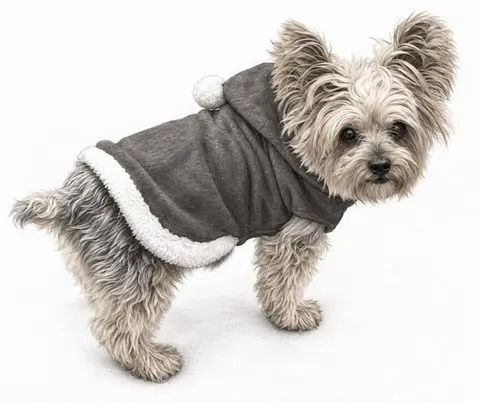
Millie
Friends Remi Mentions
Mocha
Brown-and-white coat
A dark opening ran beneath the trunk. The chipmunk vanished behind it. A moment later, it appeared at the far end, having used a route none of us could see.
“Possibly a hallway,” I said.
The fallen tree was soft in some places and rough in others. Its broken bark held narrow cracks. Small plants grew nearby. The shady earth beneath it looked cooler than the sunny path.
To a chipmunk, that log could be a lookout, a sheltered runway, or a place to search for food. Chipmunks often sleep and raise their young in underground burrows. Seeing one on a log did not tell us where its nursery was.
“So the log is not necessarily its bed,” Bowie said.
“It might be part of the way home.”
That made sense to me. The bench was an important part of my walks, but I did not sleep there all night. Usually.
A small mouse slipped through the low plants beside the log. We saw a pale belly, a quick tail, and almost nothing else.
“Which kind?” Fluffy Mocha asked.
“A very brief kind,” I said.
Our humans could not tell whether it was a white-footed mouse or a similar woodland mouse. They left the question open. I liked that. A good answer did not have to arrive faster than the animal.
Under loose bark, insects found little spaces. Fungi softened the wood. The old tree would slowly crumble, but slowly was an important word. While it changed, many creatures could use it.
Millie moved a paw toward the edge of the trail, then stopped.
“If we rolled it over, we could see everyone.”
“We might also move their ceiling,” Bowie said.
We left it where it was.
The chipmunk returned to the top, holding a seed between its paws. It looked very comfortable in a place that was too small for even one of my feet.
Fluffy Mocha tilted a fluffy head.
“How many rooms do you think are in there?”
I watched an ant disappear into a crack smaller than a whisker.
“More than we can count from out here.”
CHAPTER 5
The Rabbit Sized Door
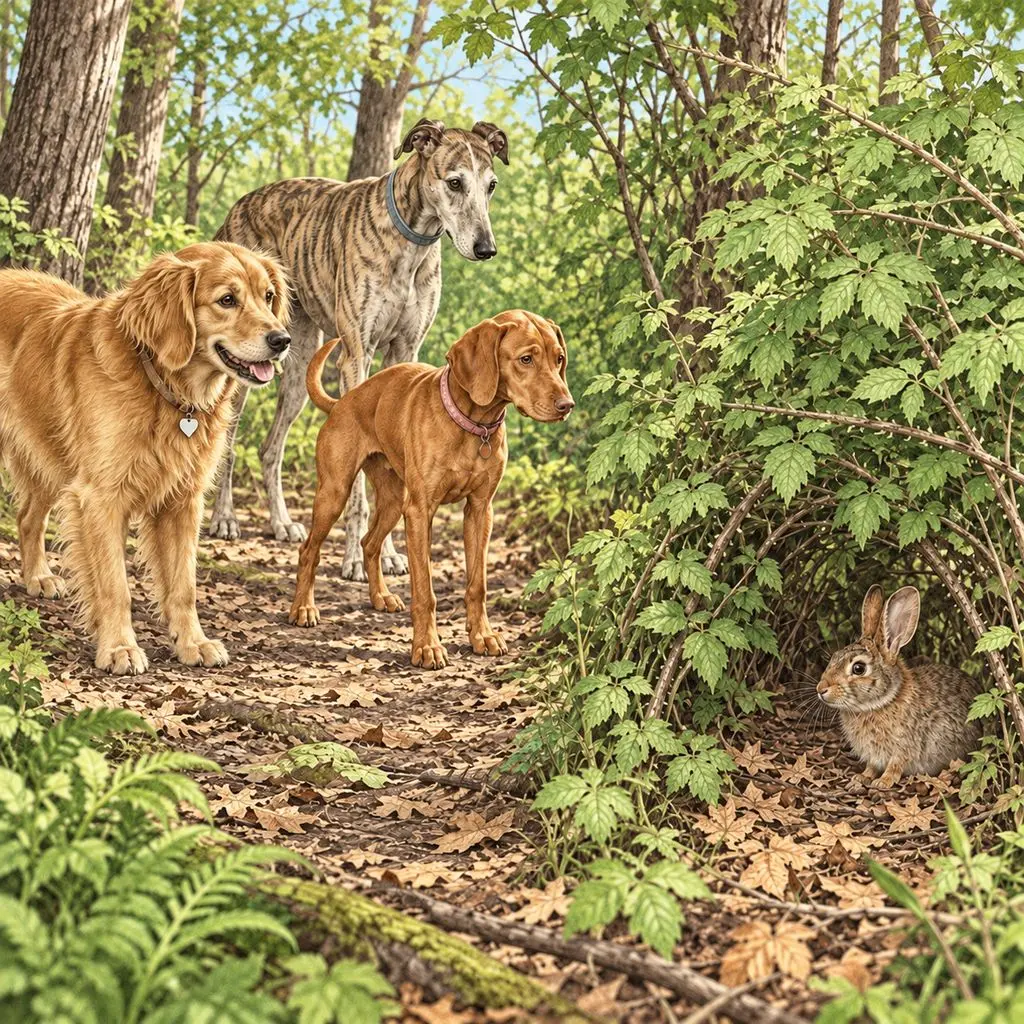
Bomber could run faster than any dog I knew at the park.
He was a retired racing greyhound, all long legs and tucked waist, with brindle stripes and a pale face. If a breeze had legs, I thought it might look a little like Bomber.
That morning, his finest achievement was staying still.
A rabbit sat beside the shrubs.
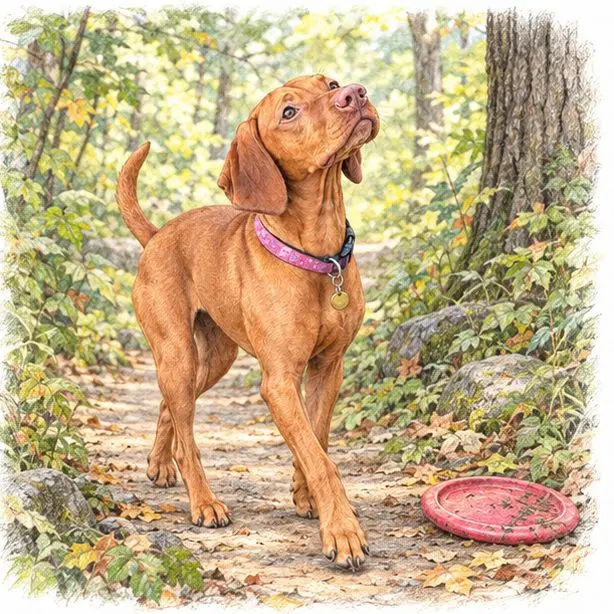
Daisy saw it, too. This was the small Vizsla who loved Frisbee, with a smooth copper coat and a sweet face. She watched the rabbit’s ears turn separately, like two little dishes collecting news.
Our humans kept us close. The rabbit had not invited us over.
Friends on This Walk
Remi
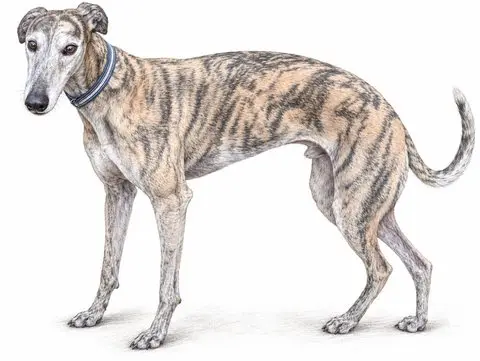
Bomber
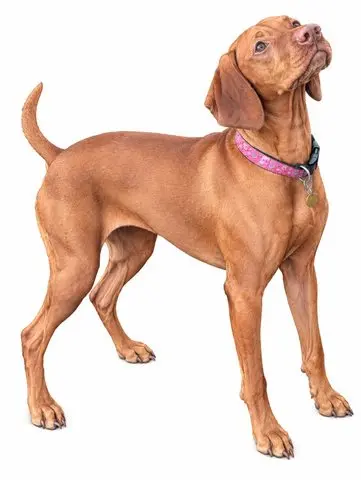
Daisy
Small Frisbee player
“It has seen us,” Daisy whispered.
The rabbit became so still that its outline almost vanished among the brown stems. I could find one dark eye, then an ear, then the eye again. Its fur matched the shadows surprisingly well.
After a moment, it hopped into a gap beneath the shrubs.
Gone.
There had been no long race across the grass. No dramatic leap over a hill. Just two quick hops and a doorway built out of stems.
Bomber looked at the place it had disappeared.
“I could never fit through there.”
“That may be part of the design,” I said.
The shrubs made a low, tangled shelter. A rabbit could move along little routes inside while larger animals had to slow down. Cover did not make a rabbit completely safe, but it offered more choices than a wide bare space.
Daisy lowered her nose toward a green leaf at the trail’s edge.
“Lunch close to the door.”
Eastern cottontails eat green plants in the warm months. When winter makes green food harder to find, twigs and bark become important. A shrub could offer shelter in one season and something to nibble in another.
My human pointed out a tiny clipped stem from the path. We could not know which animal had eaten it, but it reminded us that small mouths used this part of the woods.
“Where do baby rabbits sleep?” Daisy asked.
I imagined a deep underground room with a welcome mat. My human’s explanation was different. Cottontail mothers make shallow ground nests lined with grass and fur, often hidden remarkably well. A mother may leave her young tucked away while she feeds elsewhere.
We did not search for one. Knowing how well it needed to be hidden was enough.
Bomber looked down at his long feet. Daisy looked down at hers. I looked at mine.
The middle of the path suddenly seemed like an especially thoughtful place to put them.
Before we moved on, the rabbit’s nose appeared beneath a leaf. It twitched once, twice, and withdrew.
Bomber’s ears lifted, but his feet stayed beside his human.
“You’re very good at being fast,” I told him.
He watched the empty-looking doorway.
“Today I am practicing the other thing.”
CHAPTER 6
Asti and the Acorn Delivery
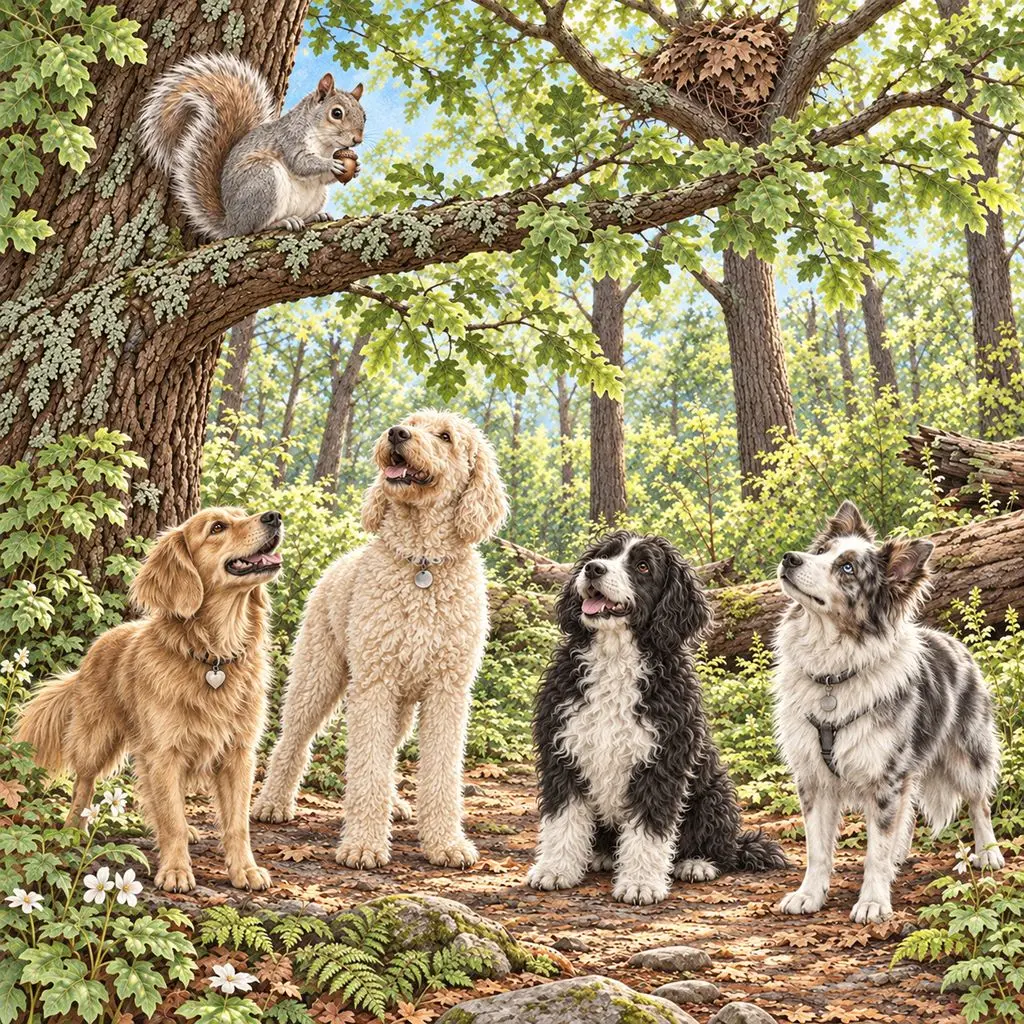
Asti saw the squirrel.
The squirrel saw Asti.
Asti’s whole curly body had an idea.
Her human said her name, and Asti stopped beside the trail. She was a big, sweet girl who listened well, even when listening interrupted an extremely promising squirrel thought.
Scout and Ajax had joined us for this stretch. Scout’s loose black-and-white waves moved in the breeze. Ajax’s pale blue eyes followed the squirrel up an oak, past a patch of light and into the branches.
“It has an acorn,” Scout said.
Friends on This Walk
Remi
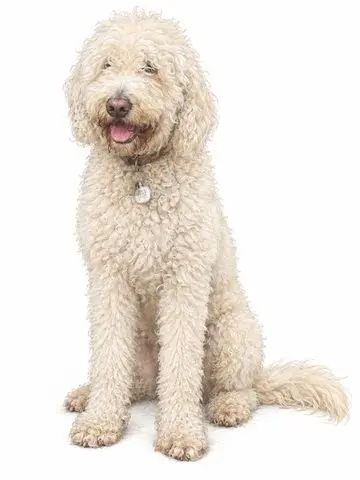
Asti
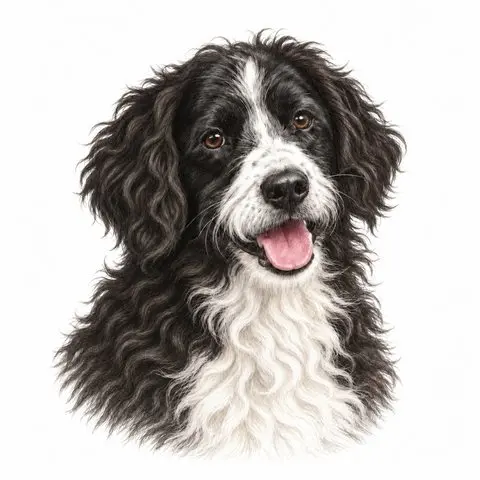
Scout
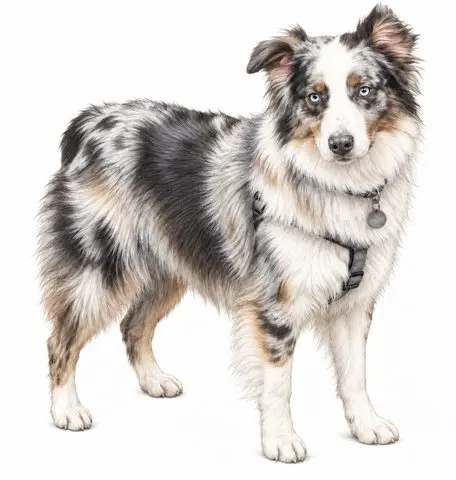
Ajax
“It has an advantage,” Asti said. “The tree.”
I knew Asti liked chasing squirrels. I also knew the squirrels had kept an excellent record of getting away. Today we were letting them keep it without a race.
The gray squirrel balanced on a branch with the acorn in its mouth. Then it moved through the branches toward another trunk.
“Where does it put all the food?” Ajax asked.
Some squirrels tuck nuts and seeds away for later. Gray squirrels bury many separate stores. They find a great many again, but a forgotten acorn sometimes gets a chance to become an oak.
Scout looked at the enormous tree above us.
“That is a very large result from a small forgotten lunch.”
Squirrels also eat things besides nuts: buds, fungi, and other foods that change with the season. The woods had more than one cupboard.
Farther up the trunk, a leafy bundle rested where branches met. Our humans thought it might be a squirrel nest. Gray squirrels may build leafy nests or use tree hollows for shelter and for raising their young.
We did not assume every bundle belonged to the squirrel we were watching. I was learning that the woods contained many possible explanations.
Asti sat down and leaned against her human’s legs.
“I have a cat at home who is very good at getting into places I cannot fit,” she said.
That would be Rosie, who ruled the house. Asti also had a younger cat friend, Hazy. The house had its own complicated collection of routes and hiding places.
“Perhaps the squirrel knows the same trick,” Scout said.
The squirrel came partway down another tree. Asti’s eyes followed it. Her human quietly praised her for staying close.
Asti’s tail swept the path.
“I can appreciate a squirrel from here,” she said, sounding slightly surprised.
We watched it bound over a low branch, pause, and disappear behind the log we had passed earlier. The canopy, the trunk, the ground, and the fallen wood were all parts of one journey.
Our map could not put the squirrel in a single room and leave it there.
Ajax looked along the route it had taken.
“We need doors between the rooms.”
“And places to put the snacks,” I added.
Asti rested more comfortably against her human. She had found a useful place to wait for her own.
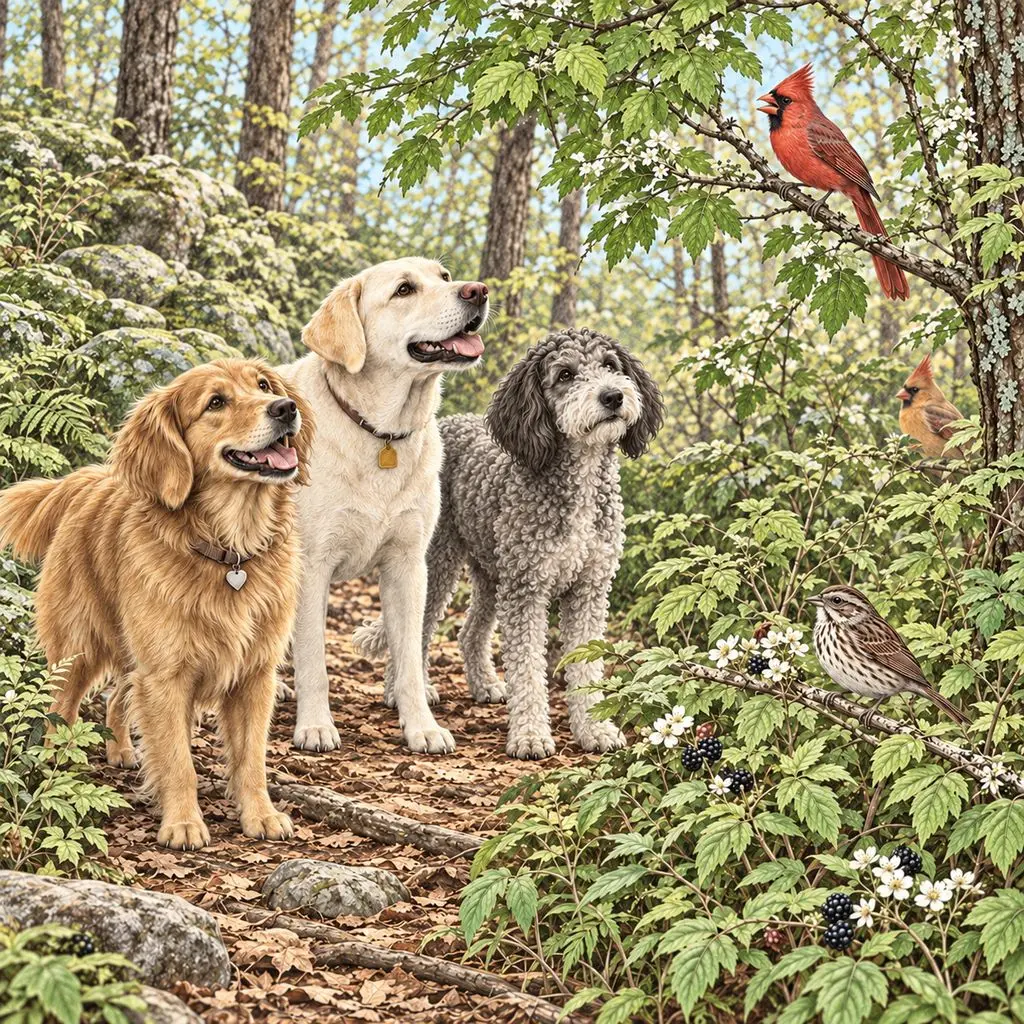
CHAPTER 7
Finch Finds a Bird
“Finch!” a human called.
A pale cream dog turned around.
A small brown bird did not.
“We have the correct Finch,” I said.
Finch joined us beside Lily, the dog with the gray curly coat and lighter muzzle. Our other Lily, the broad white dog, was coming on a later part of the walk. I was beginning to think nature might be easier to name than my friends.
The small bird hopped beneath a shrub. Its chest was streaked, and it kept dropping out of sight behind the leaves.
Friends on This Walk
Remi
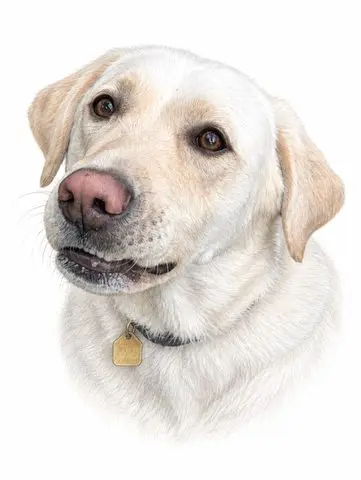
Finch
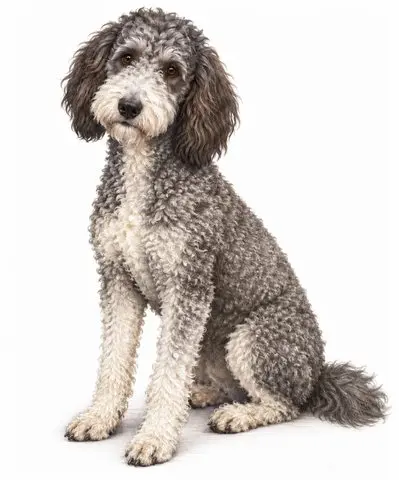
Lily
Gray curly coat
Friends Remi Mentions
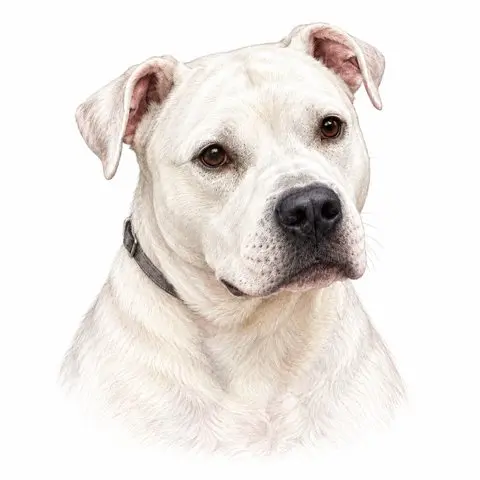
Lily
White coat
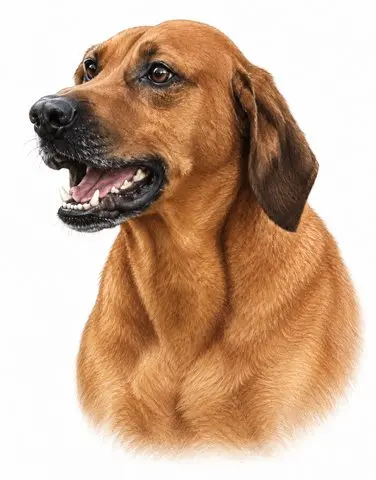
Clyde
“Song sparrow,” my human said.
Finch looked interested. “So that bird is not a finch.”
“And you are not a sparrow,” Lily said.
We had cleared that up very efficiently.
The sparrow picked near the ground, then flew onto a low branch. A short song spilled out of a bird that looked much too small to contain it.
I had expected a singing bird to choose the tallest tree. This one seemed satisfied with the shrub.
Song sparrows find seeds and small animal foods such as insects. During the nesting season, insects are especially useful food for growing young. Their nests are often on the ground or low in thick plants, where leaves and stems help hide the little cup.
Lily looked into the low growth without moving toward it.
“The part below our noses is somebody’s neighborhood.”
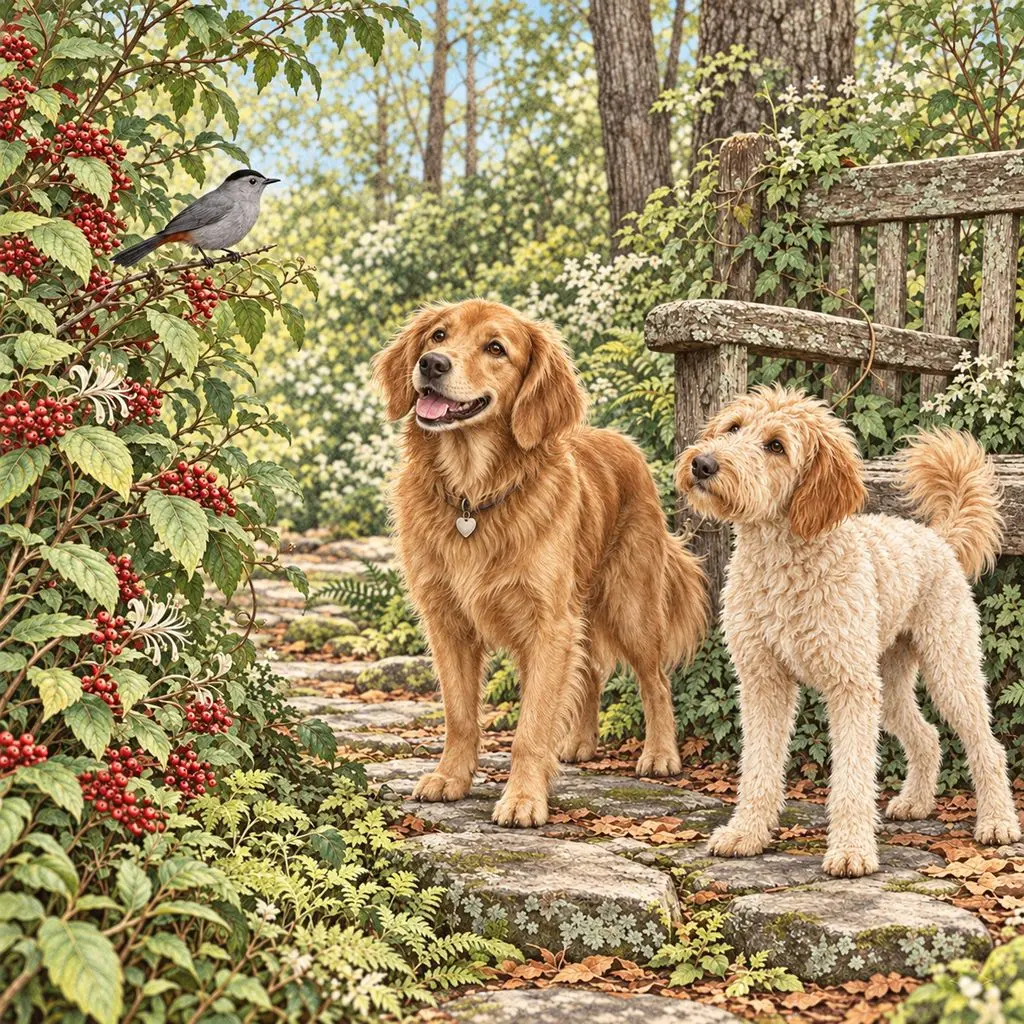
A bright whistle came from higher up. A red cardinal sat where the sunlight touched a branch. Below him, a buff-colored female moved through leafy cover.
The male was easy to see while singing. That did not mean a nest would be placed in the same exposed spot. Cardinals commonly tuck nests into shrubs, small trees, or vine tangles, often about one to fifteen feet above the ground.
“So the stage can be outside the house,” Finch said.
I liked that explanation. Clyde, our talkative hound friend, certainly did not need to stand in his bed before making an announcement.
The cardinal’s strong bill could crack seeds. Cardinals also eat fruit and insects, and they bring plenty of insects to their nestlings.
The sparrow disappeared into one patch of stems. The female cardinal slipped into another. A moment later, the shrubs looked empty again.
Finch waited. Lily waited. I waited a little less gracefully because a small fly had become interested in my nose.
Nothing reappeared.
“Did we lose them?” Finch asked.
“I think,” I said, “we have found out what the leaves are for.”
We moved on without parting the branches.
Behind us, the sparrow began another song. It sounded perfectly capable of continuing the morning without an audience.
CHAPTER 8
The Cat Who Had Feathers
Georgie was waiting near the old wooden bench on the hill.
That bench was where we had met. It held excellent smells from dogs who had stopped there before us. Humans sometimes thought a bench was only for sitting. Georgie and I knew it was also a place to catch up on the news.
“Someone has been here,” Georgie said.
“Several someones.”
We were considering the lower left corner when a small mewing sound came from the shrubs.
Georgie lifted a shaggy apricot head.
Friends on This Walk
Remi
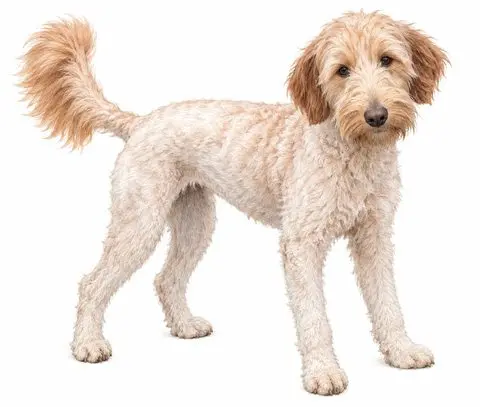
Georgie
Friends Remi Mentions
Finch
“A cat?”
The sound came again. Thin. Questioning. Definitely the sort of sound that could make a dog reconsider where the morning was going.
We stayed by the bench. A smooth gray bird appeared on a twig, flicked its dark tail, and ducked behind the leaves.
“That cat has made an unusual decision,” I said.
My human smiled. “Gray catbird.”
The name explained one thing and confused another. Humans had given a bird a cat name, and a dog a Finch name. Perhaps they should hold a meeting.
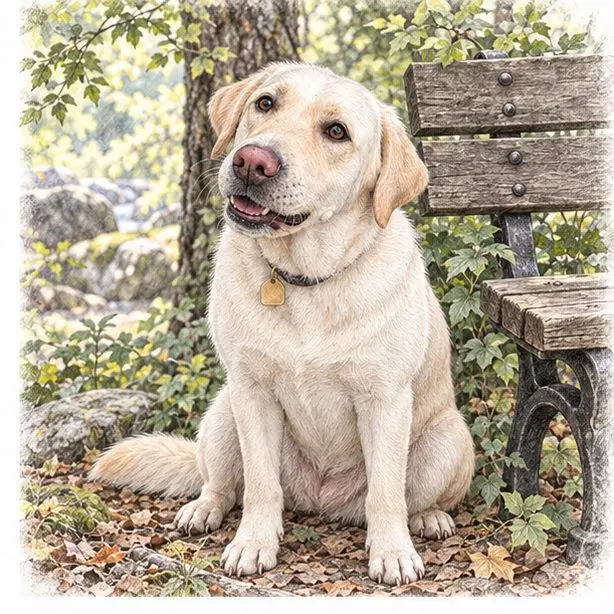
The catbird gave a longer, jumbled song from inside the thicket. It could be visible for one moment and hidden the next. Dense shrubs and vine tangles were places it could move, feed, and shelter. A nest was often tucked in low cover, commonly around four feet high, though the height could vary widely.
Georgie looked from the bench to the thicket.
“We are reading the outside of the room.”
“And somebody inside is talking.”
Catbirds eat insects and other small creatures, and they also eat fruit when it is available. The leaves could hold caterpillars. The shrubs could grow berries. Shelter and food could occur in the same patch.
A smaller yellow bird moved through the outer branches. Our humans called it a yellow warbler. It searched leaves and twigs for small insects, hardly pausing before trying the next place.
“That one checks every shelf,” Georgie said.
Yellow warblers often nest in shrubs or small trees. Their little cups are commonly below about ten feet, although some are higher. A bird did not have to live in the tallest tree to belong to the woods.
I looked at the spaces my human could see through easily, then the spaces he could not. Both belonged on our map, but the hidden spaces had much more happening than I had first guessed.
We left the bench without following either bird. Georgie sniffed one last corner before joining a human on the path.
“Anything important?” I asked.
“A good morning. Several friends. Someone who stood in mud.”
I checked my feet. Not me. Not yet.
The catbird mewed behind us.
I let it have the last word. It seemed like the sort of neighbor who would take it anyway.
CHAPTER 9
Sisters and Sticks
Frannie and Hildi arrived together, as sisters often do.
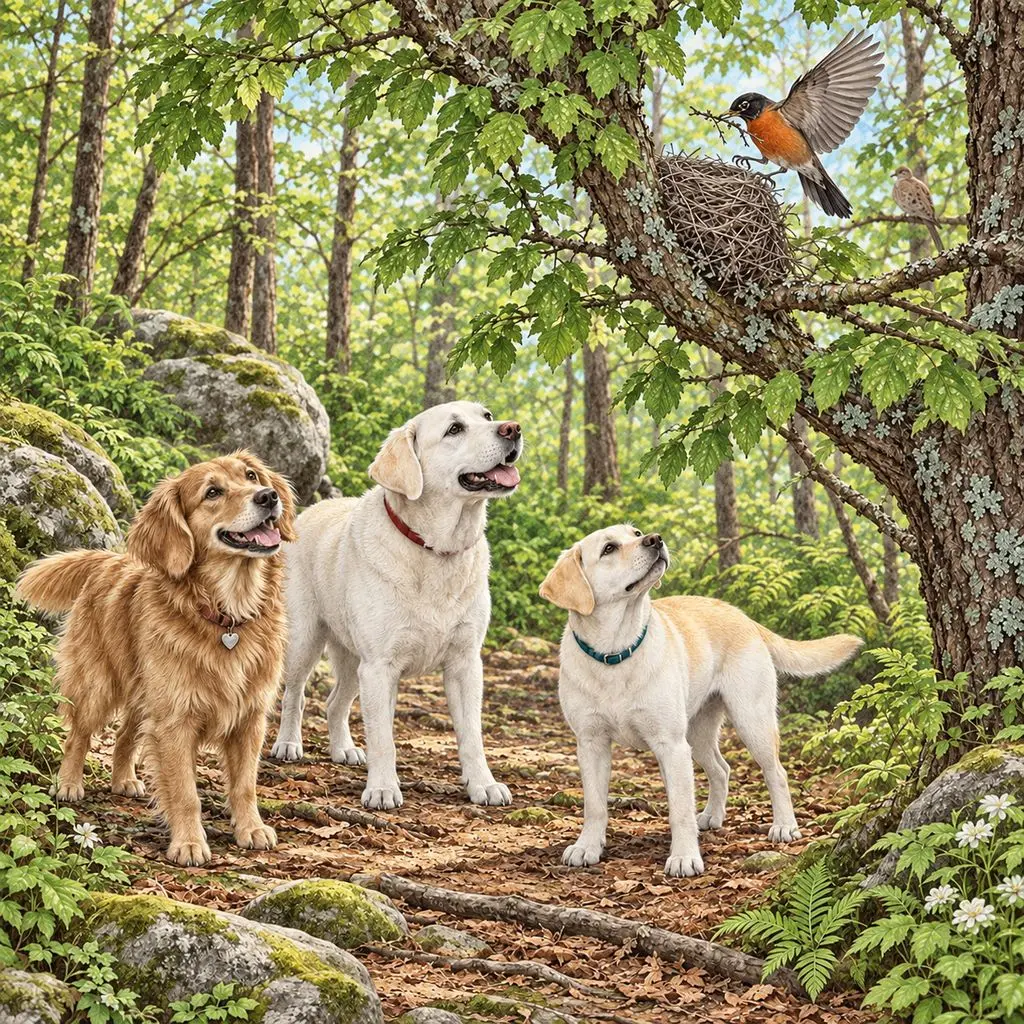
Frannie was the older white Labrador in the red collar. Hildi wore teal and had a pale yellow patch across her back. I greeted both noses before explaining that we were learning about houses.
“With doors?” Hildi asked.
“Some. Some are mostly cups.”
A robin crossed the path with a small beakful of material. It landed in a leafy tree, paused, and disappeared behind a branch.
“That one is carrying its house,” Frannie said.
Friends on This Walk
Remi
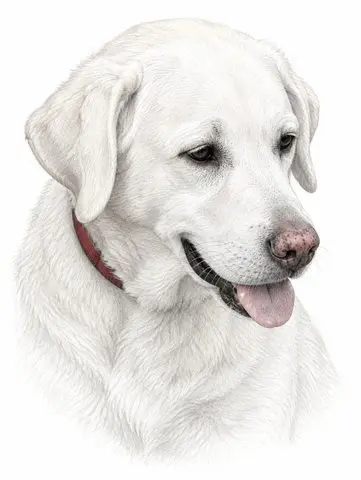
Frannie
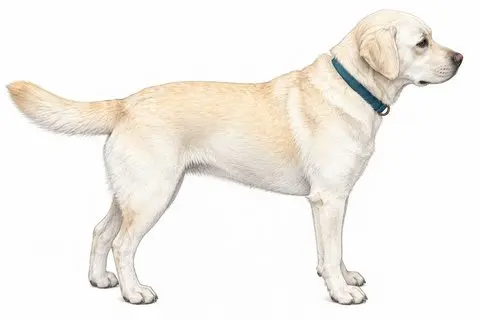
Hildi
“One mouthful at a time.”
We watched from where we were. The leaves concealed whatever happened next. My human lowered his pointing hand, and our little group continued far enough that the bird could return without having to pass us closely.
“A nest is a place for eggs and young,” he told a child. “It isn’t always a bird’s bedroom all year.”
I was glad he explained that. I had been imagining every bird going home each night, putting its feet up, and complaining about the weather.
Robins make sturdy cups with plant material and mud, then add a softer lining. Many nests sit on branches in the lower half of a tree, tucked near leaves. The robin’s muddy construction could be hidden even when the tree itself was easy to see.
Hildi looked down at the damp path.
“So this is a building supply?”
“For the robin,” Frannie said. “For us it is something we bring into the car.”
A soft coo floated from another direction. On a branch sat a mourning dove, round-chested and very still. It looked as though someone had gently set it there to keep the morning company.
Doves often build much simpler platforms of twigs. Some nest in trees or shrubs, and some choose other supports or even the ground. A nest did not need to resemble the robin’s mud cup to work for a different family.
The dove dropped to an open patch and searched for seeds. The robin searched for small creatures and, in other seasons, ate plenty of fruit. Sharing a neighborhood did not mean ordering the same breakfast.
“How do we know whether the robin has babies?” Hildi asked.
“We don’t,” I said.
It felt strange to be leading a nature walk and say that. But I could not see through leaves, and guessing would not help a baby bird.
Frannie nodded toward the quiet tree.
“We can leave that part to the robin.”
We made a rule for our imaginary map. It would show the kinds of places animals needed, not directions to their nests.
Hildi approved. “Nobody needs a sign pointing at their babies.”
I glanced back once. The robin had reappeared on the outer branch, ready to continue its work.
Our best contribution to the building project was to keep walking.
CHAPTER 10
The Tree with an Inside
Olive sat on my human’s feet.
I went to Olive’s human for a neck scratch.
This was our usual exchange, and I saw no reason a nature walk should interfere with an arrangement that worked so well.
“Remi’s neck is so soft,” Olive’s human said.
Correct.
Luna, the smaller black Lab in their family, waited nearby. Oshie stood beside her with a ball in his mouth. He was the bigger black Lab, and his ball was apparently an essential part of looking at trees.
Friends on This Walk
Remi
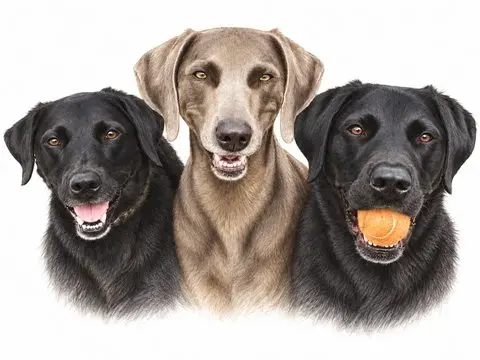
Luna, Olive, and Oshie
A chickadee landed on a trunk. Then it vanished.
I lifted my head out of the scratch.
“Where did the bird go?”
Luna pointed her nose toward a little dark opening.
“The tree has an inside.”
Of course it did. I had simply spent more time smelling the outside.
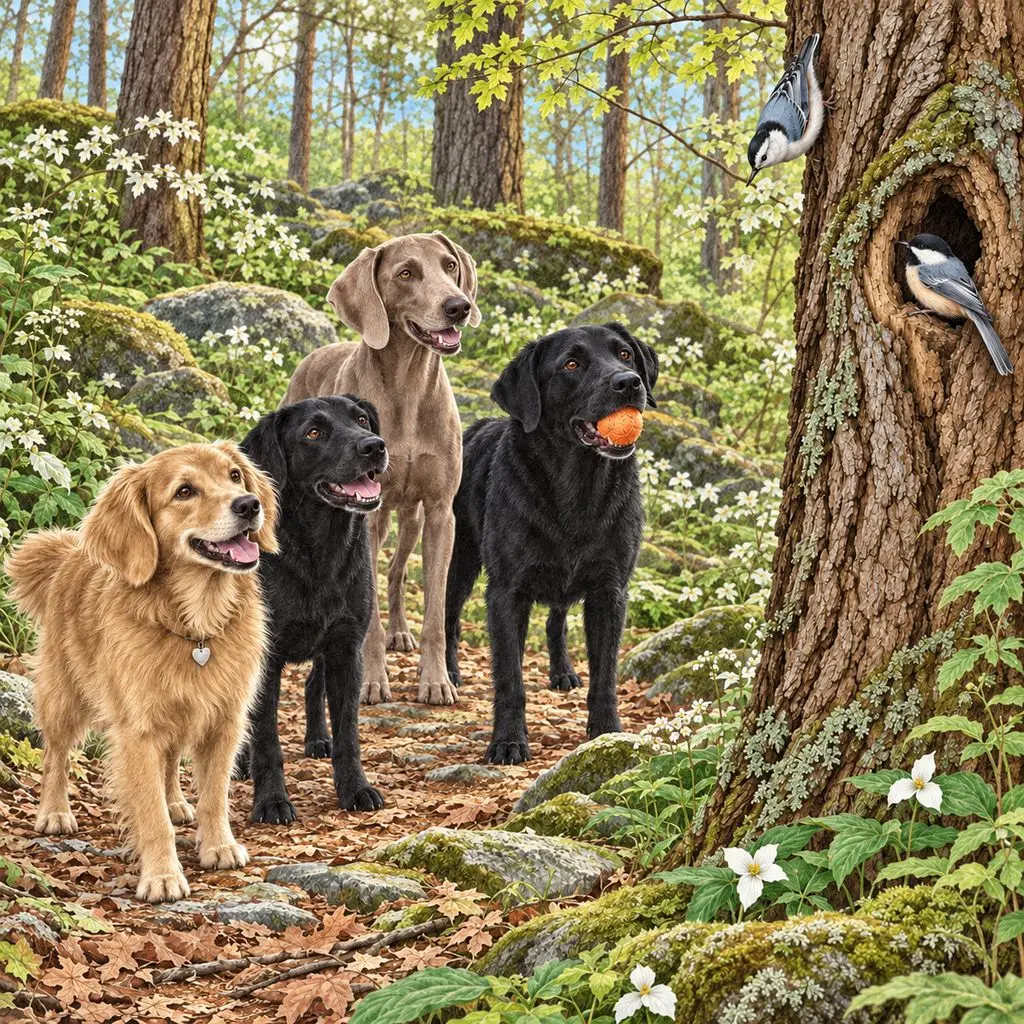
A cavity is a hollow space. Some form where wood decays. Some are excavated by birds. Chickadees can work into soft, decaying wood, and they also use suitable existing holes. Their nests are often roughly five to twenty-three feet above the ground, though they can choose other heights.
The chickadee came out again and picked at a twig. It had a whole tree to explore and a doorway small enough to overlook.
“You wouldn’t need curtains,” Luna said.
Nearby, a white-breasted nuthatch worked down a trunk headfirst. I tried imagining myself doing that and decided I preferred my current arrangement with gravity.
Nuthatches search bark for insects and also eat seeds and nuts. They often use an existing tree cavity for nesting. Another little bird, a house wren, sang from a tangle nearby. Wrens also use cavities, but they spend plenty of time searching low plants for insects and spiders.
Oshie made a muffled sound around his ball.
“Was that a question?” I asked.
He set the ball at his human’s shoe. “Do they all live in the same hole?”
“No,” I said. “A good hole can be in demand.”
The chickadee returned with something tiny in its bill. We could not see what. Our humans moved us along so it could approach in peace.
I thought about old trees with rough bark, broken branches, and places softened by time. Those features might look untidy to someone walking quickly past. To a small bird, one of them could be the reason a family had a sheltered place to begin.
Olive finally stood up. My human’s feet were returned to him in good condition.
Oshie collected the ball again.
“Some things,” he said, “need to be kept somewhere reliable.”
Luna looked at the little opening in the tree.
Then we left its owner to decide what went inside.
CHAPTER 11
Somebody Is Knocking
Tap. Tap-tap-tap.
Jax lifted one ear. His other ear kept its own opinion.
Jack lifted his curly black head.
“Someone is knocking,” I said.
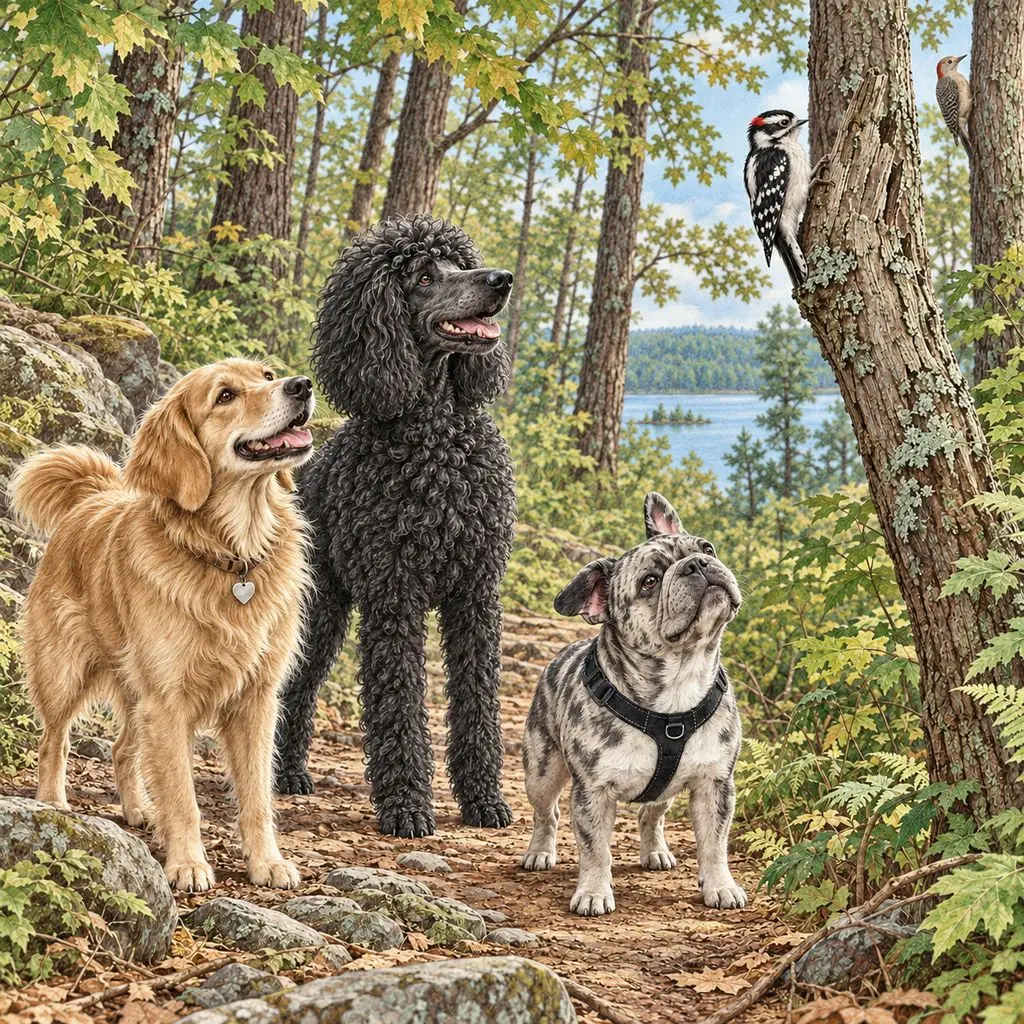
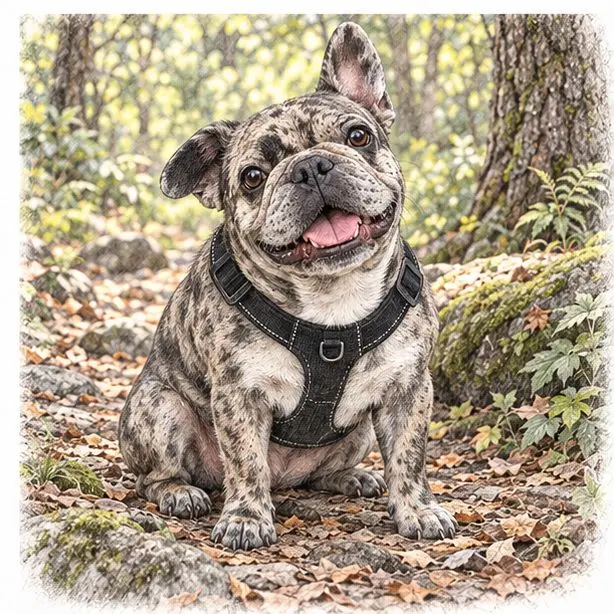
Jack was the long-legged Standard Poodle. Jax was the compact gray French Bulldog. They were different dogs with names that required humans to finish their words carefully.
Tap-tap-tap-tap!
Friends on This Walk
Remi
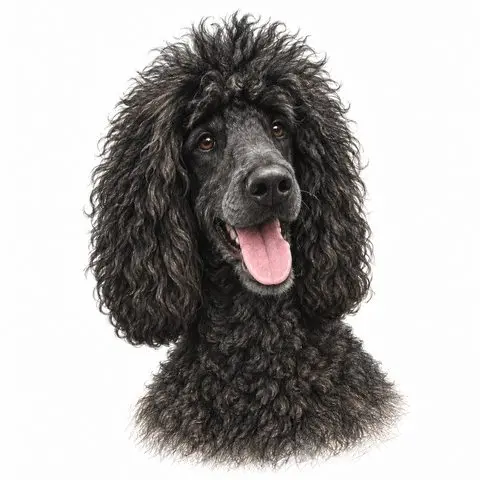
Jack
Standard Poodle
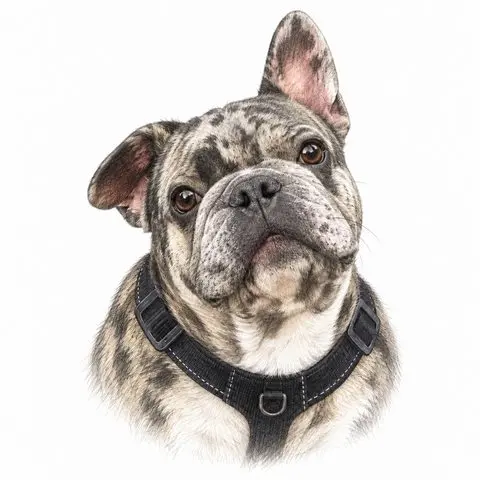
Jax
A little black-and-white woodpecker clung to a dead branch. Its stiff tail pressed against the wood as it worked. It was much smaller than the noise had suggested.
“Downy woodpecker,” my human said.
Jax examined the trunk. “That is a lot of tree for one little beak.”
The bird did not appear discouraged.
Woodpeckers can find insects in and on wood. They also peck out cavities in suitable trees or branches. A quick drum can be a message to other woodpeckers, while slower working sounds may come from feeding or digging. We would have to watch, not just hear, to decide what this bird was doing.
Jack sat. I sat. Jax remained standing because the view was already quite high enough.
A second woodpecker flew to a trunk farther away. It had a different pattern and a red patch on its head. The humans identified a red-bellied woodpecker.
“The red is mostly on top,” Jax observed.
Bird names were proving a little less straightforward than I had hoped.
The red-bellied woodpecker eats insects and also plant foods such as fruit, nuts, and seeds. Different woodpecker species use different sizes of wood, different places, and different nest heights. They were not one bird repeated in several sizes.
My human showed the child a picture of a pileated woodpecker in the field guide. It was much larger, with a bold crest and a powerful bill. We did not see one that morning, but we saw an old opening in a distant tree that reminded us of the picture.
“Is that its nest?” Jack asked.
“We cannot tell just from here,” I said.
I was getting better at that answer.
An old hole might be empty. It might hold another bird. A cavity made by one animal could later be used by a different one, if its size and condition were suitable.
Jax looked at the tree with renewed respect.
“A house with previous owners.”
The downy moved around the branch and disappeared on its far side. The tapping continued. We could hear the work even when the worker was hidden.
Jack glanced toward the trail ahead. Normally he had plenty to say about the park. For the moment, he let the woodpecker speak.
I thought this was generous of him.
Tap-tap-tap.
Someone was still knocking, but nobody needed us to answer.
CHAPTER 12
A Cradle in the Branches
Nikko was looking at something above the trail.
Pepper, his black-coated housemate, looked at Nikko.
Then I looked at Pepper. This was one of the ways a group of dogs could spend several minutes without discovering what the first dog had noticed.
“Up there,” Nikko said at last.
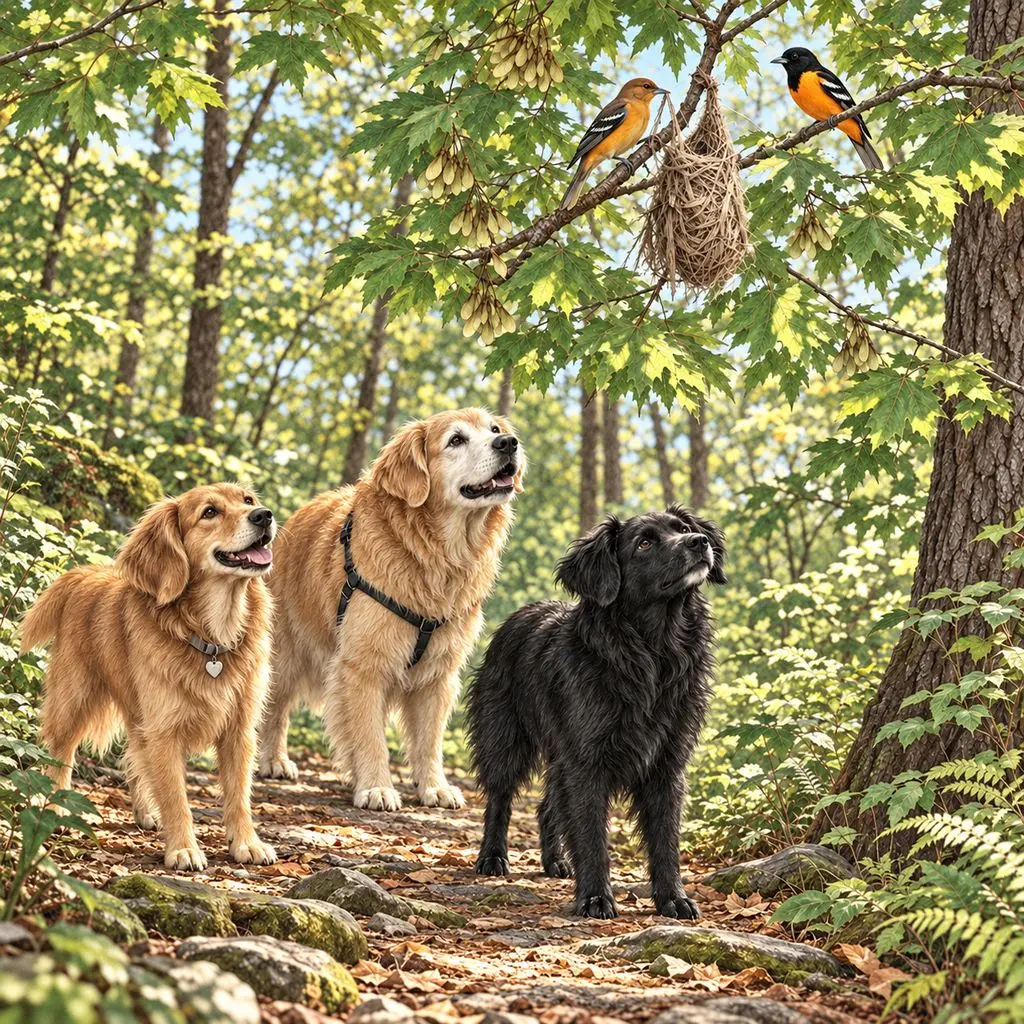
A small woven shape hung from a slender branch, high in the tree. It swayed gently when the breeze moved the leaves.
“A sock,” I said.
Friends on This Walk
Remi
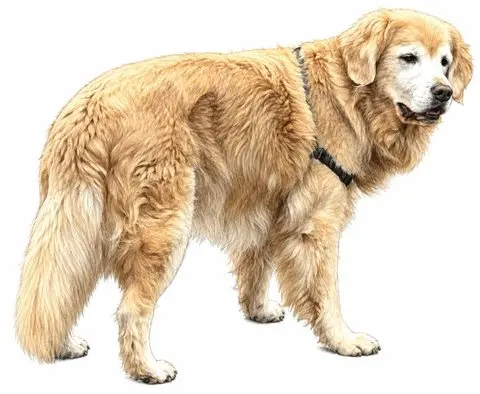
Nikko
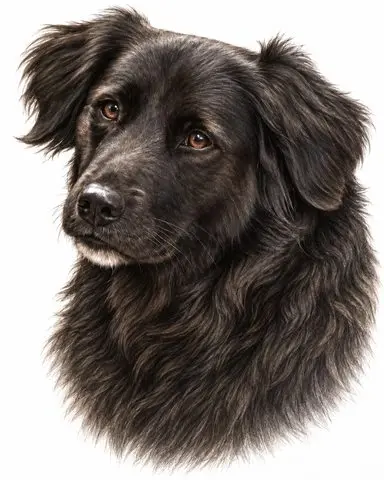
Pepper
Nikko’s housemate
My human lifted his binoculars. “An oriole nest. We’ll stay back.”
The sock belonged to a bird.
Baltimore orioles weave hanging nests from plant fibers and other slender materials. The nest’s attachment matters as much as its shape. It has to stay with the branch when the weather moves the tree.
Pepper watched the swinging nest.
“My bed does not do that.”
“Mine once moved when the vacuum came,” I said. “I did not approve.”
An orange-and-black bird flashed among the leaves and landed well away from the nest. Our humans watched only briefly, then moved to a place where the branches hid the nest from us.
Orioles use leafy trees for nesting and for searching out food. They eat insects, fruit, and nectar. When raising young, insects are especially important. Caterpillars on leaves could become a delivery carried up to a hanging cradle.
I pictured our map again. A line from a living leaf to a caterpillar. Another from the caterpillar to the bird. Another from the bird to its growing young.
“The tree is helping hold the nursery and stock the pantry,” Nikko said.
Farther along, two goldfinches crossed a sunny opening in little rising and falling flights. One male was bright yellow with black wings. Pepper followed them until they disappeared among seed-bearing plants.
American goldfinches eat mostly seeds. They often nest later in the summer than many of the birds we were discussing, when suitable seeds and soft plant fibers become plentiful.
“So they have not missed their turn,” Pepper said.
“They follow a different calendar.”
That seemed sensible. My breakfast calendar was different from my human’s. Mine said breakfast could happen whenever somebody went near the kitchen.
Nikko looked down at the new leaves beside us and then up into the full crown of the tree. The low and high places no longer seemed separate.
“A bird can need this whole tree,” he said.
“And the plants around it,” I added.
The breeze moved through the branches again. We could not see the woven cradle from our new place on the path.
It was still there.
That was becoming one of the best things we had learned.
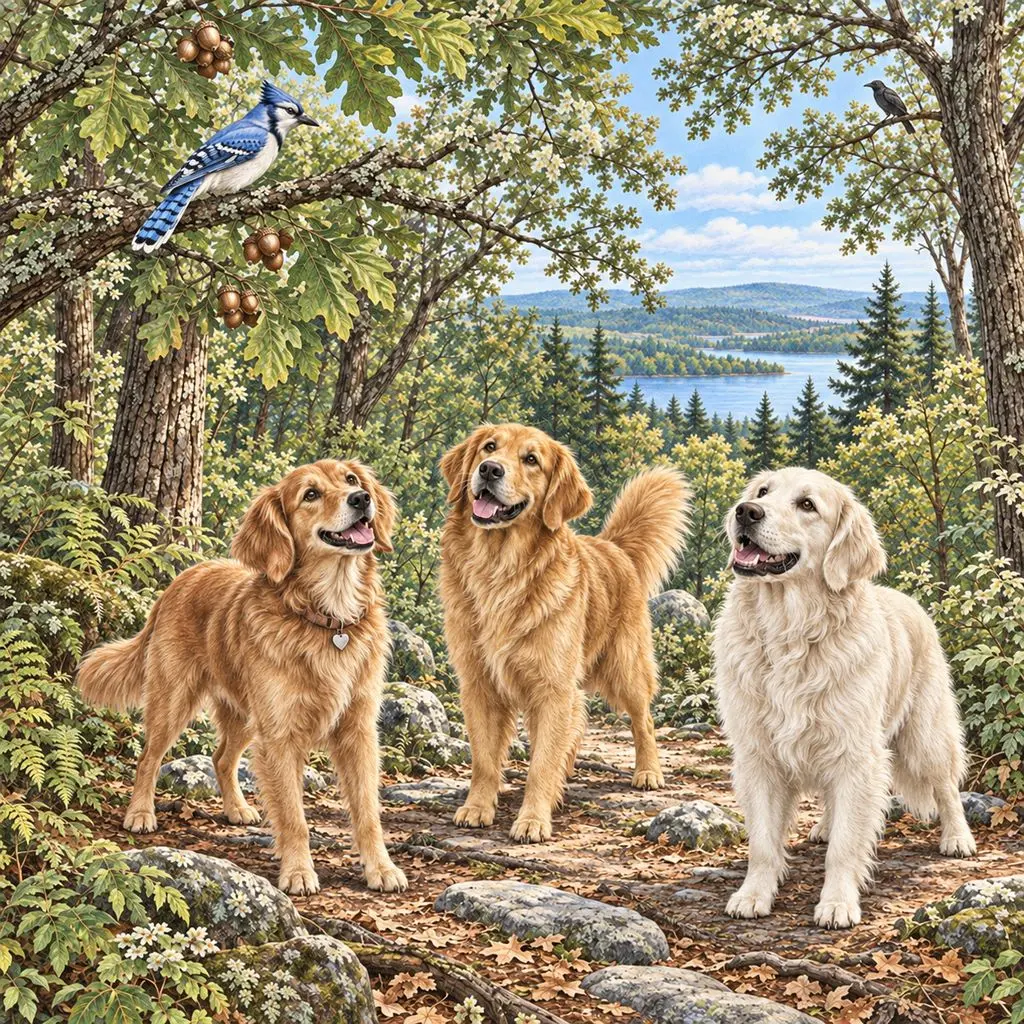
CHAPTER 13
News from the Treetops
Sunny brought sunshine to the walk even where the trees made shade.
This was Sunny the Golden Retriever. Sunny the very big yellow Lab would join us later. Our Golden Sunny greeted Tikka, greeted me, and then looked delighted that we were all still there to be greeted again.
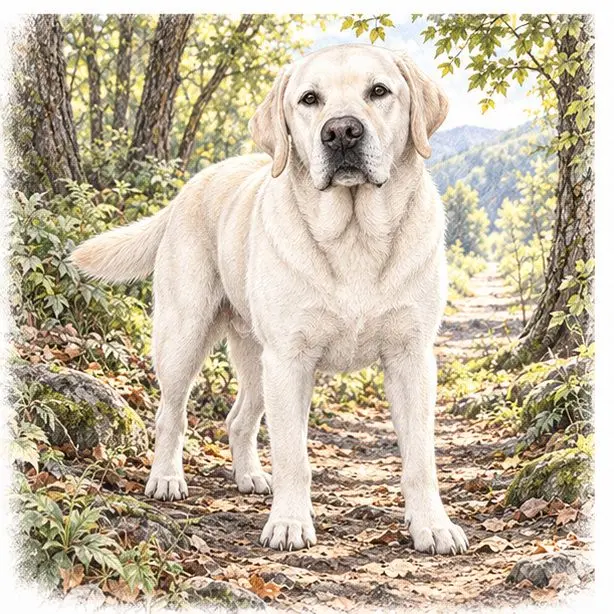
A sharp jay call interrupted him.
Tikka’s cream-colored ears lifted.
“Somebody has an announcement.”
A blue jay sat on a branch above the path. It called again, then moved deeper into the tree. From farther away came the caw of a crow.
Friends on This Walk
Remi
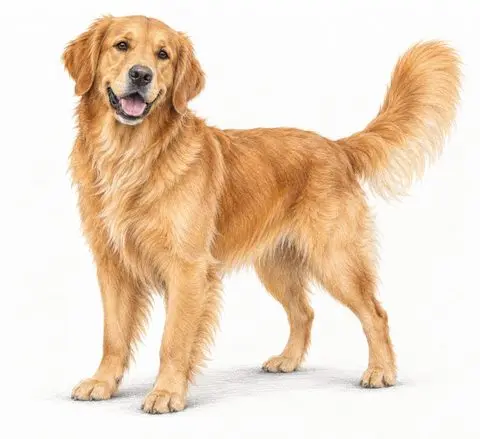
Sunny
Golden Retriever
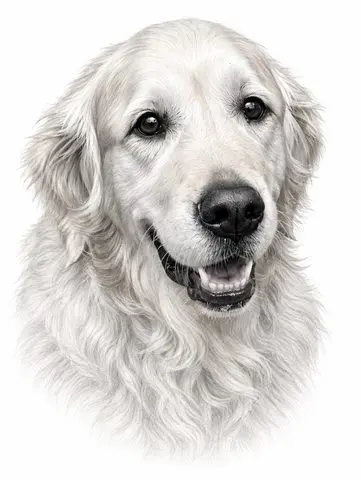
Tikka
Friends Remi Mentions
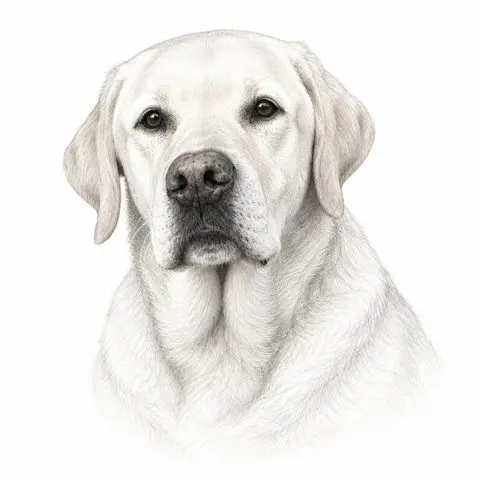
Sunny
Yellow Lab
I looked up. I could find the jay. I could not find the crow. A bird could be heard across a space much larger than its body.
“What are they saying?” Sunny asked.
“I don’t speak fluent crow,” I admitted.
Bird calls can help birds stay in contact, defend an area, or signal alarm. But hearing one call did not tell us exactly what had happened. The jay might have noticed another bird, an animal, or something we had missed.
We listened instead of answering with a bark.
That improved the conversation immediately.
Blue jays eat a varied diet, including acorns, other seeds, fruit, and insects. They may carry and hide acorns. Crows also eat many different foods. Both can use trees for nests and shelter, then feed elsewhere.
Tikka looked toward the sunny opening beyond the trees.
“The birds come and go between the rooms.”
“Without asking someone to open the door,” I said.
This was one of the great advantages of being a bird. At my house, a door could remain closed for a surprisingly long time after a dog had politely stared at it.
The jay hopped to a lower branch. Sunlight caught the pattern of its wing. We could admire the bird without knowing where its nest was. The tree offered leaves to search, branches to rest on, and cover to retreat into.
Above us, the canopy made moving patches of light. Beneath it, the shrubs held darker spaces. A gust touched the treetops first and only lightly stirred the plants near our paws.
The woods did not feel the same at every height.
Sunny closed his mouth and listened carefully. After a few moments, his tail began wagging.
“What?” Tikka asked.
“I heard another bird.”
“Which one?”
“I don’t know yet.”
He sounded pleased about the yet. There would be more walks. More listening. More chances to learn one voice at a time.
I had wanted to introduce everybody to the whole forest in one morning. The forest was turning out to be larger than my plan.
That did not make it a bad walk.
It gave us a reason to come back.
CHAPTER 14
The Sky Elevator
Rudy’s head made a very substantial shadow.
The shadow crossing the grass ahead of him was bigger.
He looked up. So did Sunny the yellow Lab. Two large Labradors and one considerably smaller Golden Retriever stood with their noses tilted toward the sky.
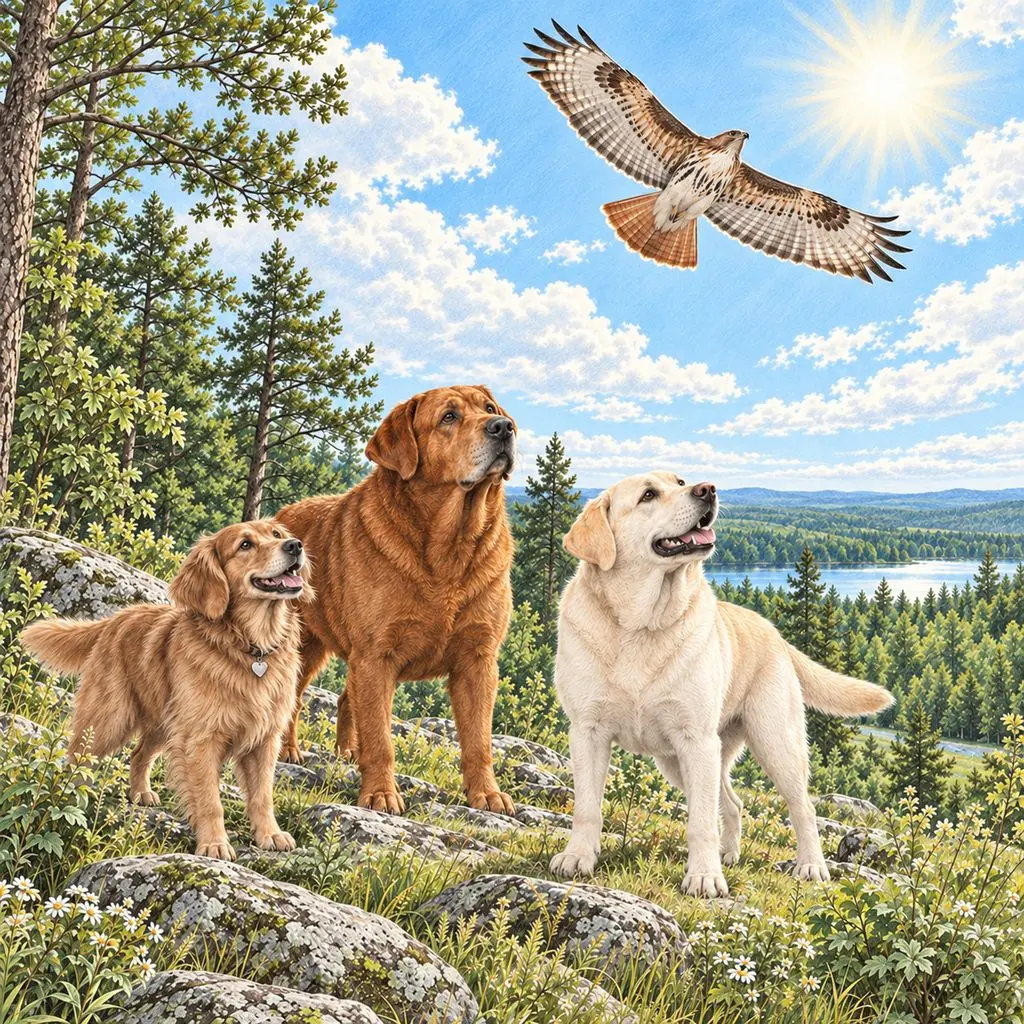
A hawk circled above the opening, wings spread wide.
It did not flap.
“It has stopped working,” I said.
Friends on This Walk
Remi
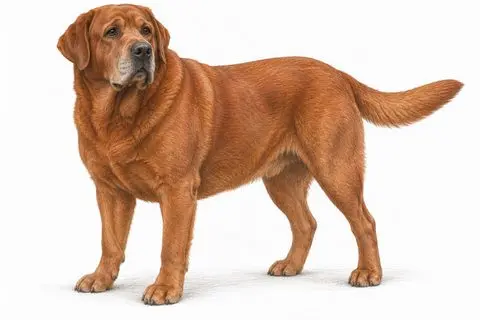
Rudy
Sunny
Yellow Lab
“It is going up,” Rudy observed.
Both things appeared to be true.
My human called it a red-tailed hawk. As it turned, we saw the broad wings and the rusty tail catching light. The tail’s color was easier to notice in the sun than in shadow.
The ground had warmed during the morning. Warm air could rise in columns called thermals. A soaring bird could turn within that rising air and gain height without beating its wings each moment.
“An elevator,” Sunny said.
“With no floor.”
Rudy considered this. “I will take the path.”
So would I.
The hawk’s circling carried it higher. We heard no wingbeats from where we stood. Then a rough, falling cry came across the opening.
“Keeee-arr!”
Its voice was quite different from the sound its wings might make. A bird could glide quietly and still make an announcement.
Red-tailed hawks often hunt small mammals such as mice, voles, and rabbits. They may watch from a perch or search while flying. Tall trees can hold their large stick nests, while open places nearby let them look for food.
The open area mattered, too. Our map needed sunny spaces as well as leafy ones.
A little later, a different hawk passed between trees with a few quick wingbeats and a glide. Our humans thought it was a Cooper’s hawk, with its long tail and woodland flight. It was gone before they were certain.
We left that identification as a possibility. Cooper’s hawks often hunt birds, and trees provide nesting sites and cover for their approach. Different hunters used different parts of the neighborhood.
Rudy lowered his big head. “The rabbit has a doorway. The hawk has a lookout.”
“Both need the place,” I said.
That thought was harder than watching a squirrel carry an acorn. A hawk’s dinner could be an animal I liked. But the hawk had to eat, too.
Sunny stayed close to his human as the shadow passed again.
The red-tailed hawk gave two strong wingbeats, then spread its wings and resumed circling.
It did flap sometimes. It simply knew when the air could help.
I watched until my neck needed a rest.
For a dog without wings, I had done a great deal of looking at the sky.
CHAPTER 15
The Eagle with the Small Voice
Humphrey had rejoined us with Duke near a place where we could see more sky.
Duke’s darker red coat was easy to find among the pale new leaves. He knew the morning woods well. Humphrey was still thinking about the hawk.
“If a bigger bird comes,” Humphrey said, “it will have a bigger voice.”
This seemed a reasonable prediction.
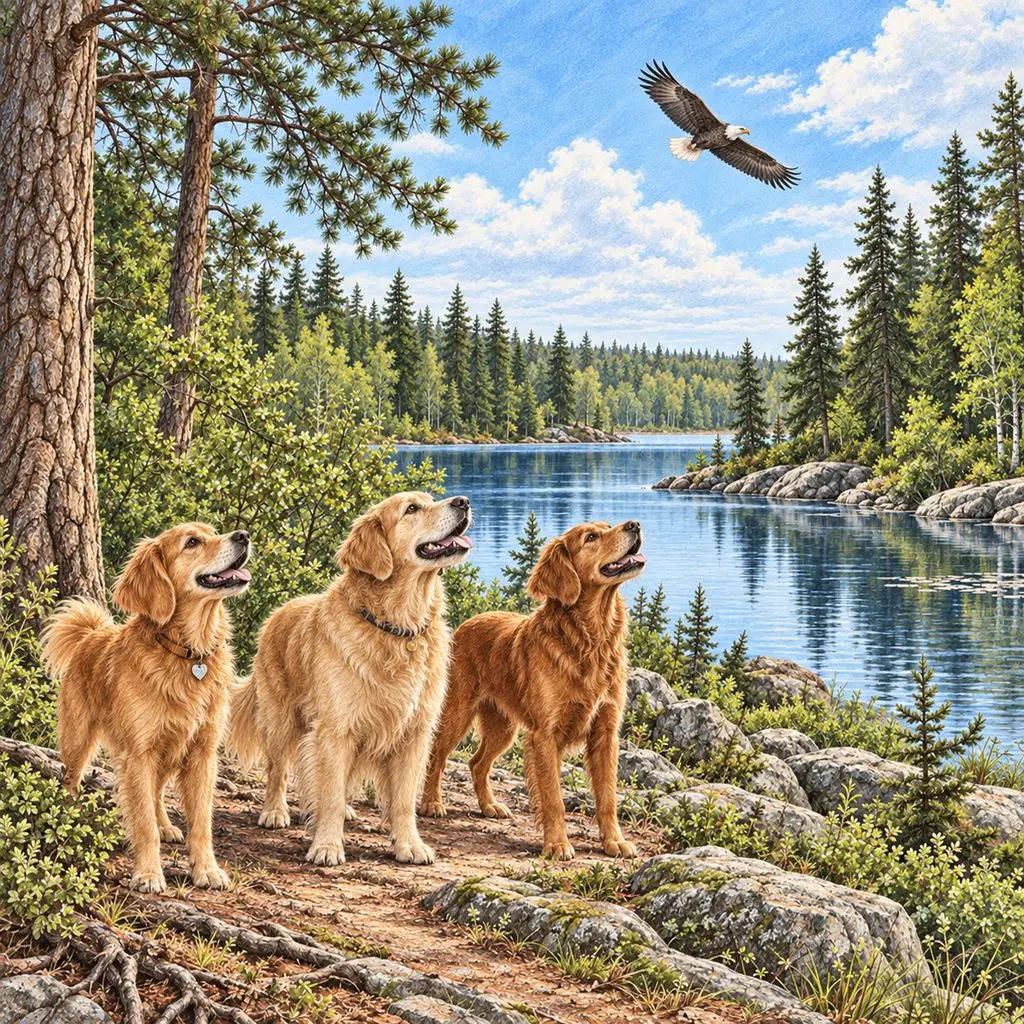
Then an eagle arrived.
It was far above the trees, gliding on broad wings. Its white head and white tail stood out against its dark body.
Friends on This Walk
Remi
Humphrey
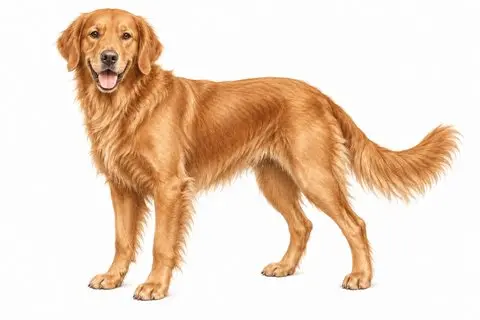
Duke
Friends Remi Mentions
Jax
“Bald eagle,” my human said.
We waited for a voice large enough to match.
What we heard was a thin series of high notes.
Humphrey looked back toward the trees.
“Was there a smaller bird?”
Duke kept watching the eagle. “I think that was the big one.”
Bald eagles often give high piping or whistling calls. The dramatic scream people sometimes expect from them is commonly the voice of a red-tailed hawk in films. A bird’s size does not tell you exactly what its voice will sound like.
I thought of Jax. This was not entirely surprising once I considered dogs.
The eagle tipped a wing and continued across the sky. Like the hawk, it could use rising air. It also flapped when it needed to. Soaring saved effort; it did not mean a bird had forgotten how to beat its wings.
“Where does that enormous bird put its nest?” Humphrey asked.
Bald eagles often build very large stick nests in strong trees near water. A small bendy twig would never do. We could see the eagle, but that did not tell us its nest was nearby. It might be traveling across a much larger area than our walk.
Fish are important food for bald eagles. They also eat other animals and carrion. A wooded shoreline can connect water for feeding with tall trees for resting or nesting.
Duke looked down the slope toward the water beyond the leaves.
“Another room connected to this one.”
My human opened the field guide to an osprey, another fish-eating bird with long wings. We compared the picture with what we had seen. An osprey’s markings and wing shape were different. Knowing that birds could be different was more useful than calling every large shape an eagle.
Humphrey watched until the white tail was too small to pick out.
“I like its real voice,” Humphrey said.
“Even though it is smaller than you expected?”
“It belongs to that bird.”
I liked that answer.
We were learning to let the woods surprise us without making it fit what we had decided beforehand.
The eagle disappeared beyond the trees. Duke turned toward the path, and I followed.
There were plenty of voices left to meet downstairs.
CHAPTER 16
Roadrunner Joins the Walk
Clyde had an announcement.
I could tell because Clyde was awake.
Our reddish-brown hound friend liked to talk, and his voice had a wonderful rolling quality. Today, however, someone beyond the bend was already speaking.
Cluck. Cluck-cluck.
Clyde listened.
“A very small hound?”
Friends on This Walk
Remi
Clyde
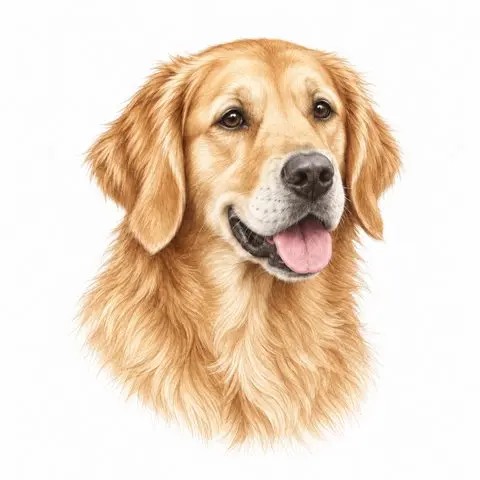
Daisy
Field Golden
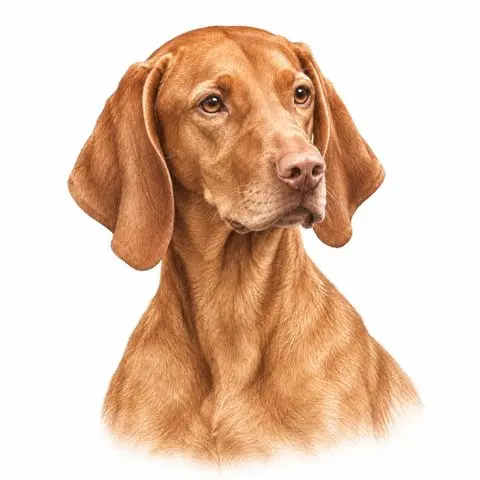
Daisy
Taller Vizsla
Friends Remi Mentions
Daisy
Small Frisbee player
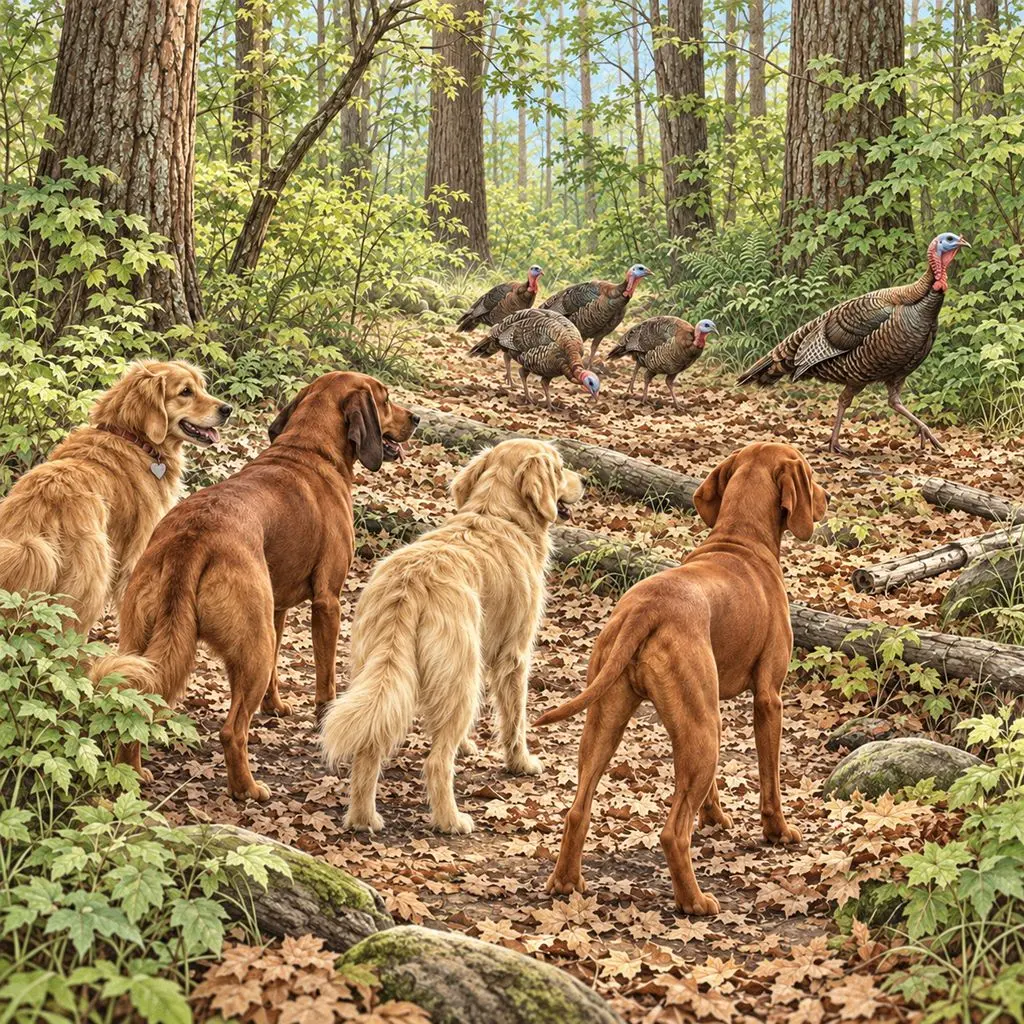
“A turkey,” my human whispered.
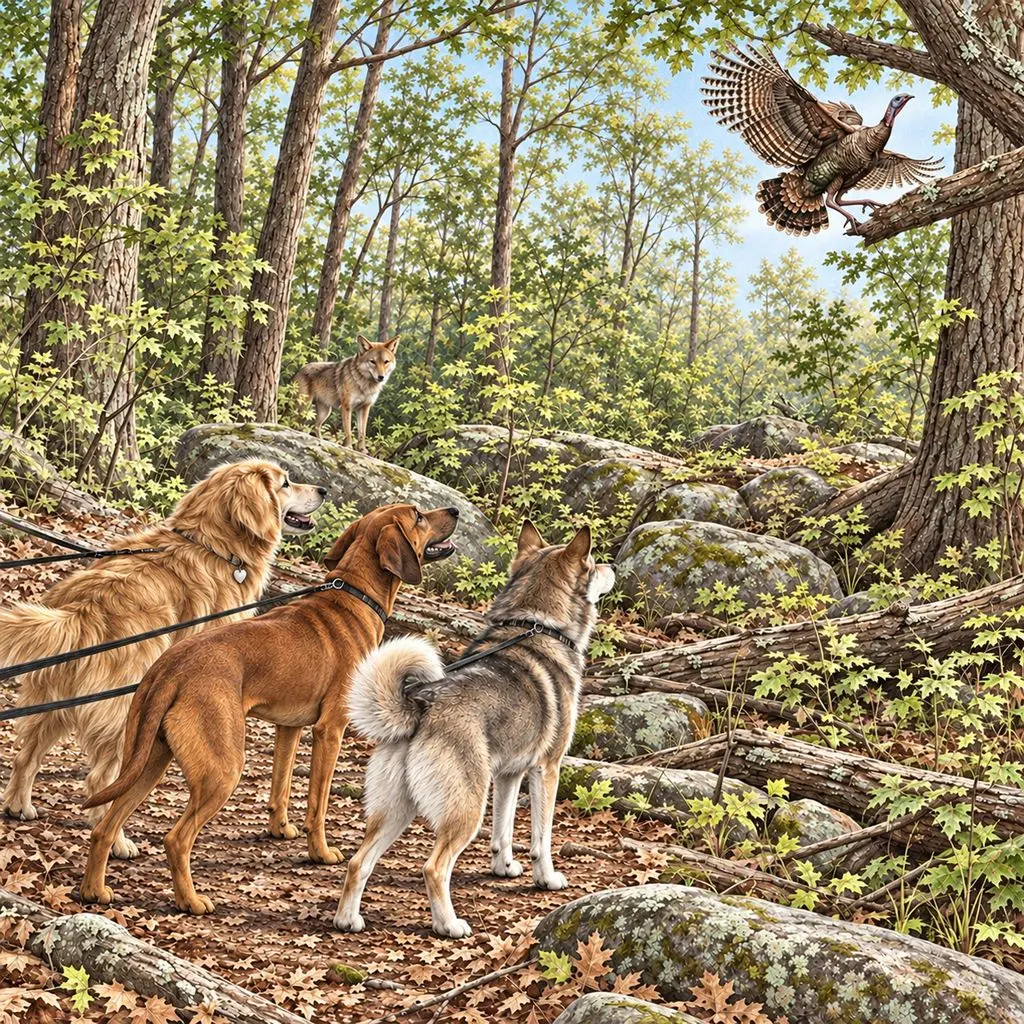
We stayed back. Ahead, several wild turkeys moved across an open patch toward the woods. Their heads bobbed as their feet hurried beneath their large bodies.
The two Daisies with us watched closely: Daisy the field Golden and the taller Vizsla Daisy. Our small Frisbee-playing Daisy had already headed home. By now, I was an experienced manager of Daisies.
One turkey traveled ahead of the others at a brisk, purposeful pace.
“That one runs everywhere,” the Golden Daisy said.
“Roadrunner,” Clyde announced softly.
The name stuck immediately.
Roadrunner was a wild turkey, of course, not the long-legged desert bird called a roadrunner. This was a nickname for a turkey whose feet appeared to have appointments.
The flock scratched and pecked among leaves and low plants. Turkeys eat varied foods, including seeds, acorns, green plant material, and insects. Young poults need plenty of small animal food, especially insects, as they grow.
Clyde watched a turkey work at the leaves.
“Looking for crumbs?”
“The forest’s own crumbs,” I said.
Low cover could hide a hen’s ground nest. Nearby openings could provide food for her growing young. At night, turkeys large enough to fly usually roost above the ground in trees. A turkey could need the downstairs by day and the upstairs after sunset.
“But they are walking,” the Vizsla Daisy said.
“So are we,” Clyde replied. “I still have other talents.”
Roadrunner raised a head, paused, and resumed the busy trot. A quieter purring sound came from the flock. The clucks were little notes in the morning, quite different from the hawk’s far-carrying cry.
The humans gave the turkeys time to cross. We did not follow them into the plants. A few stems bent, a tail disappeared, and the birds became part of the low, shifting shadows.
Clyde’s mouth opened.
Then he closed it.
“Saving an announcement?” I asked.
“Listening for the next one.”
I looked down the trail where Roadrunner had gone. A bird that big could become remarkably difficult to see once the woods folded around it.
I had no idea we would meet that turkey again.
Or that the next announcement would come from its wings.
CHAPTER 17
The Deer We Almost Missed
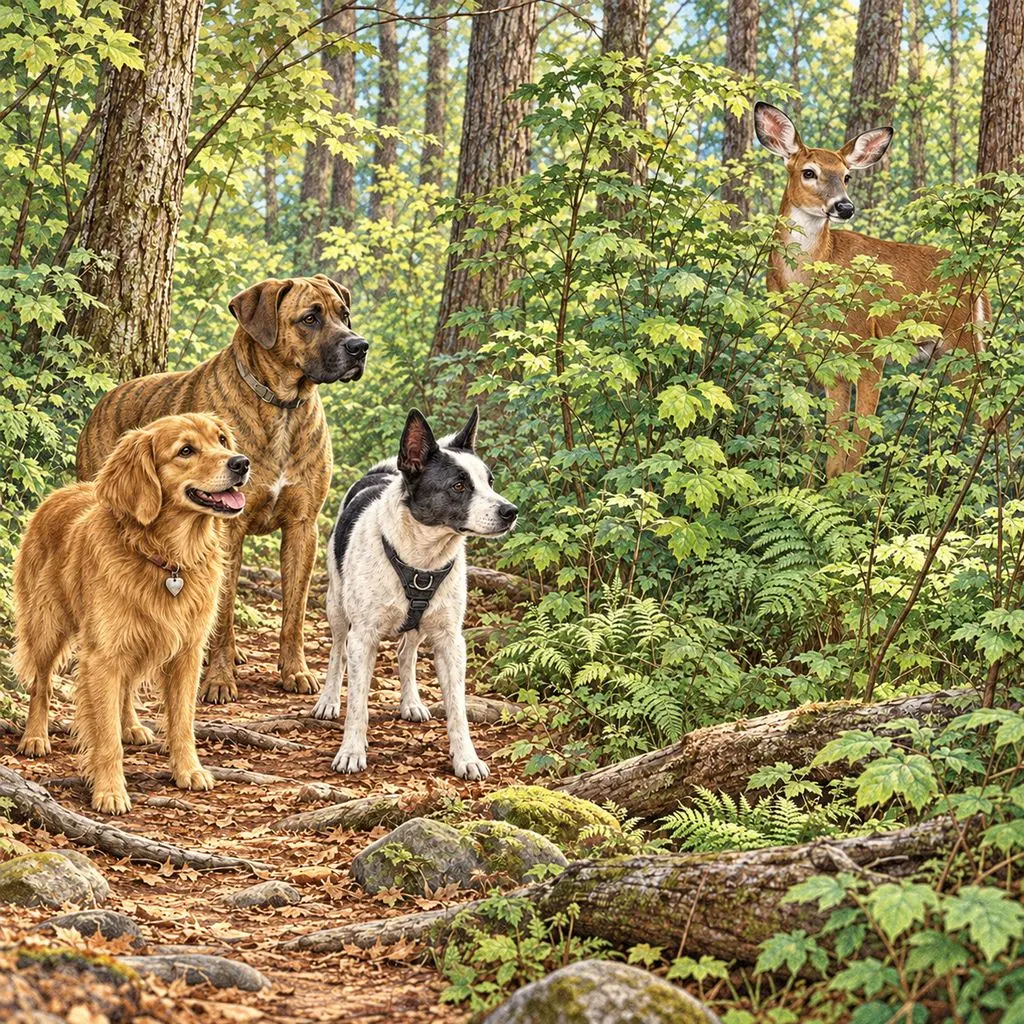
Moose saw the ears first.
Not the deer. Just the ears.
Two shapes above a screen of leaves turned toward the trail. Then I found a dark nose, a brown cheek, and an eye looking back at us.
“How long has that deer been there?” Luther whispered.
None of us knew.
Moose was a large dog. Luther was a young dog. I was a dog who considered herself extremely observant, particularly around snack bags. Yet a much larger animal had stood nearby without any of us noticing.
Friends on This Walk
Remi
Moose
Luther
The deer took one step. A branch crossed its shoulder, and its outline broke into pieces again.
“The leaves are wearing a deer,” Luther said.
My human smiled. “Or the deer is wearing the leaves.”
We stopped well back. The doe watched, then lowered her head to browse. She selected tender growth with delicate movements of her muzzle. Deer eat many kinds of plants. Leaves, buds, twigs, acorns, and fruits can all be part of their changing menu.
I had been thinking of the thicket as a hiding place. Now I could see it was a place to eat while remaining partly hidden.
“A dining room with curtains,” I whispered.
Luther glanced beneath the shrubs.
“Could there be a baby?”
“There could,” my human said. “But we will not look for one.”
He explained that a young fawn might lie quietly in cover while its mother fed elsewhere. Its spots could help it blend into patches of light and shade. A fawn by itself did not automatically need rescuing. Walking closer to check could disturb the very hiding place keeping it safe.
Moose backed one big paw away from the edge.
We never saw a fawn that day. That belonged on our list of things we did not know, which was becoming quite respectable.
The doe lifted her head again. Behind her, dense stems met a more open patch beneath a mature tree. Farther on, another band of shrubs led toward the creek.
“There is a way through,” I said.
Not our way. A deer’s way.
An animal did not need every part of its home to look the same. It could rest in one place, browse in another, and move between them along a sheltered route. Our trail was only one route through a much larger neighborhood.
Luther looked as though he would have liked to ask the deer several questions. Instead, he turned with his human when we moved on.
By the time I looked back, I could see only leaves.
“Gone?” Moose asked.
“Maybe,” I said.
That was the astonishing thing about good cover.
Sometimes you could not tell whether an animal had left or had simply become difficult to see.
CHAPTER 18
Roadrunner Takes the Upstairs
Benny joined us where the path curved away from the thicket.
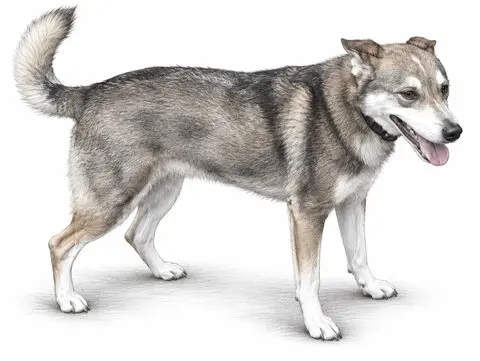
With his grizzled coat and pointed face, Benny sometimes reminded people of a coyote. Benny, however, was a dog with a human, a leash, and definite opinions about treats.
The animal across the clearing had none of those things.
Wiley stood in the shade.
I knew him by his long legs, pale cheeks, and thick, dark-tipped tail. Farther back, Maple was almost lost among the stems. They were wild coyotes, going about their own lives.
Our humans brought us close and began moving us quietly farther away. We watched from the trail, across a wide stretch of open ground.
Friends on This Walk
Remi
Benny
Clyde
Something clucked.
Roadrunner stepped from the leaves.
For one small moment, turkey and coyote seemed to notice each other at exactly the same time.
Roadrunner ran.
Wiley ran too.
“Those feet really do have appointments,” Clyde breathed.
The turkey sped across the clearing, body stretched forward, legs moving in a blur. Wiley followed for a few quick strides.
Then the whole ending changed.
WHUP-WHUP-WHUP!
Roadrunner threw open a pair of enormous wings.
The sound rolled across the clearing like a big drum being carried up a staircase. Leaves stirred. Feet lifted. A bird we had known mostly as a busy runner rose past the low branches and landed in a tree.
Wiley stopped below.
Roadrunner settled on the branch, looking remarkably like a turkey who had always intended to be there.
“Upstairs appointment,” Clyde whispered.
My tail wanted to celebrate. I kept it low and stayed beside my human. This was not our chase to join.
Wiley looked upward, then turned away. Maple slipped through the background, and the two coyotes disappeared into cover.
Benny let out a slow breath.
“I am glad the turkey got away.”
“So am I,” I said.
My human reminded us that coyotes need food too. Small mammals make up much of their diet in many places, but they also eat other foods, including some birds and fruits. A coyote trying to catch a turkey was not being a storybook villain. A turkey escaping was not being rude. Both were trying to live.
Roadrunner shuffled along the branch.
“I thought turkeys were ground birds,” Benny said.
“Ground is where they do much of their feeding,” my human replied. “It does not mean they are stuck there.”
I added three things to our growing map: low cover, feeding space, and a tree strong enough to hold a very relieved turkey.
And one thing to my ears.
Wings could make a sound all their own.
Roadrunner had clucked with a voice.
Roadrunner had thundered into the air with a body.
“A turkey,” Clyde said softly, “comes with a drum.”
CHAPTER 19
Somebody Came Before Us
After all that excitement, Henry found something completely still.
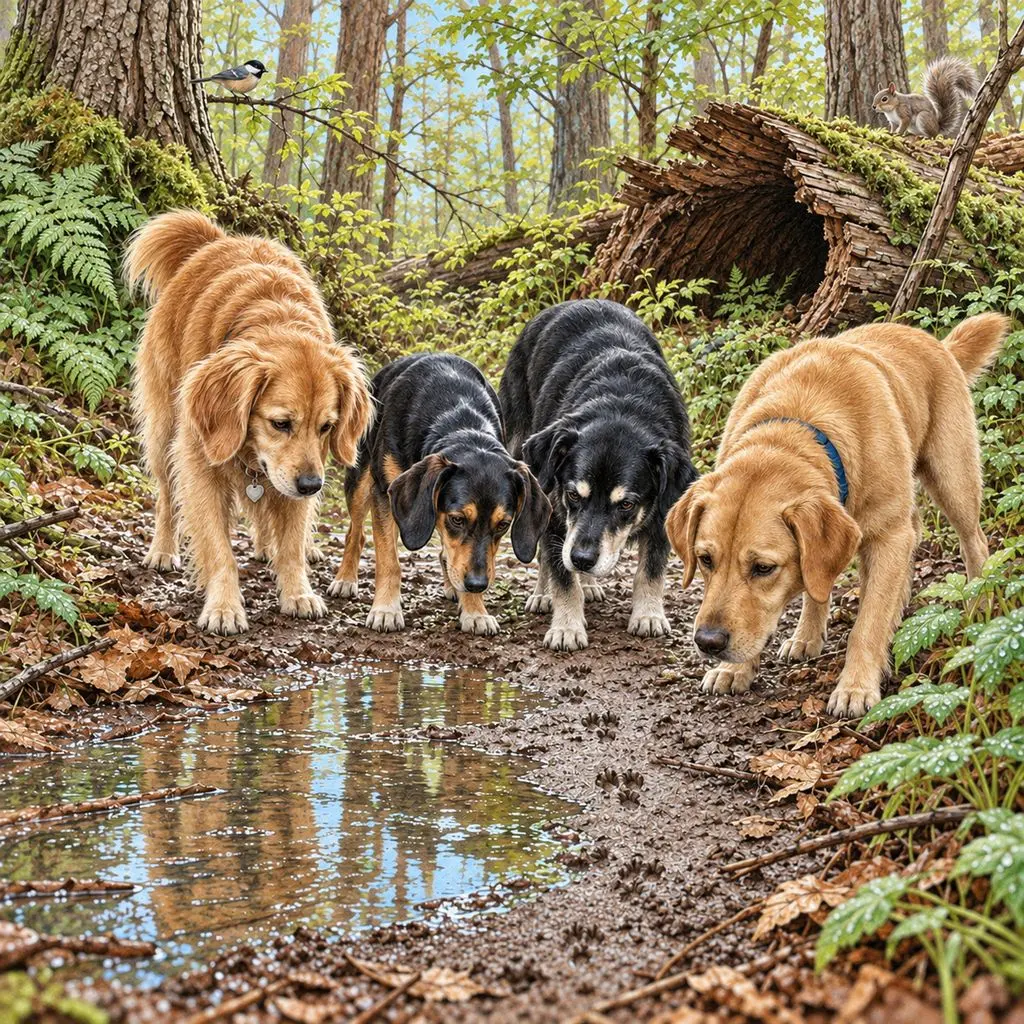
Mud.
Rue found the interesting part of the mud: a row of small marks along its edge. Djungo lowered his reddish-tan head, sniffed from the path, and looked thoughtful.
“Somebody came before us.”
That was a safe beginning.
It was also nearly all we knew.
Friends on This Walk
Remi
Rue and Henry
Djungo
The prints overlapped. A leaf covered one, water blurred another, and a much larger shoe had flattened the middle of the trail.
“Raccoon?” Henry suggested.
“Maybe,” my human said. “We would need clearer clues to be sure.”
In the field guide, a raccoon’s tracks looked rather like little hands. An opossum’s hind foot had a striking thumb-shaped toe. Skunks left their own patterns, and all of those animals could travel through woods after many daytime visitors had gone home.
We did not turn the mystery marks into a definite answer just because we liked one.
“Can our map have a question mark?” Rue asked.
“An excellent one,” I said.
The question led us to the hollow trunk beyond the mud. A hollow could shelter a resting raccoon. Other animals might use spaces beneath roots, brush piles, burrows, or openings under logs. A shelter that looked empty at noon could be busy after dark.
Djungo looked into the shadow between two fallen limbs.
“And we would never know.”
“We might know by watching from a distance,” my human said. “We do not need to reach inside.”
I thought of my own bed. I would not enjoy an enormous unfamiliar paw arriving through the doorway to find out whether I was home.
Raccoons can eat a wide variety of foods. Opossums also have varied diets, and skunks often hunt insects and other small animals. None of them needed sandwiches left beside the trail. Human food could draw wildlife too close to people and dogs.
Our lunch stayed in the humans’ bags.
So did the wrappers afterward.
Henry inspected the blurry tracks again.
“What if we never learn who made them?”
I had to think about that. At the beginning of the walk, I had wanted a map full of answers. Now I had a map full of places that mattered, even when their occupants were hidden.
“Then somebody gets to keep a secret,” I said.
A breeze moved the leaves over the hollow. The woods carried on looking quiet.
But quiet had become a much larger word.
It could mean sleeping. Waiting. Hiding. Listening.
Or simply living somewhere a dog had not thought to look.
We left the muddy question mark exactly where it was.
CHAPTER 20
Ducks with Different Addresses
Frannie reached the pond first, with Hildi beside her.
Frannie’s red collar made a bright spot above her pale coat. Hildi’s teal collar and little yellow patch helped me tell the sisters apart, even when they both looked in the same direction.
Which they were doing now.
“Duck,” Frannie said.
“Another duck,” Hildi said.
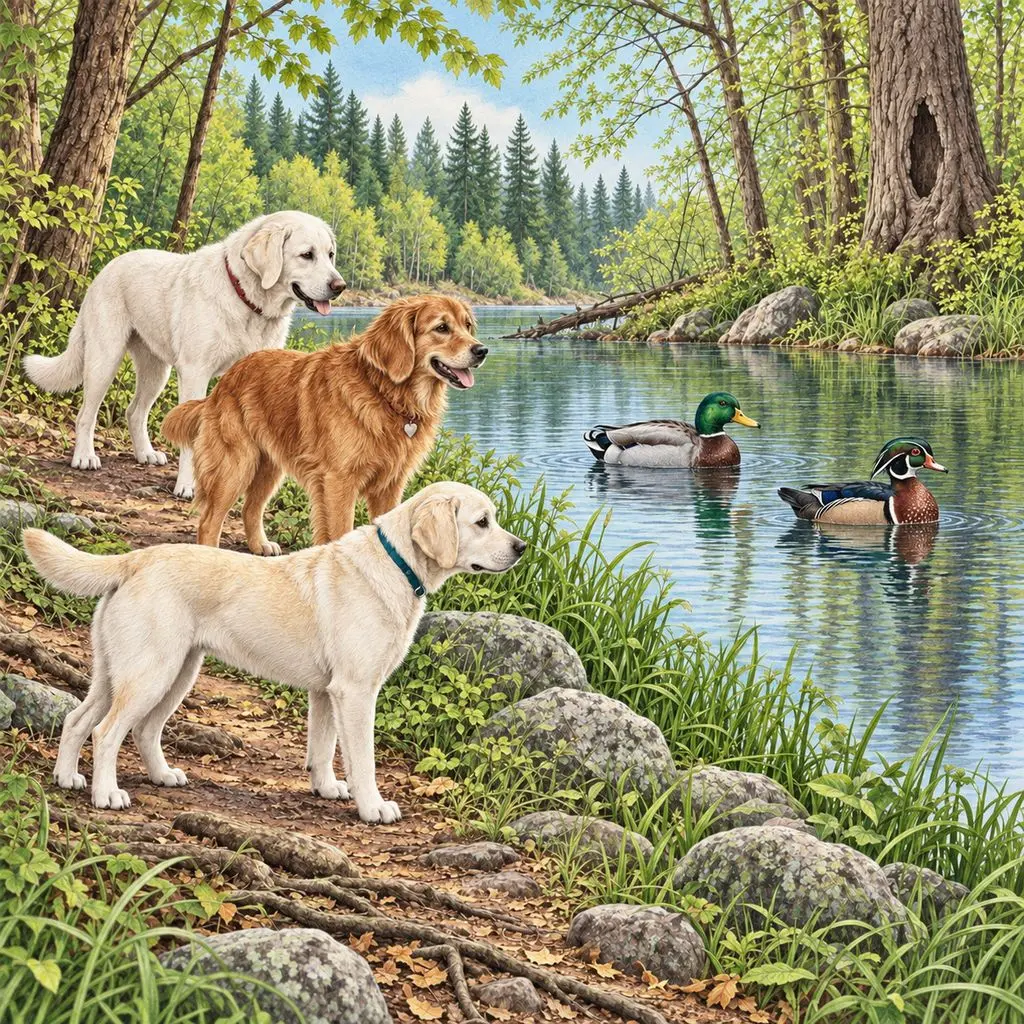
The first was a mallard. The second, nearer the wooded bank, was a wood duck with a beautifully patterned head.
Friends on This Walk
Remi
Frannie
Hildi
Both floated. Both had webbed feet. Both belonged to the enormous category that dogs sometimes call Things in Water That Are Not Balls.
Their nesting choices were very different.
A mallard hen usually makes a nest on the ground, tucked into vegetation. The nest can be near water or some distance away. When the ducklings hatch, they leave the nest and follow their mother to feeding places.
“Downstairs ducks,” Hildi said.
“For the nest,” my human agreed.
A wood duck hen usually nests inside a tree cavity, or in a suitable nest box. The hollow might be quite high. Soon after hatching, the ducklings climb to the entrance and jump down to follow their mother.
Frannie looked at the trees.
Then at the pond.
Then at the trees again.
“The babies do what?”
“They jump,” I said, feeling astonished on her behalf.
We were not watching ducklings jump that afternoon. There was no reason to search for an occupied hollow or wait beneath one. Learning that the journey happened somewhere was exciting enough.
The wood duck paddled toward a fallen branch at the water’s edge. A dragonfly passed above it, and the mallard tipped forward to feed, tail pointing up.
Duck foods vary by species and season. Seeds and other plant material are important to both of these ducks. Insects and other small water animals can be especially important to growing young.
Shallow water, living plants, and sheltered banks offered more than a place to float. They offered places to find food and slip out of sight.
“So a tree can be part of a duck’s home,” Hildi said.
“And the water can be part of a tree-nesting bird’s home,” Frannie added.
Our imaginary floors were beginning to connect in wonderful ways.
My human called us farther along the path before the ducks needed to move away. Hildi took one last look at the hollow trees beyond the shore.
“I am keeping my bed on the ground.”
“Very sensible,” I told her.
I had tried jumping off a sofa once with too much confidence. I respected any baby bird that started life with better plans.
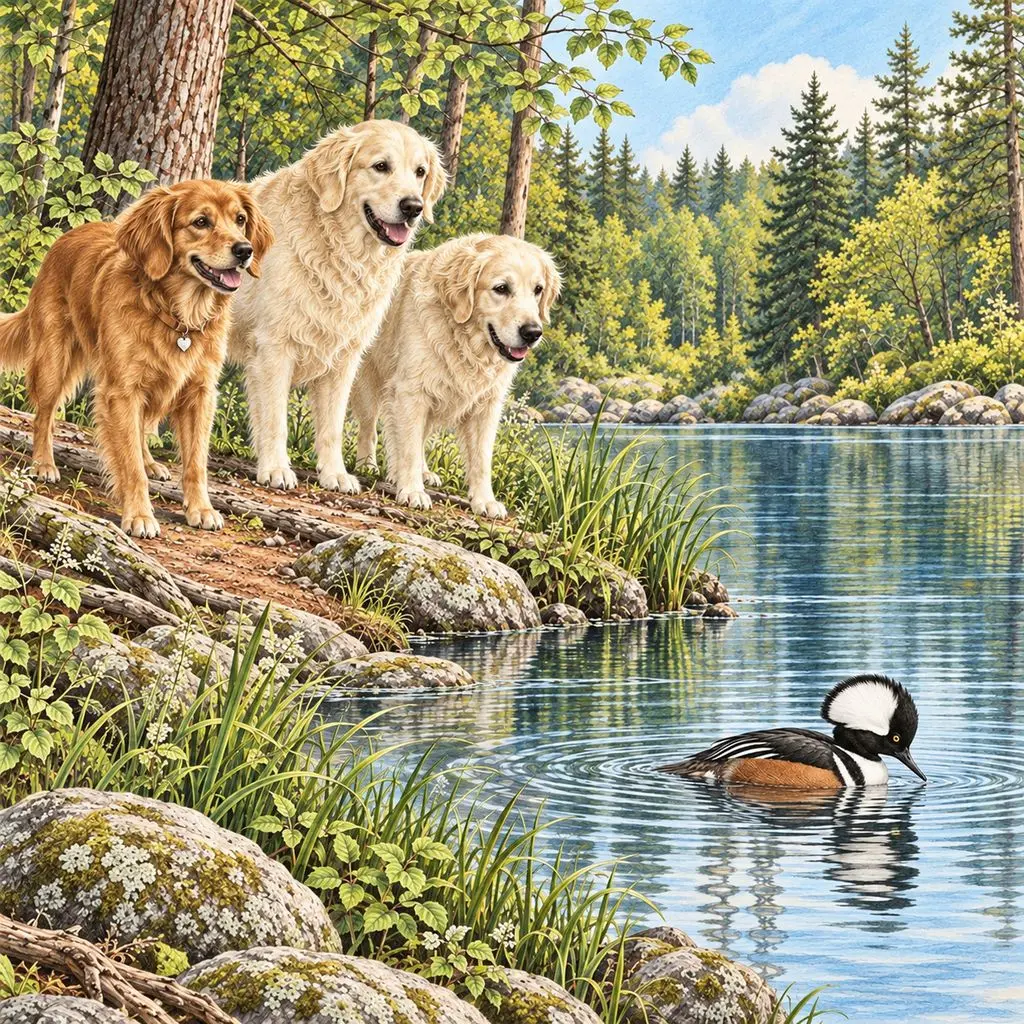
CHAPTER 21
The Duck That Disappeared
Lou was looking at a duck.
Then Lou was looking at a circle.
“I think it has gone downstairs,” Lou said.
Ripples spread across the pond. A moment later, a small duck surfaced several body lengths away.
Tikka followed the movement with sharp attention.
“It has an underwater downstairs.”
Friends on This Walk
Remi
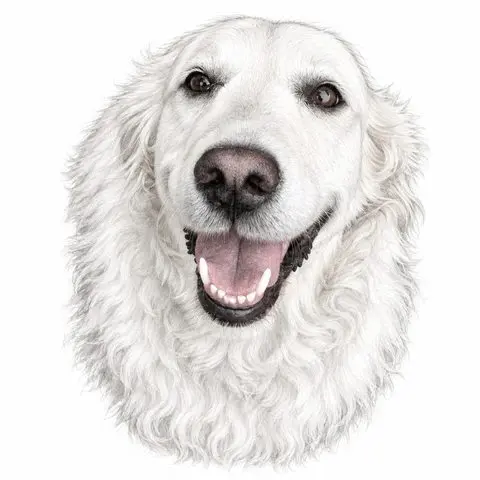
Lou
Tikka
Our humans compared the duck’s shape and markings with the field guide. The crest and narrow bill helped them identify a hooded merganser.
This duck did more than tip forward like the mallard. It dived. Small fish, water insects, crayfish, and other water animals could become its meals. Its bill was much narrower than the mallard’s broad bill, with edges suited to gripping slippery prey.
“A different tool,” I said.
I knew about tools. My nose was for finding things. My mouth was for carrying balls. My tail was for expressing views that nobody had asked me to express.
The merganser disappeared again.
Lou counted ripples without claiming to know where the duck would come up.
The field guide showed common mergansers too, larger relatives that eat mostly fish as adults. It also showed a red-breasted merganser. Seeing one kind did not mean all three lived or nested at this pond.
“We have a whole page of ducks we have not met,” Tikka said.
“That is one of the best things about a field guide,” my human replied.
We turned to a northern pintail, with a graceful long neck. My human remembered seeing pintails during migration, when birds were traveling between seasonal homes. A stop on a journey could matter even if a bird never nested there.
That made me think of the water bowls our humans had brought. We would not sleep beside those bowls. We still needed them on the way.
Hooded mergansers usually nest in cavities. Common mergansers often do too. Pintails usually nest on the ground in open country, concealed among plants. Different ducks, different nesting needs, different journeys.
Lou looked across the pond at a big old tree.
“Another reason for a tree to have an inside.”
The little merganser surfaced once more. Water gleamed on its head. It swallowed something too small and quick for us to identify, then turned toward the shaded shore.
We did not need to identify the meal to understand the connection.
The water held food.
The banks held cover.
The trees could hold nesting places.
And the open sky connected this pond with places beyond our walk.
Tikka watched the circle close behind the diving duck.
“Your map is getting very deep, Remi.”
I hoped the paper could manage it.
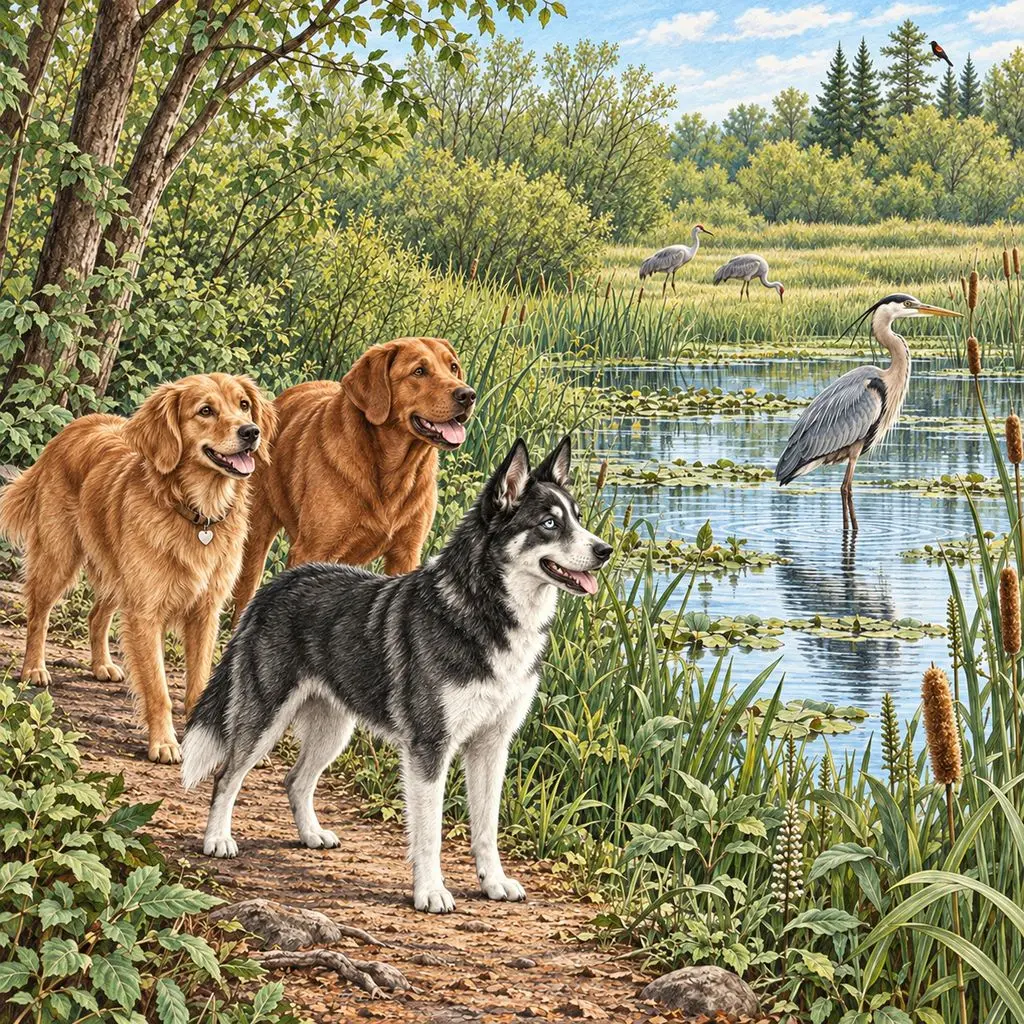
CHAPTER 22
Long Legs and a Wobbly Stem
Rusty stood beside Egret at the next opening in the trees.
Egret was our dog friend. The tall bird in the shallows was a great blue heron.
I was beginning to appreciate introductions.
The heron stood so still that a breeze moved the reeds more than it moved the bird. Its long neck folded into a patient curve. Then its head darted forward.
A flash at the bill disappeared.
“Fishing,” Rusty whispered.
Friends on This Walk
Remi
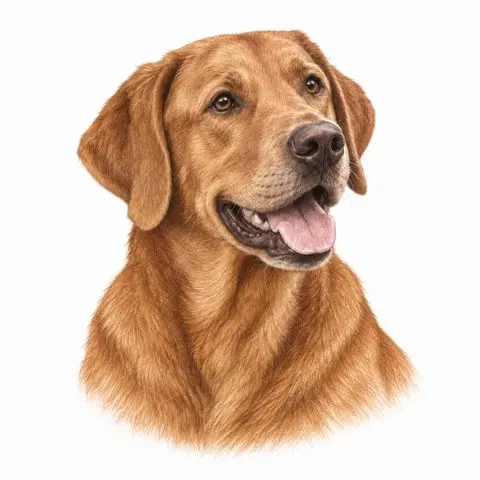
Rusty
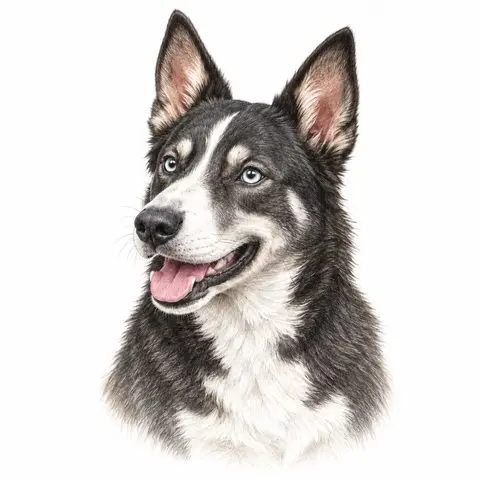
Egret
Fish were important food for herons, although they could eat other small animals too. Long legs let the bird wade. A long bill helped it catch prey. Stillness was part of the work.
I tried standing like a heron.
I had too many legs and not nearly enough patience.
Farther across the wetland, a pair of sandhill cranes moved through low plants. Our humans watched through binoculars and let us look from a comfortable distance.
Cranes also had long legs, but their feeding was different. They could probe and pick for seeds, roots, insects, and other foods on land and in shallow wetlands.
“Do all tall birds have tall nests?” Egret asked.
An excellent question from a dog with a tall bird’s name.
Great blue herons often nest in tall trees, sometimes in groups called colonies. Sandhill cranes usually build low nest mounds among wetland plants, often in shallow water. We could see feeding birds from the trail. We could not assume their nests were nearby.
Then a much smaller bird claimed our attention.
Conk-la-ree!
A red-winged blackbird balanced on a stem. When it shifted, the bright shoulder patches flashed against its dark body.
“That branch is bending,” Rusty said.
“It is a reed,” my human replied.
The bird sang from the flexible perch. Nearby, cattails and other tall wetland plants made a dense screen. A female red-winged blackbird could weave a cup among supporting stems, low over water or ground. Insects were important food in warm months; seeds became especially useful at other times.
I watched the reed bow and rise.
We had looked for homes in trunks and branches. Here, stems could do some of the holding. Water could help separate a nest from certain predators, though no nesting place was perfectly safe.
Three kinds of birds. Three sets of needs. One wetland connected to trees and open ground.
Egret stepped back with Rusty as the heron began to move.
“I could never be a heron,” I admitted.
“Because of the legs?”
“Because I would announce the fish before I caught it.”
The red-winged blackbird announced something entirely its own.
We listened, and the reeds kept swaying.
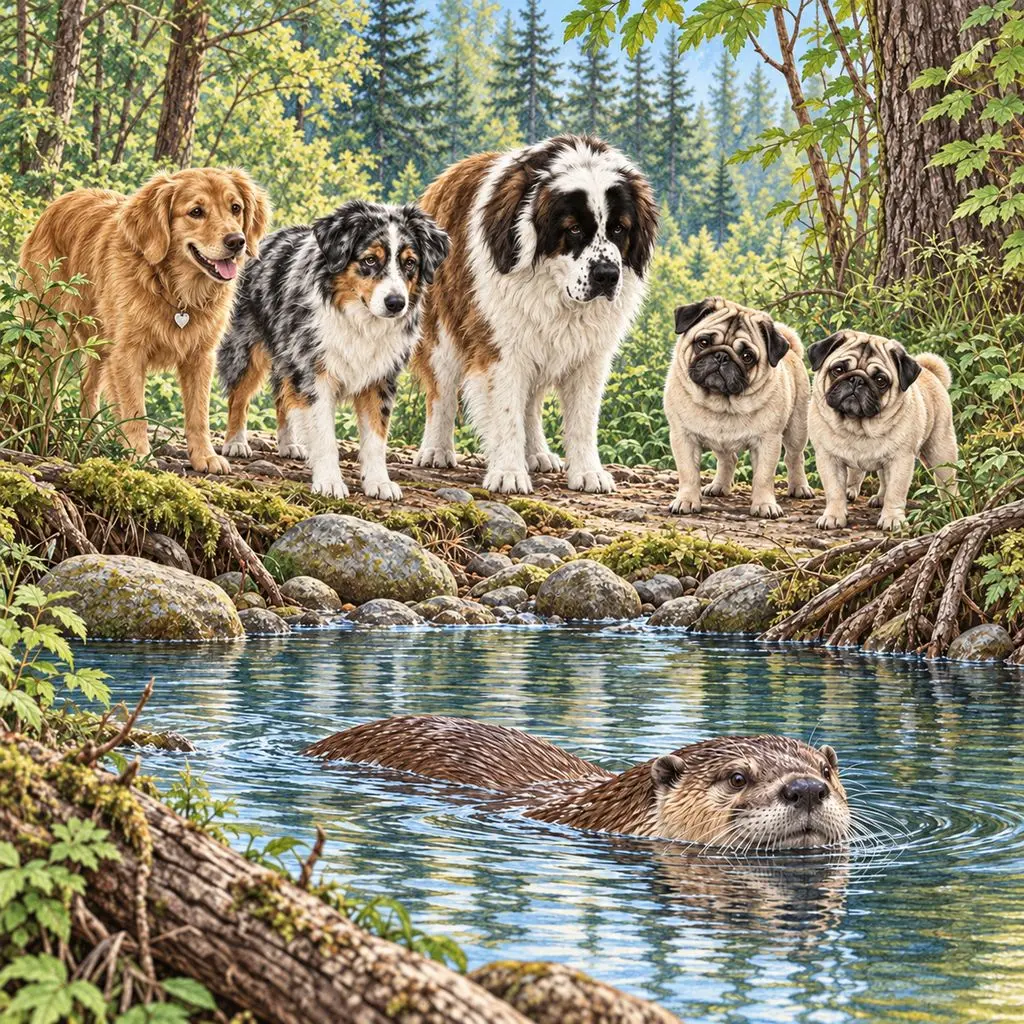
CHAPTER 23
A Ripple with Whiskers
Chase, Olaf, Buster, and Bugsy joined our next small walking group near the creek.
That was plenty of company for a dog who had been trying all day to keep announcements quiet.
Bugsy noticed the ripple.
Not a duck-shaped ripple.
A longer, lower ripple with a dark head at the front.
Our humans stopped. Something sleek rolled at the surface, and a long body slipped beneath the water.
Friends on This Walk
Remi
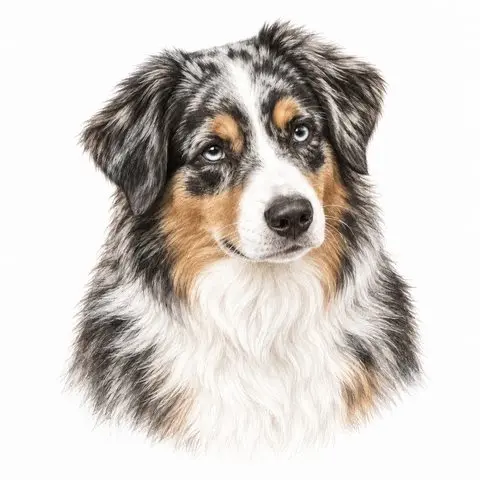
Chase
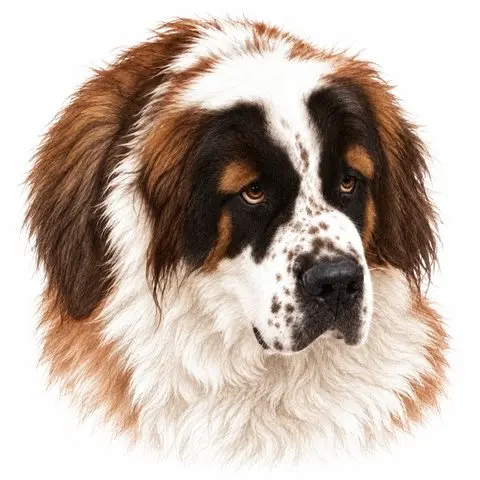
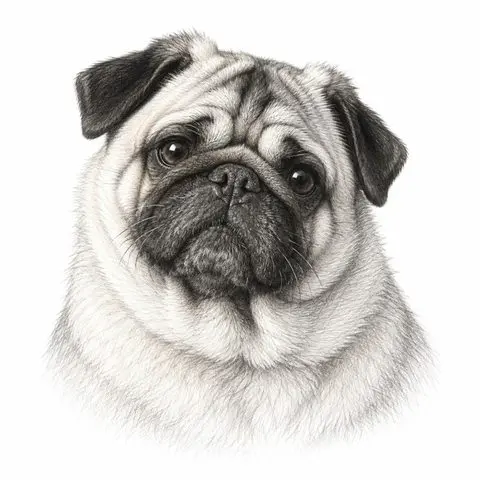
Olaf
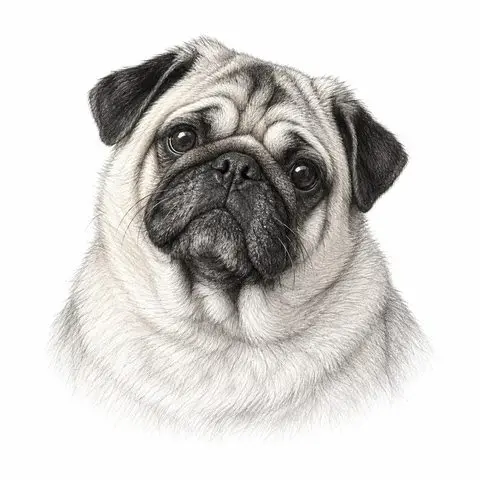
Buster
Bugsy
“Otter,” my human whispered after another clear look.
Buster’s eyes followed the widening rings.
“That animal is made of swimming.”
The otter appeared again near the bank. Whiskers caught the light, then vanished. River otters hunt fish and other animals in and around the water. Banks, roots, and sheltered resting places belong to their world too.
Chase looked at the field guide’s other swimming mammals.
A beaver had a broad, flat tail. A muskrat was smaller, with a narrow tail. A mink was a slender hunter. A glimpse of brown fur alone would not always settle the question.
“We were lucky to see more,” I said.
On a log farther along, a painted turtle warmed in the sun. The log that had once been part of a tree was now a dry resting place over water.
“Still working,” Olaf said.
I remembered our chipmunk’s log and agreed.
From the bank came a short, sudden plunk. A frog had jumped before we had properly noticed it. We could hear frogs at the pond edge, but that one brief glimpse did not tell us its species.
A dragonfly passed above the reeds. My human explained that dragonflies began life as young called nymphs living underwater. The flying adult and the water-living youngster belonged to the same life story.
“Another animal that changes floors,” Bugsy said.
We watched the surface closely. Beneath it were things we could not see: tiny moving creatures, plant stems, roots, mud, and hiding spaces. Above it were birds, insects, and shifting patches of sunlight.
I had thought of the pond as the place where ducks floated.
That had been like thinking of my house as the place where the doormat lived.
There was much more to it.
Our humans led us away before our group became too interesting to the wildlife. The turtle stayed on its log. The reeds stood where they had stood before. The otter did not come back for an encore.
“Will we see it next time?” Olaf asked.
“Maybe,” I said.
That was becoming one of my favorite answers.
It left room for an ordinary walk to turn into a discovery.
CHAPTER 24
The Wings We Could Not Hear
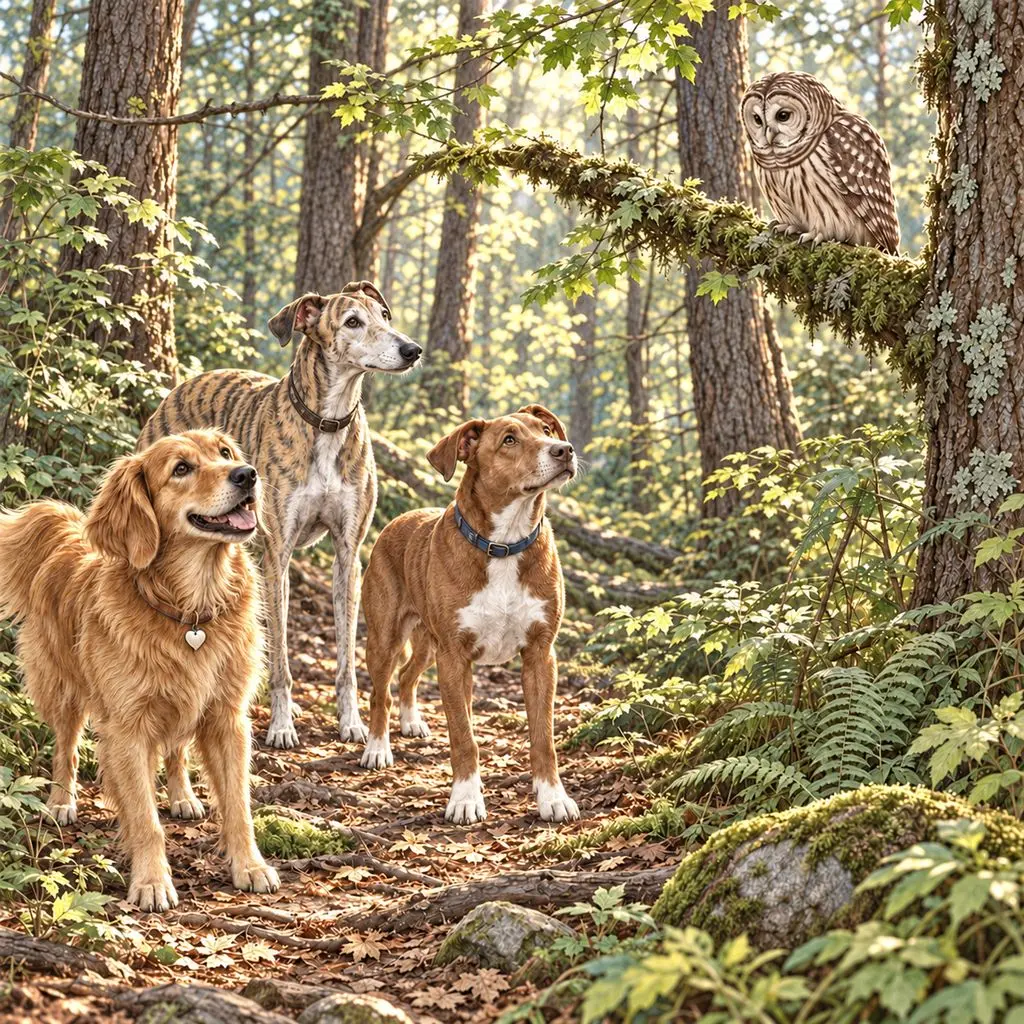
By late afternoon, the woods had changed their lighting.
Sunshine lay in narrow strips across the trail. Bomber rested beside his human, long legs folded comfortably. Morning Mocha stood near me, brown and white among the shadows.
Then something broad moved between two trunks.
I saw wings.
I saw a rounded head.
I saw a bird settle on a branch.
Friends on This Walk
Remi
Bomber
Mocha
Brown-and-white coat
I did not hear a turkey drum.
I did not even hear a proper swish.
“An owl,” my human whispered. “A barred owl.”
We were far enough away to watch without gathering beneath it. Through the binoculars, its dark eyes and rounded head became clear.
Morning Mocha looked from the bird to the space it had crossed.
“It flapped. I saw it flap.”
So had I.
That was what made it different from the hawk riding a current of warm air. The owl had used its wings, yet the flight had seemed almost soundless to us.
Special feather edges and soft surfaces help many owls reduce the noise of air passing over their wings. Quiet flight helps a hunting owl approach prey, and it can help the owl hear faint sounds below. Almost silent to us did not mean every owl made absolutely no sound in every kind of flight.
Bomber raised his narrow head.
“Roadrunner has different equipment.”
“Roadrunner has a drum kit,” I said.
We remembered the turkey’s sudden, forceful takeoff. We remembered the hawk and eagle soaring, letting rising air help hold them up. We remembered that both raptors also flapped when they needed to.
Three ways of moving through air. Three very different things for our ears to notice.
The owl turned its head. Somewhere deeper in the woods came a patterned series of hoots.
“Quiet wings,” Morning Mocha whispered. “Quite a voice.”
Barred owls often nest inside large tree cavities. Their foods include small mammals and a variety of other animals. Woods with mature trees and nearby water can offer useful hunting and nesting places.
In spring, a young owl might leave the nest before becoming a confident flyer. Branches and nearby cover could still be part of its nursery. We did not see a youngster, and we would not search for one.
My human showed us a great horned owl in the guide. Its ear tufts were feathers, not horns, and it often used a nest another large bird had built. Different owls had different voices and nesting habits too.
The barred owl watched the ground beneath its branch.
Bomber settled his chin.
Nobody made an announcement.
For a little while, listening meant giving the quiet enough room to stay.
CHAPTER 25
The Little Snake in the Leaves
Something beside the path moved without making a sound.
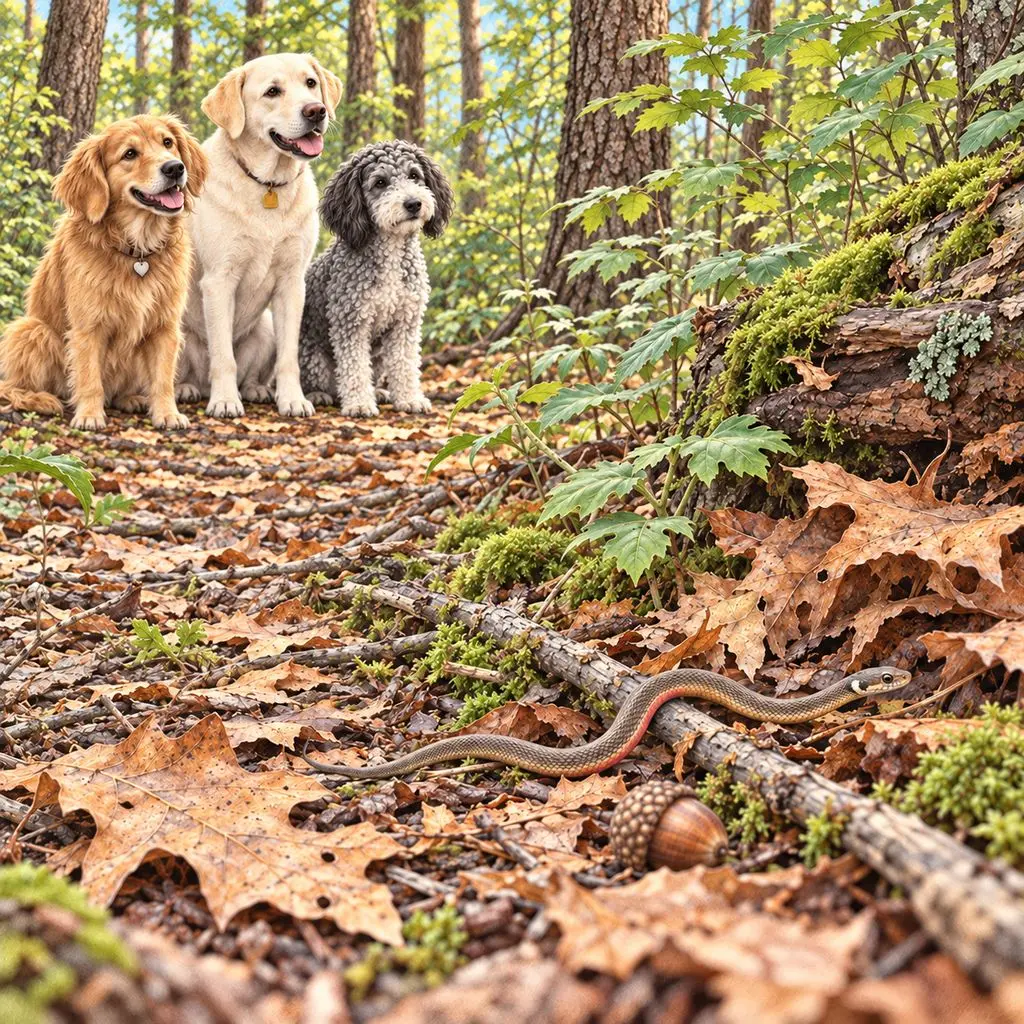
I stopped. Finch stopped behind me. Lily, our friend with the gray curly coat, stopped beside Finch.
“A leaf?” Finch asked.
The little brown shape slid over a twig.
“An unusually determined leaf,” I said.
Our humans shortened the leashes and kept us on the path. We watched from several steps away while the small traveler made its way through the old leaves.
Friends on This Walk
Remi
Finch
Lily
Gray curly coat
“A northern red-bellied snake,” my human said. “I have seen these little snakes here at Purgatory Park before.”
I had imagined that finding a snake would require finding something long enough to be impressive. This one seemed scarcely bigger than a large earthworm.
That was about right. Adults are usually only eight to ten inches long. Red-bellied snakes are Minnesota’s smallest snakes, and they are nonvenomous.
“That is a great deal of snake in a very small package,” Lily said.
From above, this one looked brown, the color of the leaves around it. Other red-bellied snakes can look reddish brown or gray. Some have faint stripes along their backs.
My human pointed without reaching. Three small pale spots just behind the head were another clue to a northern red-bellied snake.
“Where is the red part?” Finch asked.
“Underneath,” I said, making an excellent guess from the name.
As the snake eased over a little twig, we caught a glimpse of pink along its lower side. The belly can be pink, orange, or red. We did not need to turn it over to find out which shade it wore.
Lily sat down. “It can keep the rest of its pajamas private.”
The snake’s head disappeared beneath the curled edge of an oak leaf. The rest of the snake followed in a smooth, quiet bend.
Now I could see why a pile of leaves might be a good place to live.
Damp woodland leaves and rotting logs offer this little snake shelter. Earthworms and slugs can be food. A place that looked untidy to a human could hold both a hiding place and dinner.
“A restaurant with a roof,” Finch said.
“Several roofs,” I replied. “Some of them shaped like oak leaves.”
We had spent the walk looking up at branches and listening into shrubs. This neighbor traveled through a world so low that even my nose was above most of it.
There was family life down there too. Red-bellied snakes give birth to live young in late summer. The babies are even smaller than the snake we had just seen.
I looked at the opening beneath the leaf. It was no wider than a small crack, but someone had gone home through it.
Finch leaned forward a little, then settled back beside his human.
“Should we look again?”
“We already saw it,” Lily said. “It has not invited us inside.”
We left the leaves where they were. Nobody lifted the log. Nobody tried to pick up the snake.
The path continued past us, wide enough for all three dogs. The snake’s path was hidden under our very noses.
I stepped carefully as we went on. The woods had just become a little more crowded, and a great deal more interesting.
CHAPTER 26
The Bee with the Rusty Patch
At a sunny opening in the woods, a flower began to buzz.
Finch tipped his head. Lily’s gray curls stirred in the breeze. I sat beside my human, keeping my nose well away from the blossoms.
“I think the flower has a visitor,” Lily said.
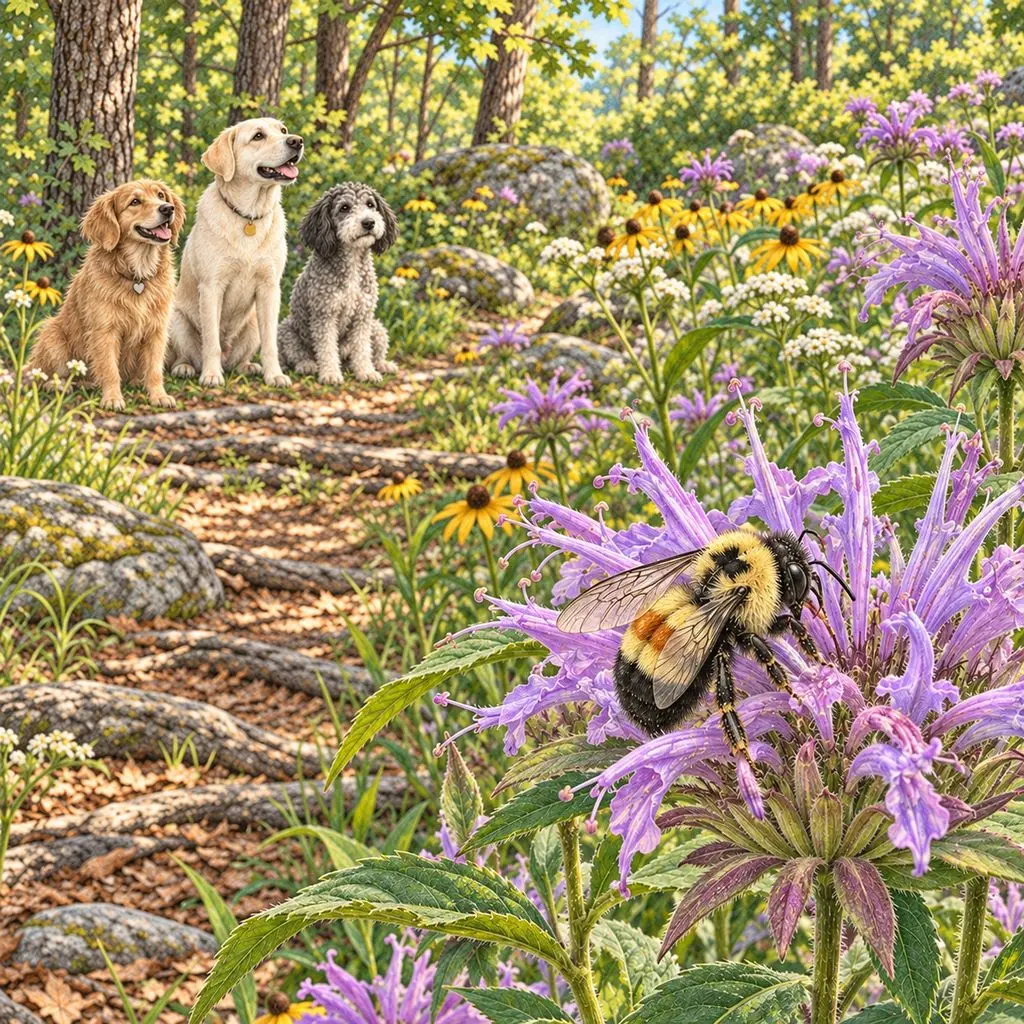
A fuzzy black-and-yellow bumblebee climbed between the small purple blooms. It looked thoroughly occupied.
“We can wait,” I said.
That was easy to say. Watching someone else have a snack usually reminded me that I would also enjoy one.
Friends on This Walk
Remi
Finch
Lily
Gray curly coat
My human used the camera’s zoom. He could take a picture from the path without bringing us closer to the bee.
On the screen, we could see a little rusty-orange patch on its back. Yellow hairs surrounded the patch, including along the edge nearest the black rear of its body.
There was also a dark mark between its wings, shaped a little like a thumbtack, on an otherwise yellow, furry middle.
“This could be a rusty patched bumblebee,” my human said. “People have reported them here at Purgatory Park. We will have the photograph checked.”
Other bumblebees can look similar. A rusty patch is a clue, but a careful identification takes more than one quick glance.
Later, a person who knew bees confirmed the picture. We had watched a rusty patched bumblebee worker visiting the flowers.
“Does every one have a rusty patch?” Finch asked.
The workers and males do. The queens do not. That made naming bees rather more complicated than I had expected.
“And nobody is actually rusty,” Lily said.
“A useful distinction,” I agreed. “Especially after rain.”
My human told us why this small visitor was special. Rusty patched bumblebees have disappeared from many places where they once lived. They are rare now, and they have been protected as endangered under the federal Endangered Species Act since 2017.
“Endangered means they are in danger of disappearing,” he explained.
Finch looked back at the flower. “Then a place with one still in it matters.”
The bee kept working. It drank sweet nectar and collected pollen. As bees visit flowers, they can carry pollen from flower to flower, helping plants make seeds and fruits. That work is called pollination.
I thought of berries, and then of birds eating berries. A bee’s small visit could be connected to somebody else’s future lunch.
Rusty patched bumblebees live in colonies. A queen starts a new colony in spring. A nest is often underground, sometimes in an old rodent burrow. Workers gather food for their colony as the season continues.
“Another home under the ground,” Lily said.
We did not know where this bee’s nest was. Seeing a bee on a flower did not show us its front door, and we did not follow it to search for one.
These bees need flowers that provide food through the growing season, from spring into fall. They also need places where their nests and winter shelters can remain undisturbed.
“One flower cannot be breakfast forever,” Finch said.
My human nodded. Leaving blossoms for bees and giving wildlife space were things we could understand right away. A protected bee was a neighbor to photograph carefully, never one to catch or keep.
The little worker lifted off and settled on another flower. We stayed where we were.
For a moment, the sunny opening sounded quiet. Then the buzzing began again.
I was glad we had stopped long enough to hear it.
CHAPTER 27
The Kindness of a Little Space
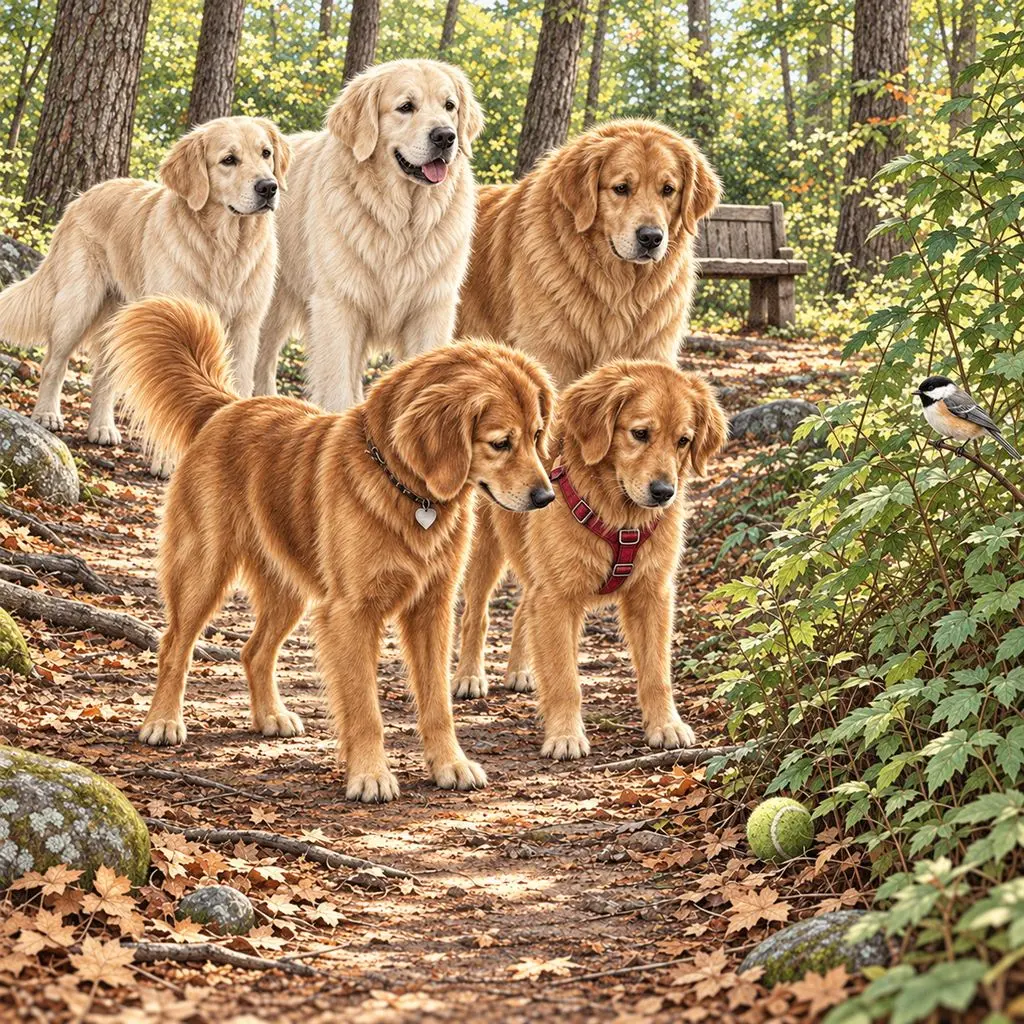
At the resting place, there were more Golden Retrievers than a person could reasonably count without being licked.
Luke stood beside Hank, both cream-colored and handsome. Hank’s nearly white coat looked especially bright in the afternoon light. Teddy greeted us gently, in his calmer, unhurried way.
Young Ruby had come for the last short part of the walk. She was a different Ruby from our older field Golden friend, and I made the introductions carefully.
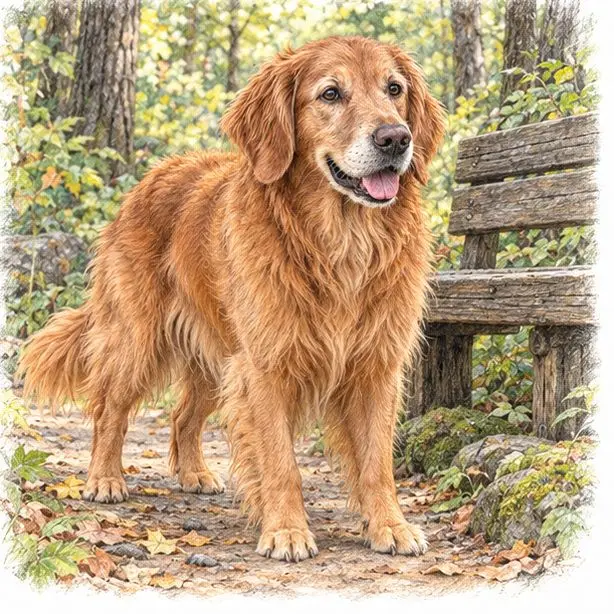
Sophie lowered herself into her familiar creeping greeting. A little later, she found a willing human on the bench and offered one of her excellent hugs.
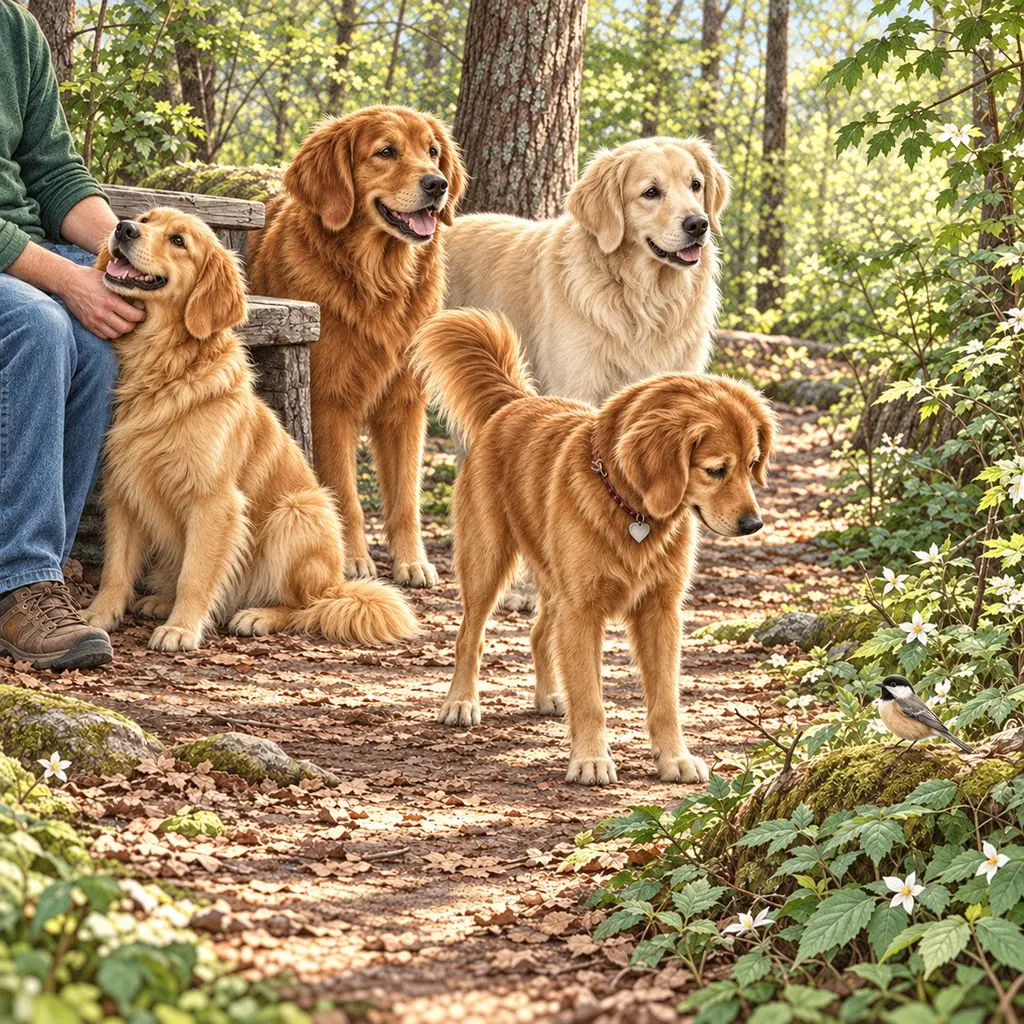
“Our species does enjoy a bench,” I observed.
Truman stayed attentive beside his person. He looked rather like a slightly larger, older version of me, but his excellent service-dog training was all his own. Rosie, our cream Golden friend who brought comfort to children in hospitals, settled nearby.
Friends on This Walk
Remi
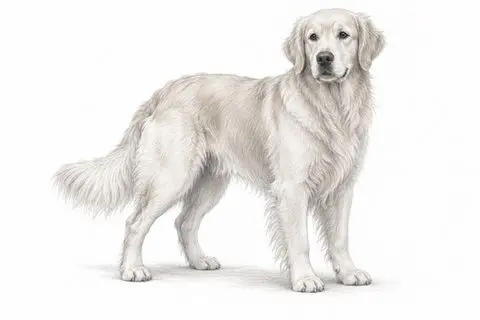
Luke
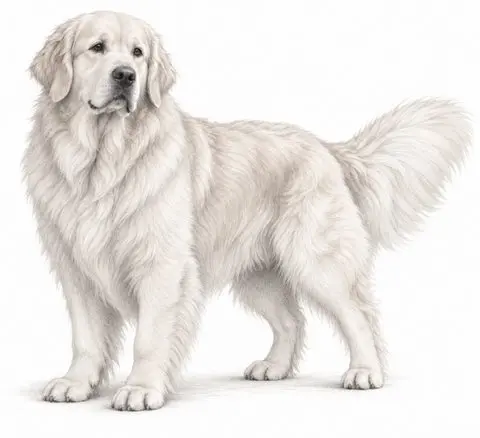
Hank
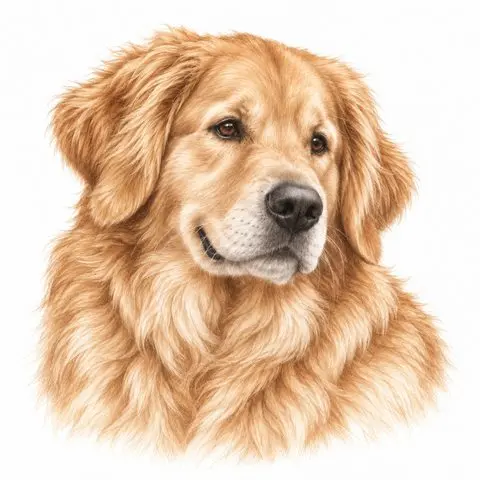
Teddy
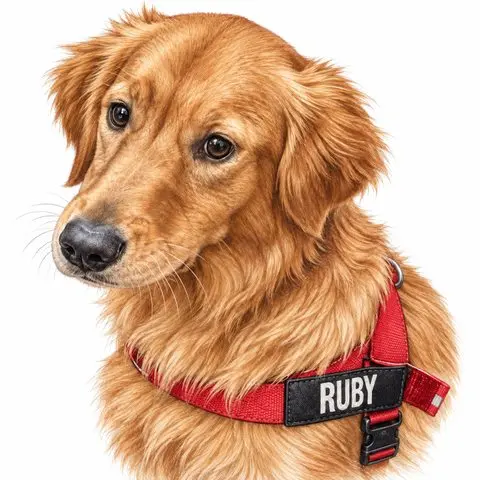
Ruby
Young Golden
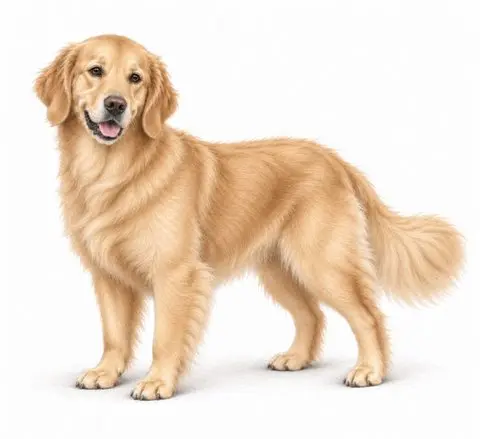
Sophie
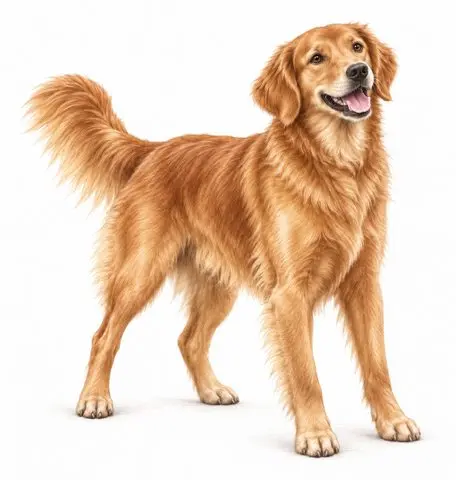
Truman
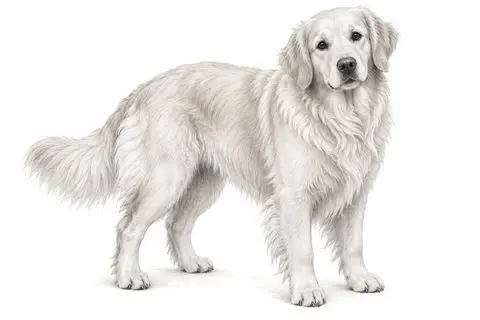
Rosie
Friends Remi Mentions
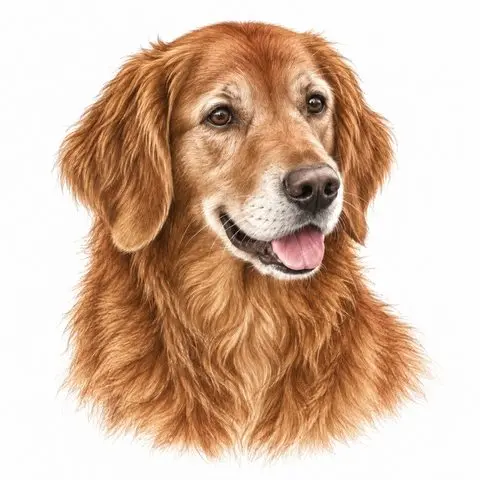
Ruby
Field Golden
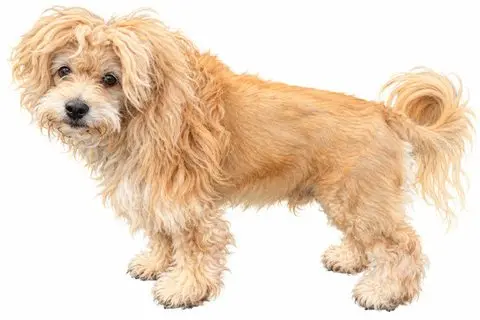
Cody
The Lion
We took turns at the water bowls. The humans put their bags on the bench, and my human reached into his for a clean towel.
My ball rolled out.
I had brought it at the beginning of the day and behaved with considerable dignity about its long disappearance.
Now it bounced once on the path.
Twice.
And stopped at the very edge of a low tangle of plants.
My front feet moved before the rest of my thoughts arrived.
Then I heard a small, sharp bird call from the tangle.
I stopped.
The ball was close enough to see. The space beyond it was not mine to rush through.
Young Ruby stopped too.
“We could get it quickly,” she whispered.
We probably could have. That was what made stopping difficult.
Truman watched his person. Rosie waited with the calm attention I imagined she brought to a child who needed company more than excitement.
My human walked to the edge, staying on the bare path. The ball lay within reach. He picked it up without parting the branches and returned it to the bag.
No adventure. No rescue. No paws in anybody’s hidden room.
I felt oddly proud.
“You let the ball wait,” Luke said.
“Briefly,” I replied. “Let us be accurate.”
The little call came again, then stopped. We had no proof there was a nest. We did not need proof to give the bird some space.
Hank stretched out near Teddy. Sophie rested after her hug, and young Ruby watched a leaf turn in the breeze.
I thought of Cody, our friendly little Lion, with the warm mane around his face. Cody had a way of making a greeting feel as though there was room for everybody. I wanted our visit to the woods to feel that way too.
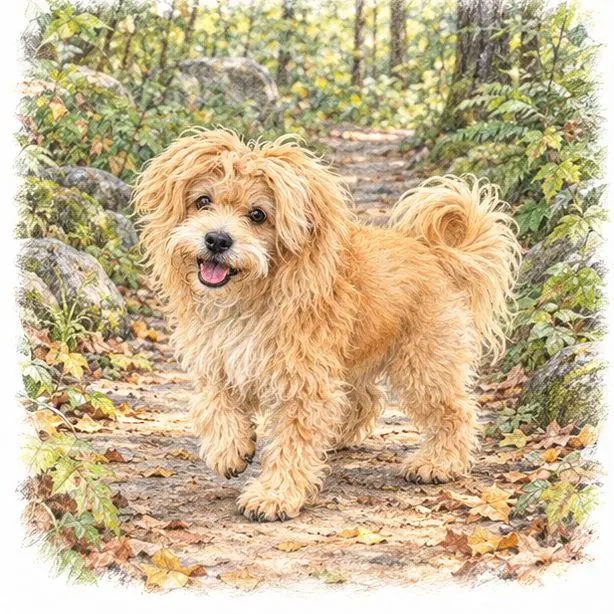
Room for us on the path.
Room for the birds in the stems.
Room for a rabbit to stay unseen.
Rosie looked toward the quiet tangle.
“Sometimes kindness is something you do,” she said.
I leaned against my human’s leg.
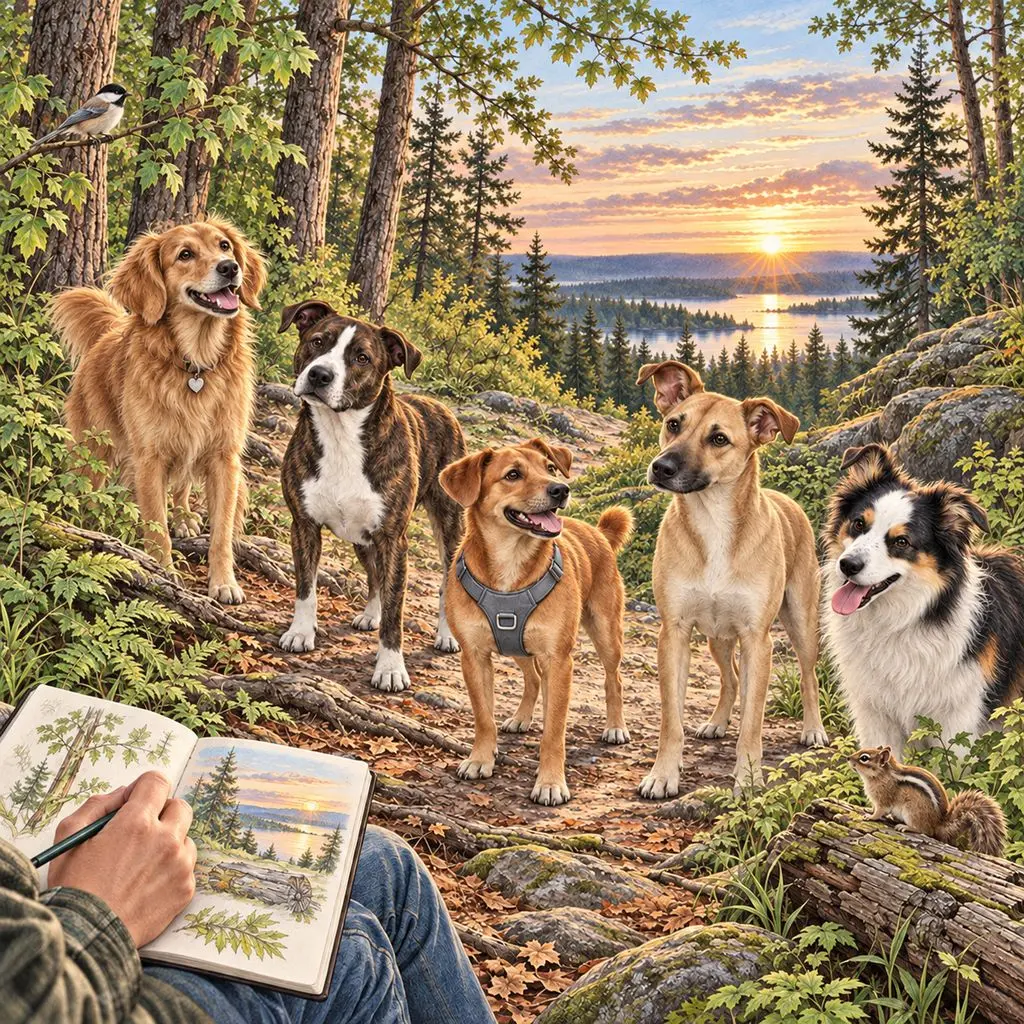
“And sometimes it is the little space you leave.”
CHAPTER 28
A Map with Room for Secrets
By the time we returned to the gathering place, our different walking groups had stories to exchange.
Chewie came close, warm and familiar. Gordie and Emma Lou waited with their human. Charlie arrived with Sasha at a pace that suited Sasha’s older legs, and I was glad nobody made that pace feel late.
Rolo rested beside Ruthie. Broad-shouldered Lily and Harlem found comfortable places nearby. Mojo noticed the treat bag, which was precisely the sort of observation for which Mojo was qualified.
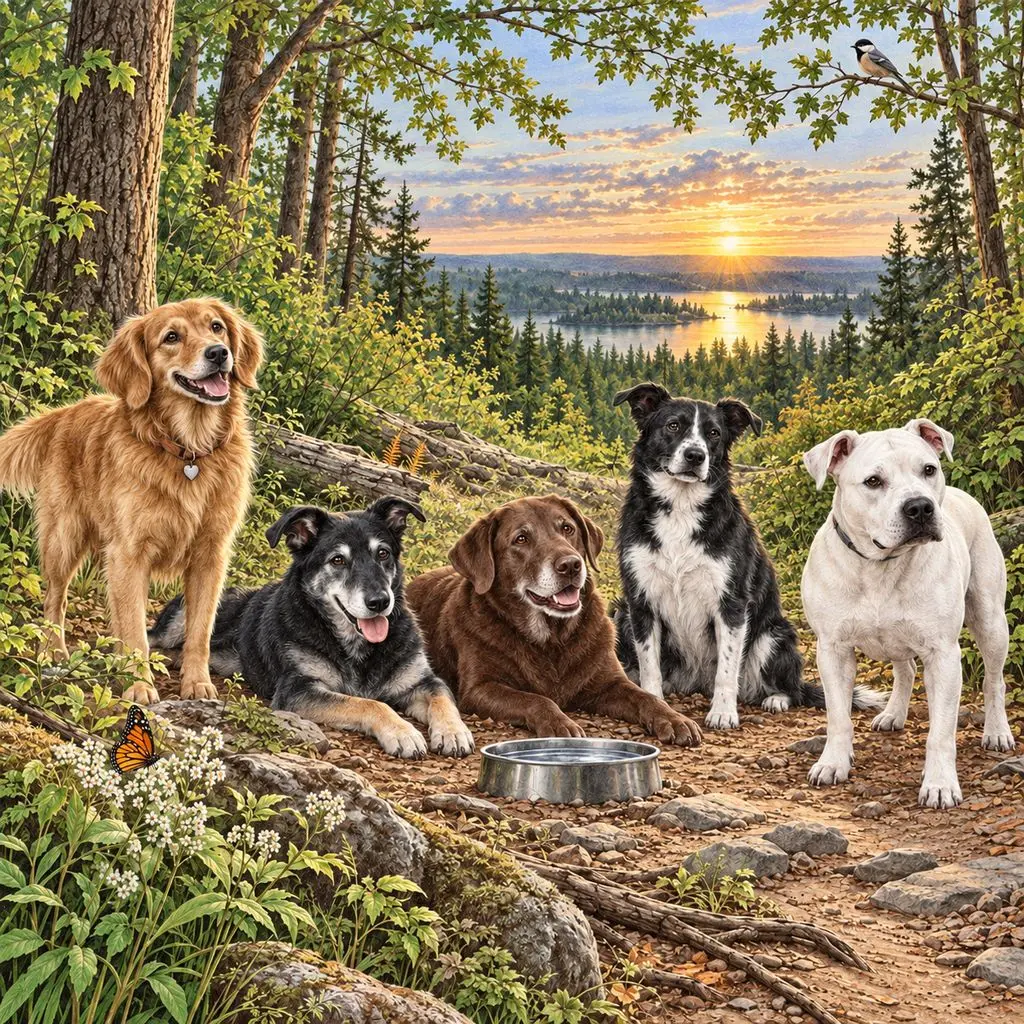
Sparky checked that the little group coming from the trail had caught up. Georgia paused beside Mila while the humans poured water.
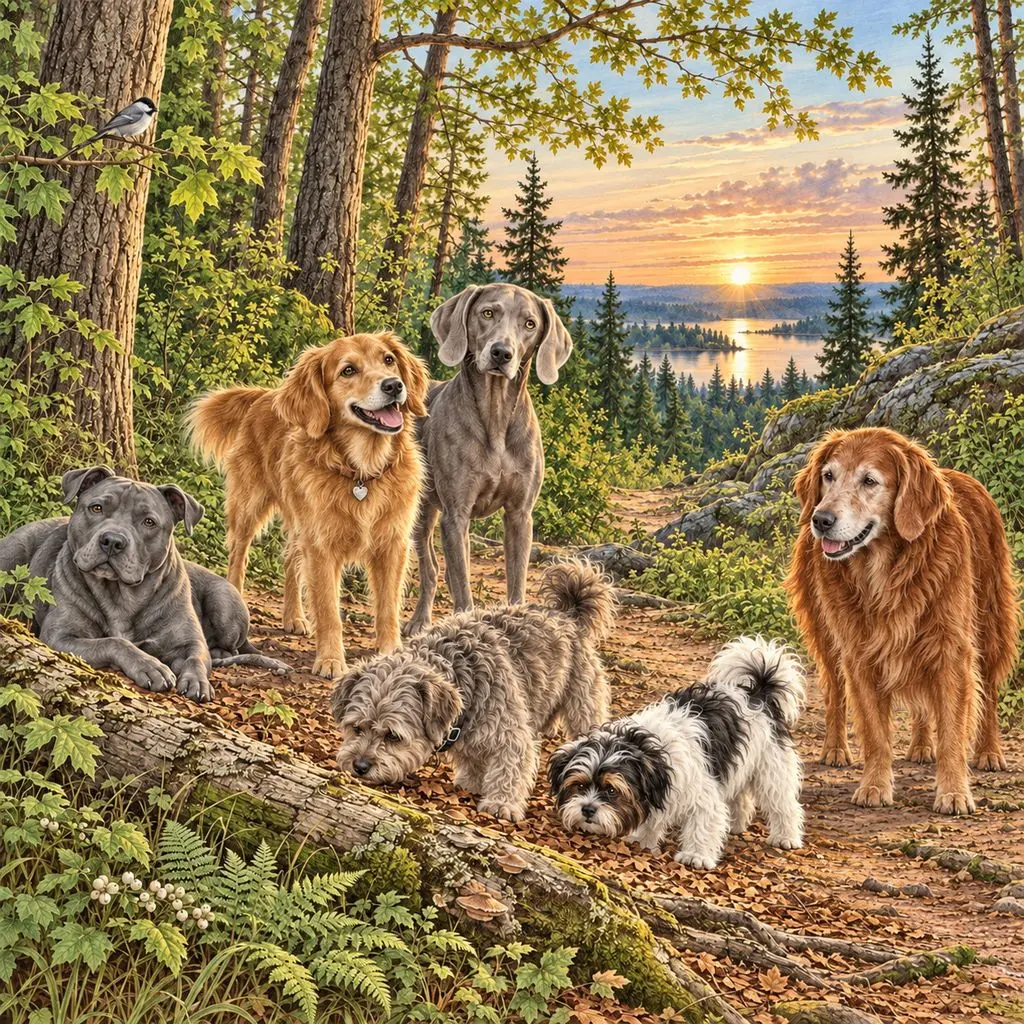
We were meeting near the entrance, with plenty of space between us, instead of bringing every dog to one bird’s doorstep.
Pippin’s bell gave a small ring. Jasper, Lexi, and little Pepper were beside him, just as they had been in the morning.
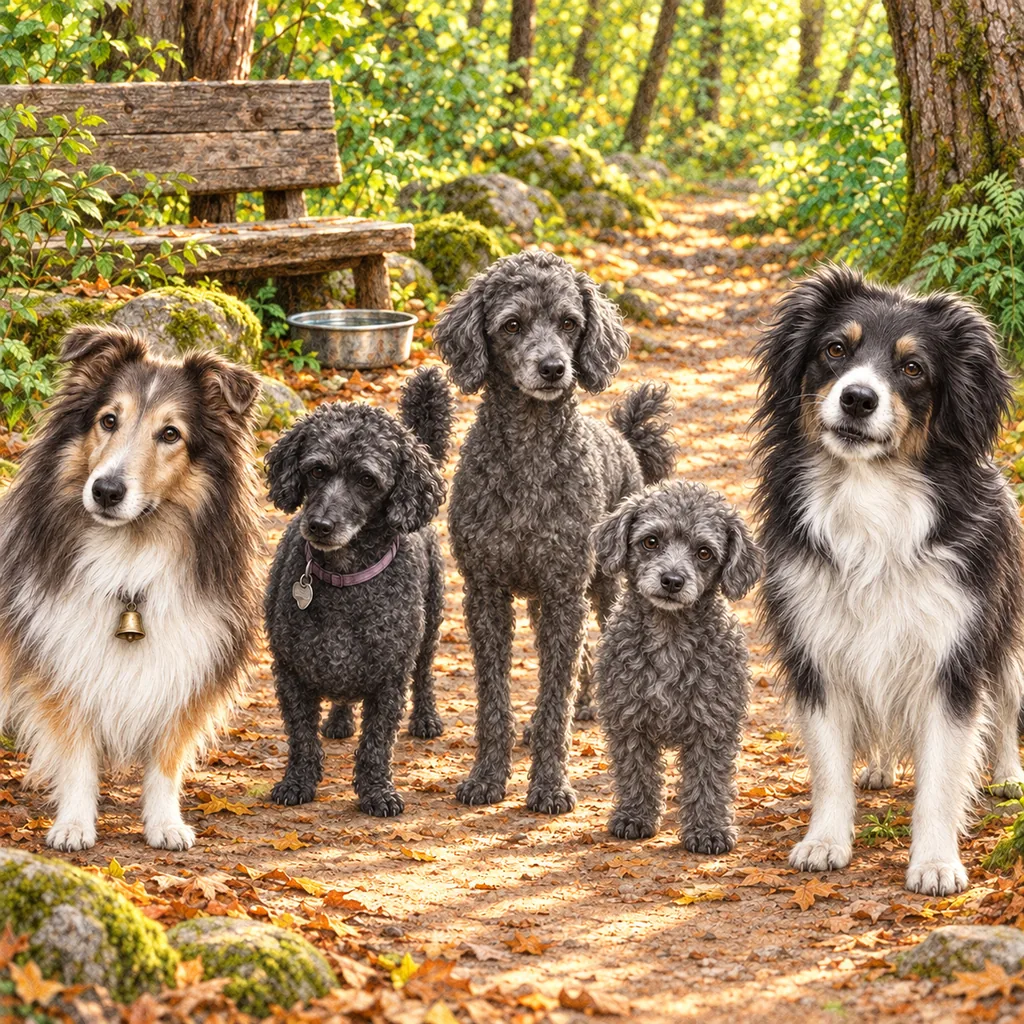
“The map?” Pippin asked.
My human opened the notebook.
There were no nest addresses.
There were leaves, logs, shrubs, tree trunks, high branches, an open patch, and a pond. Arrows joined them. A question mark sat beside the mud.
“You left things out,” Gordie said.
“On purpose.”
I explained that a good nature map did not have to lead everybody to a nest or a den. It could show the kinds of places animals needed and leave the families their privacy.
Emma Lou studied the arrows.
“Why so many?”
“Because a nest is not the whole home,” I said.
A chickadee needed food beyond its hole. A turkey used the ground and the trees. A duck could need water, shore plants, and a hollow trunk. A deer could travel from shelter to food without ever using our trail.
Charlie’s human had brought a ball for later. I noticed. Of course I noticed. But I kept my nose near the notebook for one more moment.
The two kinds of Mocha had helped us notice different things. The three Daisies had joined different parts of the day. The two Sunnys, two Rubys, two Lilys, and three Peppers each had their own place among our friends.
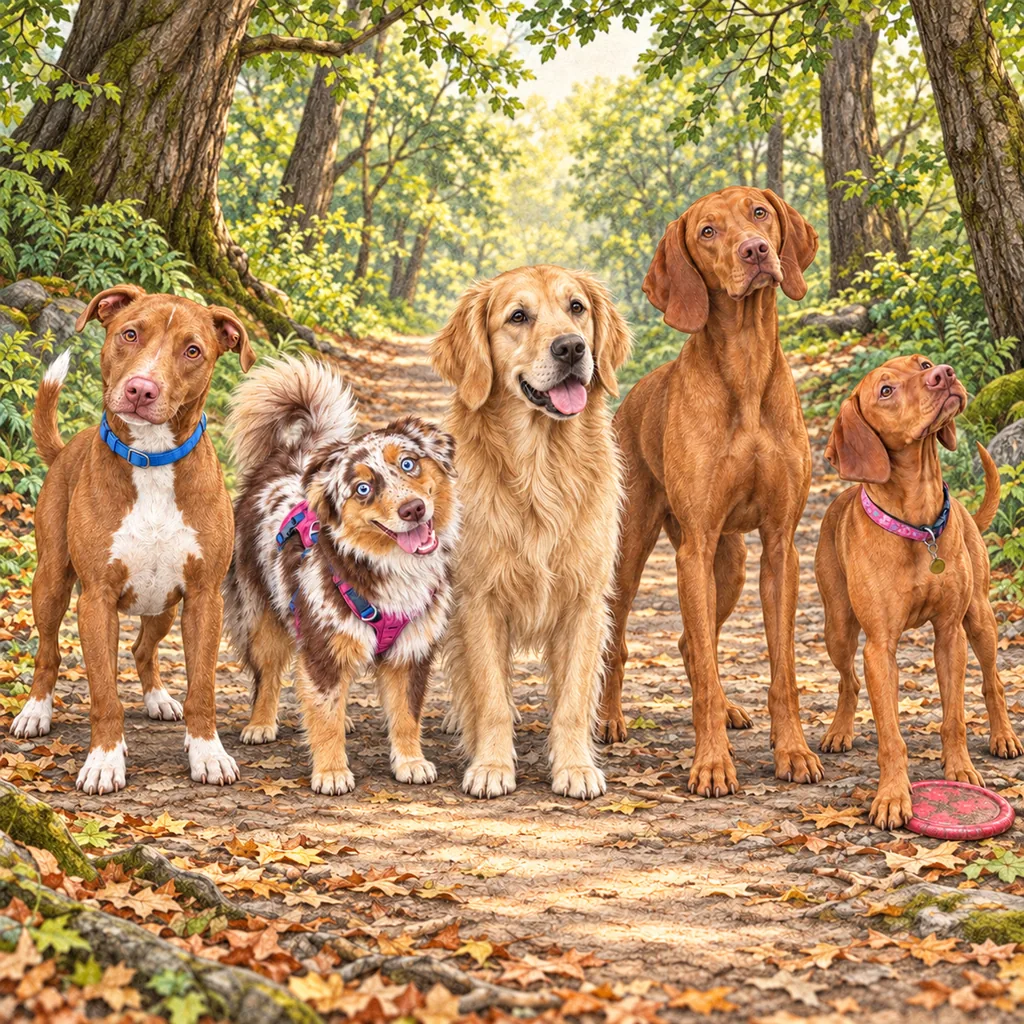
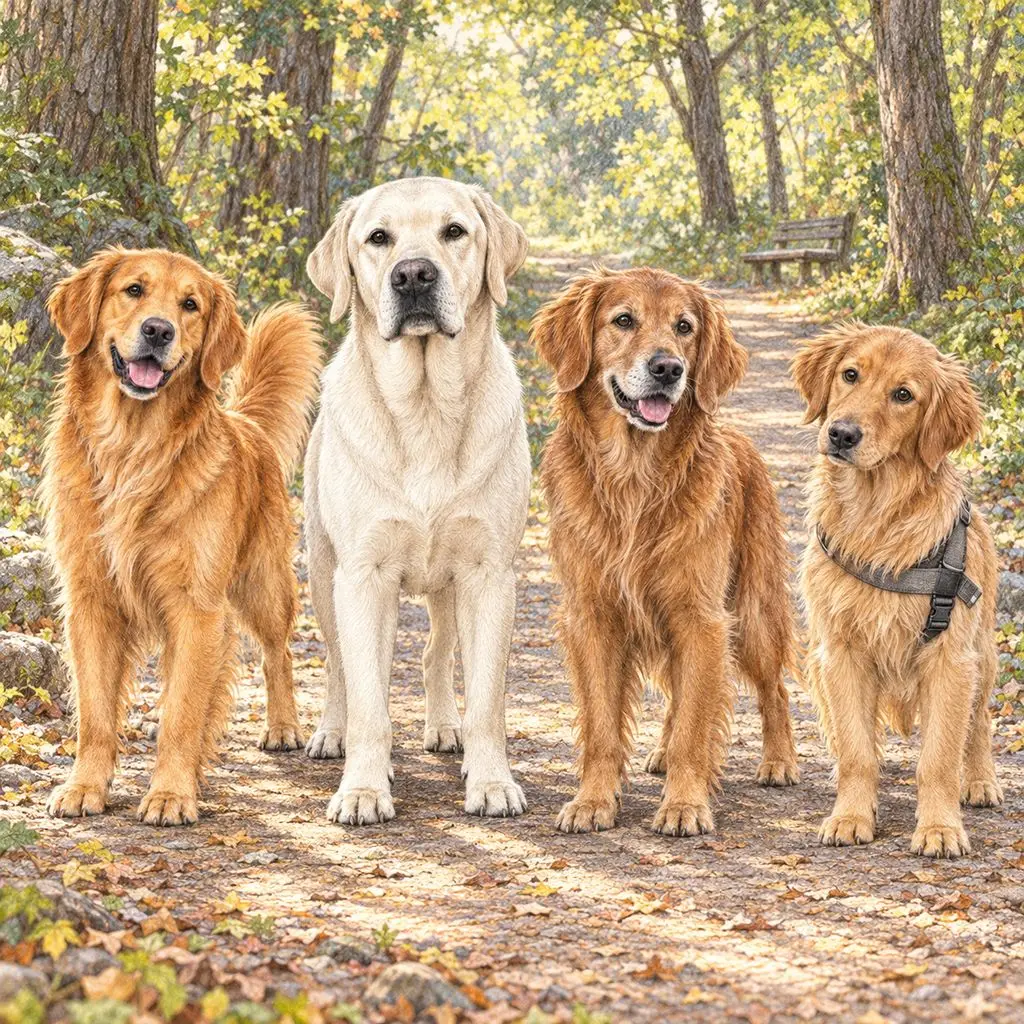
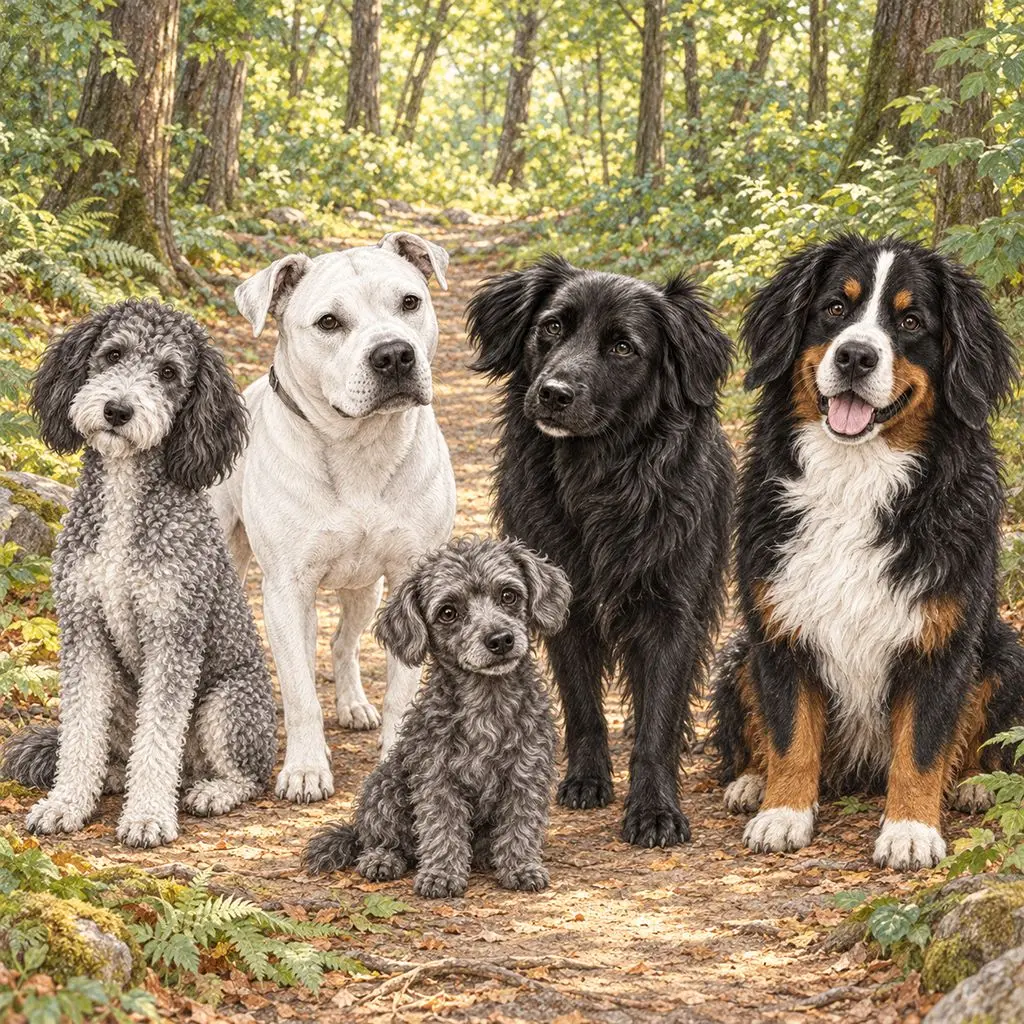
Nobody had to be the same to belong.
That seemed true of the woods as well.
Ruby, our older field Golden, headed toward the waste bin with her human and her familiar tied bag. Even the end of a walk had small jobs that mattered.
Pippin turned back to the drawing.
“Is it finished?”
I considered the blank corner.
“The walk is,” I said. “The map is not.”
We had seen one day. The woods had a whole year to live.
My human closed the notebook. Somewhere beyond the gathering place, a small bird sang from a branch we had never noticed.
I carried that sound home.
And, at last, my ball.
Friends Meeting Again
Remi
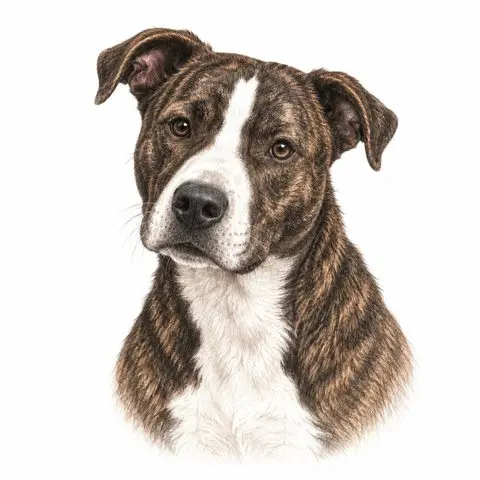
Chewie
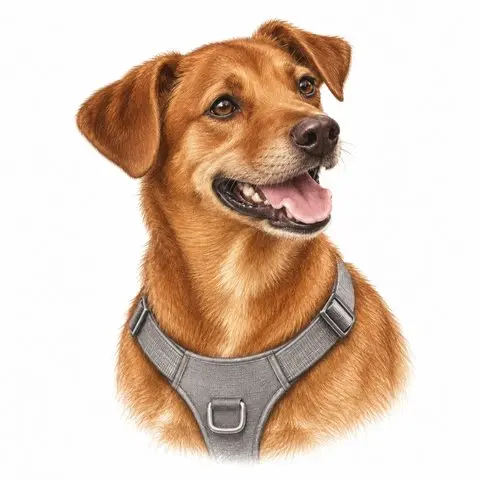
Gordie
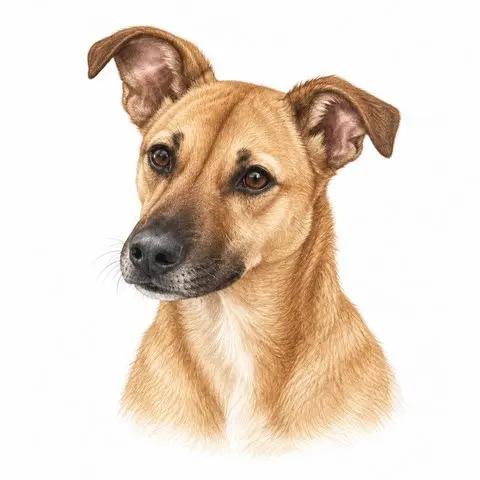
Emma Lou
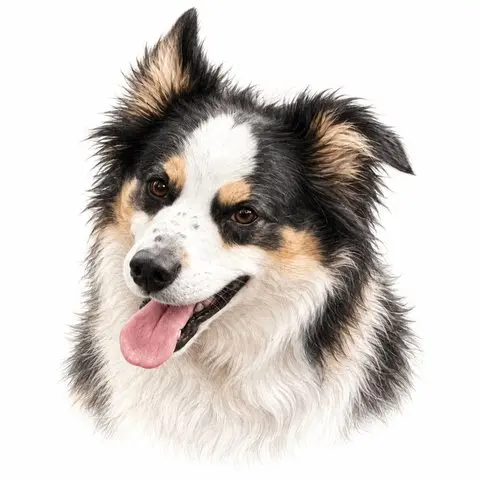
Charlie
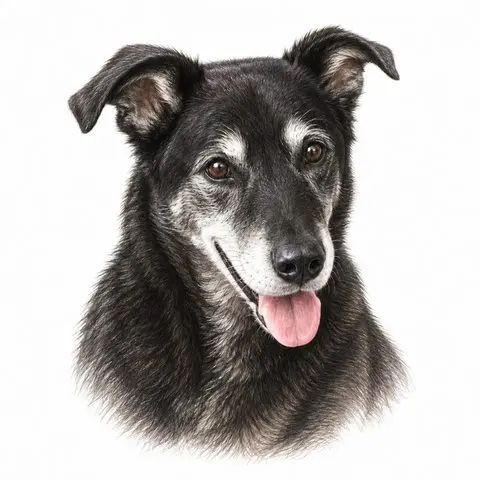
Sasha
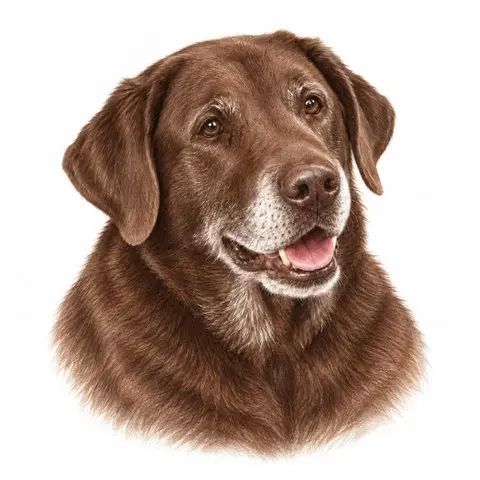
Rolo
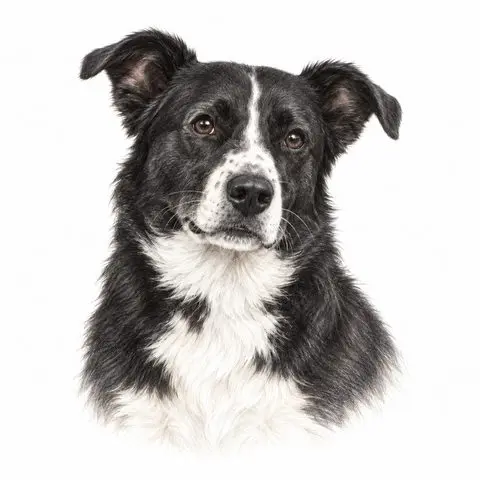
Ruthie
Lily
White coat
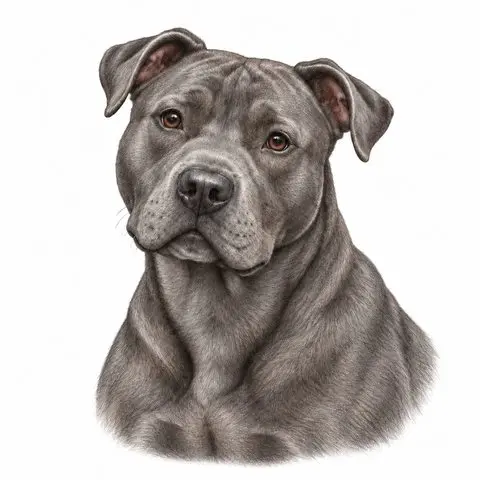
Harlem
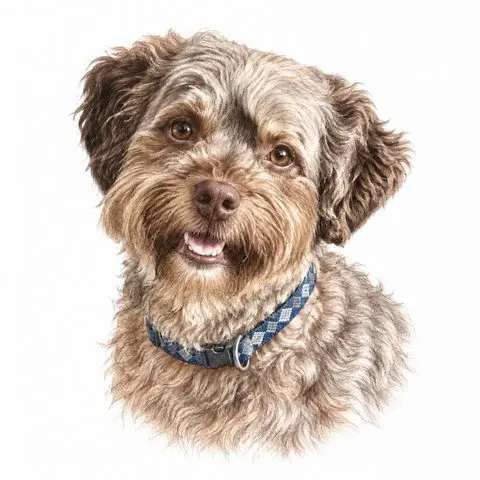
Mojo
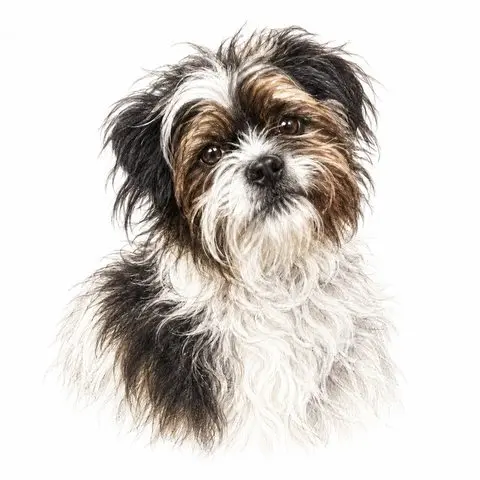
Sparky
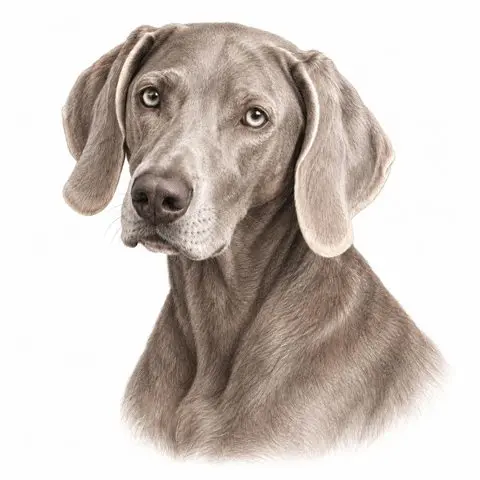
Georgia
Ruby
Field Golden
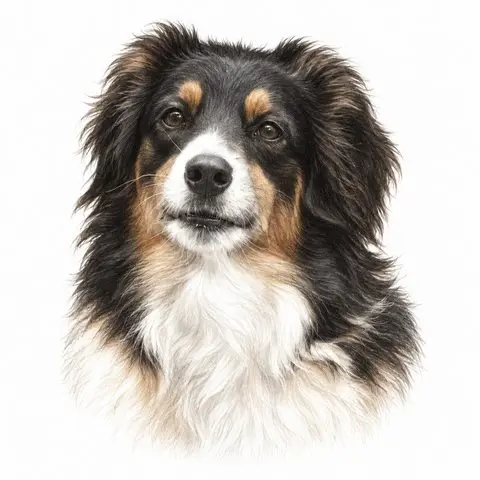
Mila
Pippin
Jasper
Lexi
Pepper
Pippin’s friend
Friends Remembered from the Walk
Mocha
Brown-and-white coat
Mocha
Fluffy merle coat
Daisy
Field Golden
Daisy
Taller Vizsla
Daisy
Small Frisbee player
Sunny
Golden Retriever
Sunny
Yellow Lab
Ruby
Young Golden
Lily
Gray curly coat
Pepper
Nikko’s housemate
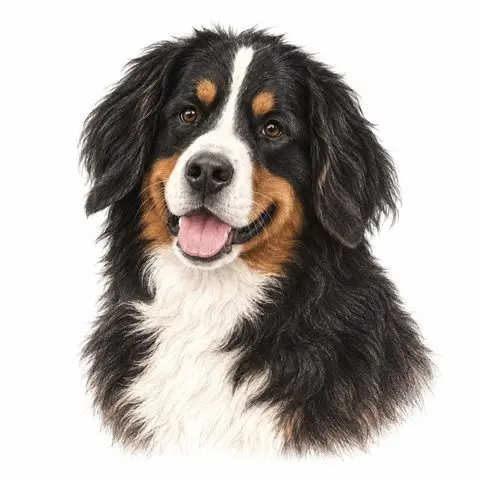
Pepper
Snow Lover
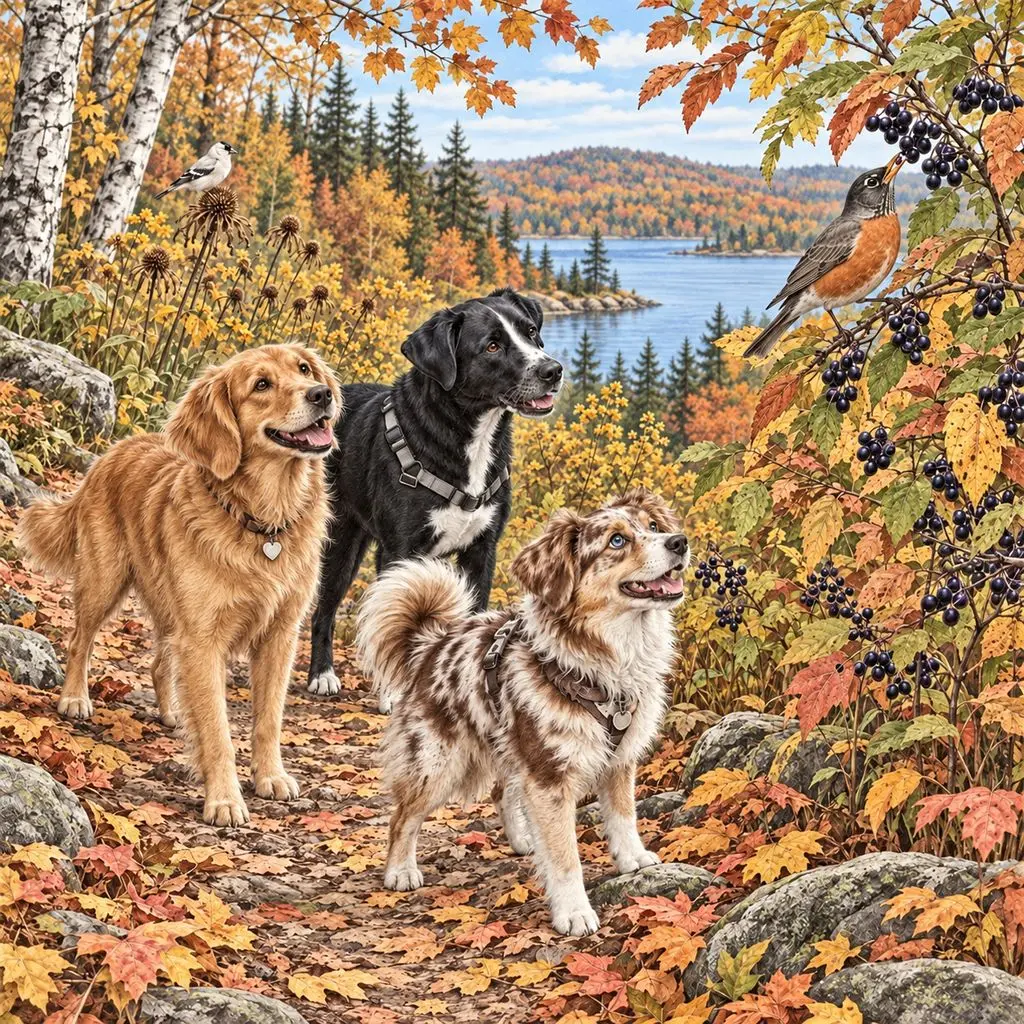
CHAPTER 29
The Summer Page and the Berry Page
We went back.
Not all at once, and not with a promise that every animal would appear again. We went back the way friends return to a good story: curious about the next part.
In summer, Finch and gray-curly Lily walked with me past a patch of seed-bearing plants. A goldfinch clung to a stem that bent beneath its small weight.
“The bird with my name,” Finch said.
This time, we were ready for its calendar. American goldfinches often nest later than many songbirds, when useful seeds and fluffy plant fibers are plentiful. A summer patch that looked dry and untidy to a hurried passerby could be a grocery store with building materials attached.
Farther on, Sophie noticed a young robin on the ground.
Friends on This Walk
Remi
Finch
Lily
Gray curly coat
Asti
Bowie
Mocha
Fluffy merle coat
Sophie
It was feathered. Its tail was short. It hopped awkwardly into low cover while an adult watched nearby.
We stayed away.
Young birds often spend time outside a nest before they fly expertly. A healthy fledgling with parents nearby needs room to learn, not a dog audience at close range.
The shrubbery became its practice room.
On another warm visit, Asti and I watched a monarch butterfly at flowers. My human pointed out nearby milkweed. Monarch caterpillars use milkweed as food, while adult butterflies drink nectar from flowers. One life could need different plants at different stages.
“Your map needs a calendar,” Asti said.
She was right.
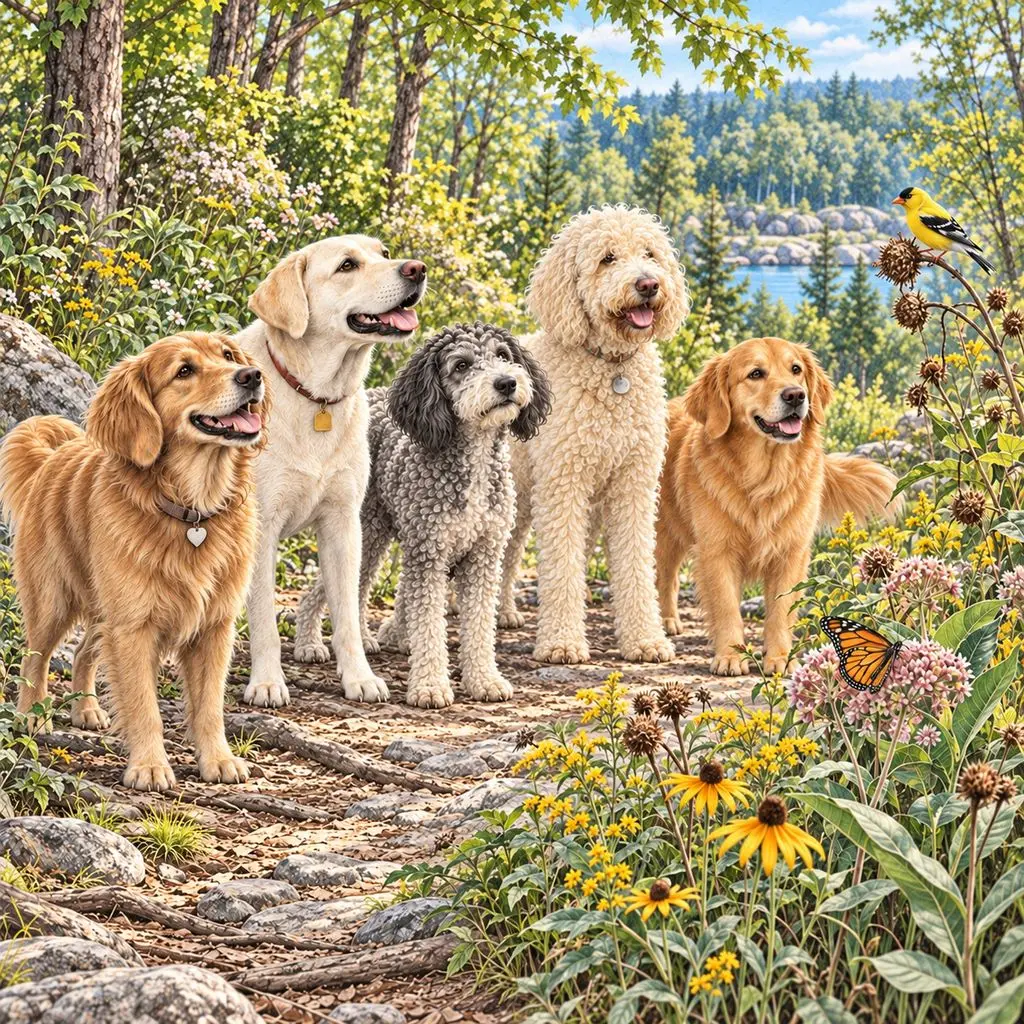
When summer leaned toward fall, Bowie and Fluffy Mocha joined me for the berry page.
A robin swallowed a dark fruit in a buckthorn shrub. My human identified the plant carefully. Birds do eat ripe buckthorn fruits, and the seeds can travel afterward when the birds leave droppings elsewhere.
“A flying delivery service,” Bowie said.
“With unusual packaging,” I added.
We did not taste the fruits. A bird’s food was not automatically safe food for children or dogs.
My human also explained that a useful meal did not tell the whole story of a plant. Common buckthorn could spread thickly and crowd out other plants. Many kinds of native shrubs, flowers, and trees together offered more kinds of food across the seasons. Dogwoods, viburnums, oaks, and other plants each had their own timing and visitors.
I thought of our group. Seventy-five dogs exactly like me would have produced a great many opinions about balls. Our different friends noticed much more.
The same sort of variety mattered here, though the woods had its own way of doing things.
Fruits fed some animals. Acorns fed others. Caterpillars on leaves became meals for growing birds. Fallen leaves began another journey toward soil.
We saw a coyote-shaped figure far across an opening one evening, too briefly to say whether it was Wiley or Maple. Coyotes could eat fruit as part of a varied diet, but we could not tell what that one had eaten. We left the unknown part unknown.
On the notebook’s next page, my human drew a little calendar.
There were still empty squares.
“Good,” Fluffy Mocha said. “Places for what comes next.”
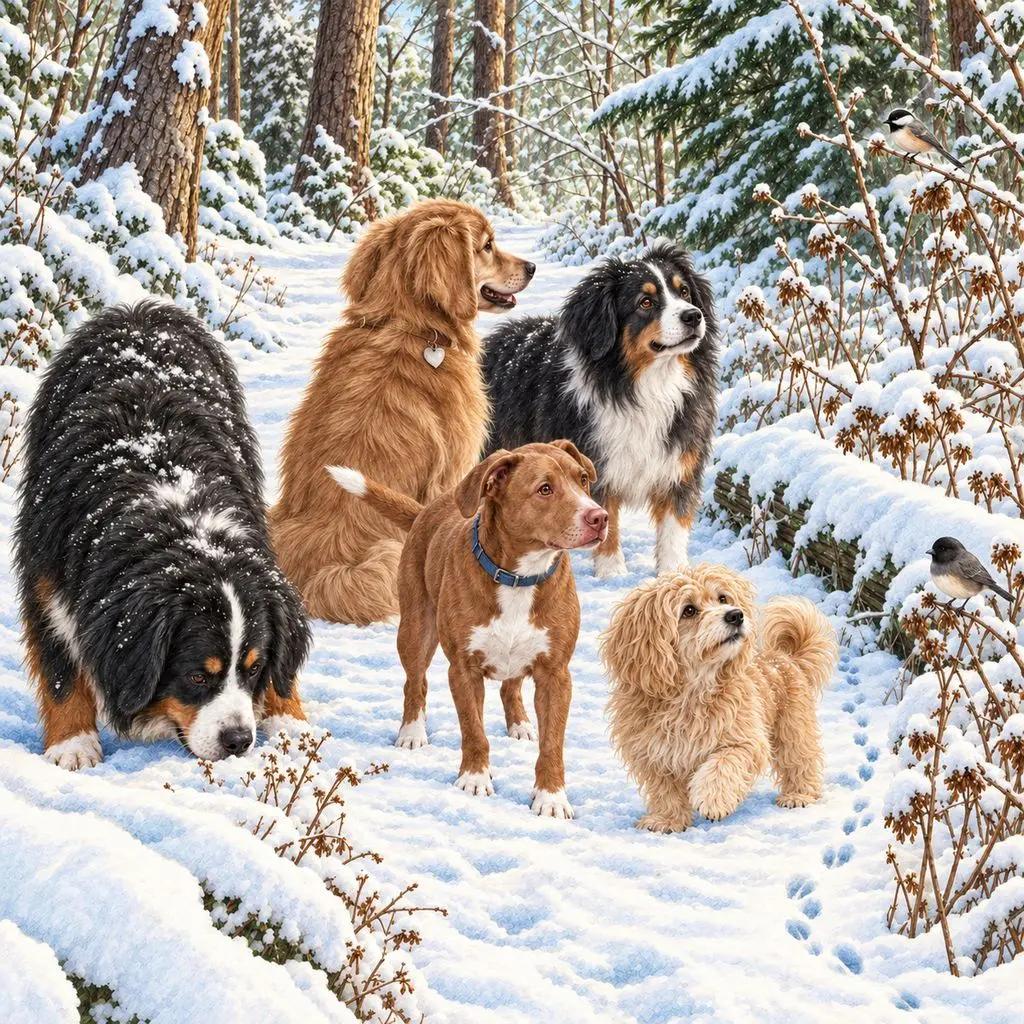
CHAPTER 30
The Woods Are Still Full of Homes
Winter arrived with a fresh page of its own.
Pepper the Snow Lover approved immediately.
Mila walked nearby while Pepper’s full tricolor coat collected little flecks of white. Morning Mocha joined us again, and Cody came along for a short greeting near the entrance, his warm lionlike face enough to brighten the grayest morning.
“Everybody looks different,” Cody said.
I looked at the woods.
Without leaves, I could see farther between the trunks. Yet the lower tangle still broke the wind. Evergreens held dark pockets of shelter. Dry stems stood above the snow with seeds attached.
Friends on This Walk
Remi
Pepper
Snow Lover
Mila
Cody
The Lion
Mocha
Brown-and-white coat
A dark-eyed junco hopped beneath them, searching the ground. A chickadee worked along a twig. From somewhere out of sight came a woodpecker’s tap.
The summer oriole was gone from our cold woods. Some birds had traveled south; others stayed and met winter in their own ways.
“The neighborhood has changed shifts,” I said.
Pepper sniffed toward a line of rabbit tracks. We followed the marks with our eyes, not our paws. They disappeared beneath low branches.
In winter, a cottontail could nibble twigs and bark when tender green plants were scarce. The same brush that hid a rabbit in spring could offer nearby shelter on a cold day.
Farther along, deer tracks crossed the path. A squirrel hurried up a trunk and vanished around the other side. Its stored food, leafy nest, or hollow shelter could help it through the season.
The fallen log was capped with snow.
“Still working?” Morning Mocha asked.
“Still working.”
We could not see the sheltered spaces under it. We could not see every small creature beneath the snow, every seed tucked away, or every bird resting among thick branches.
That no longer made the woods seem empty.
My human opened our notebook with his gloved hands. The map had grown a summer page, a berry page, and now a page with tracks.
At the edge of the trees, a turkey hurried across the snow.
I could not know whether it was our Roadrunner.
But I could hope.
The bird paused, looked around, and continued toward cover. No booming wings today. Its feet were handling the appointment perfectly well.
From the wooded distance came a low owl call. I remembered the broad wings moving between trunks without the sound I expected.
A rabbit’s roof. A turkey’s staircase. A chickadee’s pantry. An owl’s hunting place.
The woods had never been just a collection of trees.
It was all those lives, using all those places, in all those changing ways.
Cody headed back with his human. Pepper found another delightful patch of snow. I leaned into a neck scratch and let the cold air carry the small sounds around us.
“Is the map finished now?” my human asked.
I looked at the blank space waiting after winter.
Soon there would be buds.
Then leaves.
Then a bird choosing a place we might never see.
“Not yet,” I told him.
And that was the nicest part.
Remi’s Nature Guide
Look for the habitat, not the hidden nest.
The woods have many overlapping layers. An animal may feed in one layer, hide in another, and raise its young somewhere else. The boundaries are flexible: a low shrub can be a bird’s upper branch and a deer’s curtain.
Soil and leaf litter
Small creatures, decomposers, seeds, moisture, and hidden travel spaces.
Fallen wood and roots
Shelter, insects, fungi, protected gaps, and places to rest or feed.
Grasses and low shrubs
Food, concealed ground nests, cover for fledglings and small mammals.
Understory and trunks
Leafy hiding places, tree cavities, bark insects, and routes between branches.
Canopy and sky
Nesting branches, perches, leafy food sources, and room to fly or soar.
Water and its edges
Drinking and feeding places, water-living young, shore cover, and wetland nesting stems.
Plants and animals also need enough space and connections between useful places. No single layer supplies everything.
How to Read the Bird Guide
The following pages describe the birds seen or discussed in the story. Foods listed are examples, not complete menus. Many birds change their diets as the seasons change, and growing young may need different foods from adults.
Nest height is measured above the ground unless the entry says water. “Usually” and “often” matter: birds do not carry measuring tapes, and suitable sites vary. Some entries describe a position, such as the upper branches, because one narrow height range would be misleading.
A nest is mainly a place for eggs and young. A roost is a place to rest or sleep. Many birds do not sleep in a nest throughout the year.
Seeing a bird near a tree does not prove that it has a nest there. Enjoy what you can see from the path. Let an adult help with identification, and use binoculars instead of moving closer.
In current field guides, the yellow warbler of this story may be listed as northern yellow warbler, and house wren as northern house wren. These longer names distinguish them from related birds elsewhere.
The pictures show examples of each species. Colors can change with age, sex, and season. The animals are not shown at the same scale.
A short height helper
One foot equals 12 inches. Three feet is about one yard. Ten feet is well above a child’s head; 30 feet reaches into many trees. These comparisons help you imagine the layers without climbing or approaching a nest.
Low Cover and Hidden Cups
A singing perch can be much higher than the bird’s nest.
Song sparrow
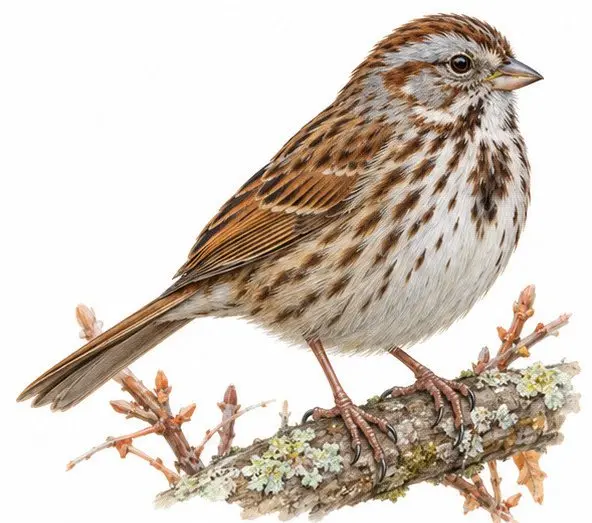
Food
Insects and other small invertebrates; seeds and fruits.
Nest and needed cover
Ground or low vegetation, sometimes up to 15 feet. A cup hidden by grasses and shrubs; often near water.
Northern cardinal
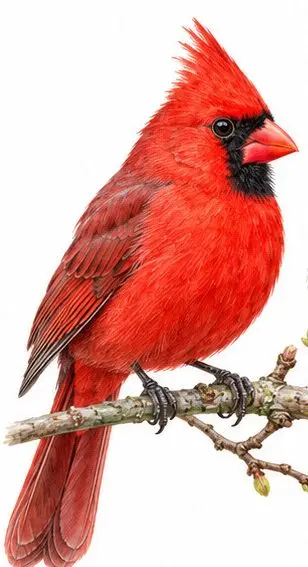
Food
Seeds, fruits, and insects; many insects for growing young.
Nest and needed cover
Usually 1–15 feet up in dense shrubs, vines, or small trees. Thick foliage conceals the cup.
Gray catbird
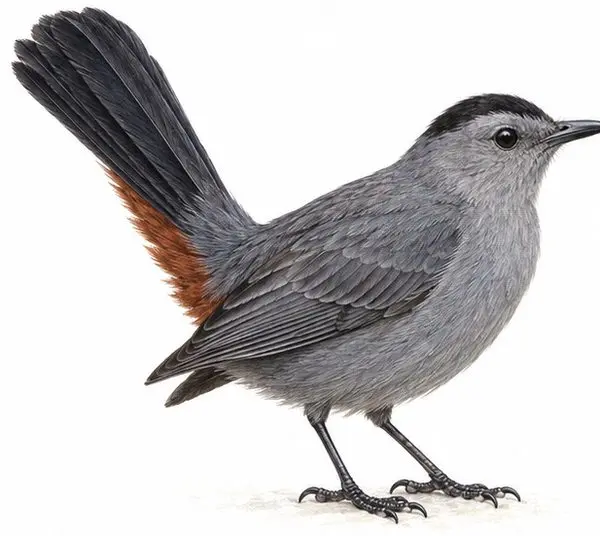
Food
Insects and fruits.
Nest and needed cover
Often about 4 feet up in a dense shrub or vine tangle. Much lower and higher nests also occur.
Yellow warbler
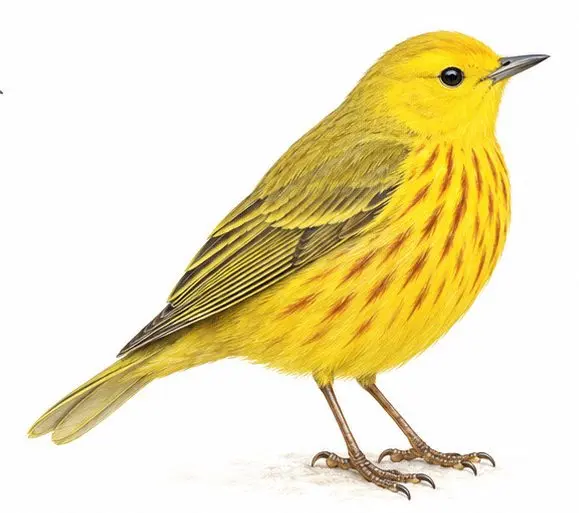
Food
Mostly insects picked from leaves or caught in short flights.
Nest and needed cover
Usually within 10 feet of the ground in a shrub or small tree fork. Streamside thickets are useful cover.
Sources: Cornell Lab of Ornithology species accounts; selected nest-height details from Audubon and NestWatch. See Sources and Notes.
Branches and Seed Heads
Food can come from one layer while the nest is in another.
American robin
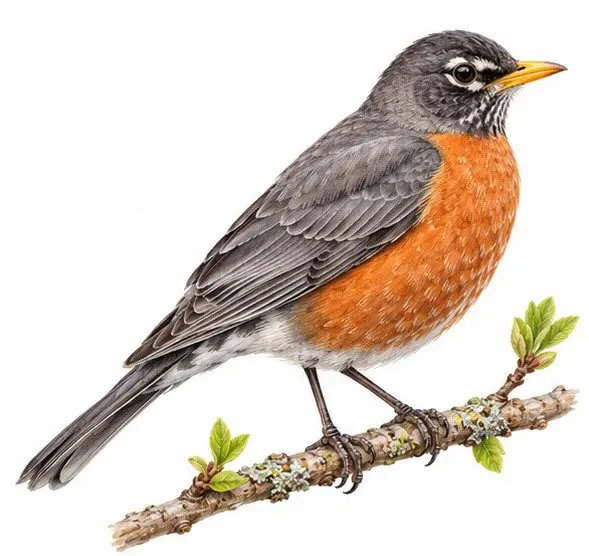
Food
Earthworms, insects, and fruits; the mixture changes with season.
Nest and needed cover
A mud-reinforced cup, often 5–25 feet up and beneath leaves. Feeds on open ground and uses nearby woody cover.
Mourning dove
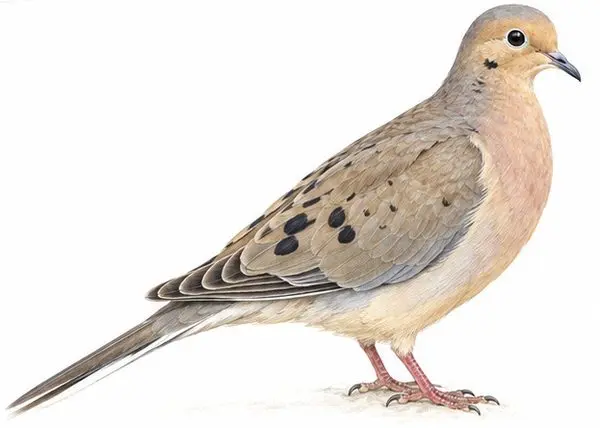
Food
Mostly seeds gathered on the ground.
Nest and needed cover
A simple twig platform in a tree or shrub, sometimes on the ground. Nest height varies widely. Needs feeding openings and resting cover.
American goldfinch
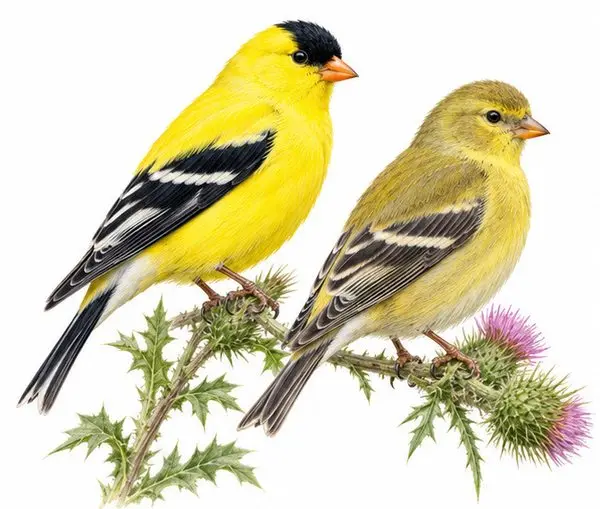
Food
Almost entirely seeds, including seeds fed to young.
Nest and needed cover
A plant-fiber cup in a shrub or tree fork, usually below 30 feet. Often nests later in summer near seed-bearing plants.
Dark-eyed junco
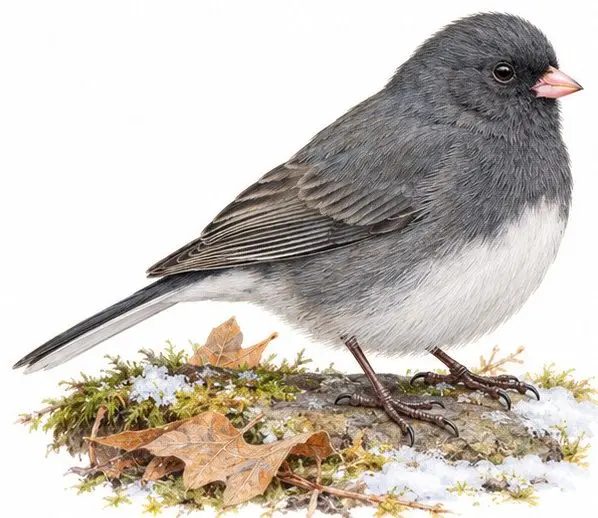
Food
Mostly seeds; also insects, especially in the breeding season.
Nest and needed cover
Usually on or close to the ground, tucked by roots, a bank, or plants. The winter visitors in this story are feeding, not nesting.
Sources: Cornell Lab of Ornithology species accounts; selected nest-height details from Audubon and NestWatch. See Sources and Notes.
Little Birds Inside Trees
A cavity is a hollow space. A bird may use one made by another bird.
Black-capped chickadee
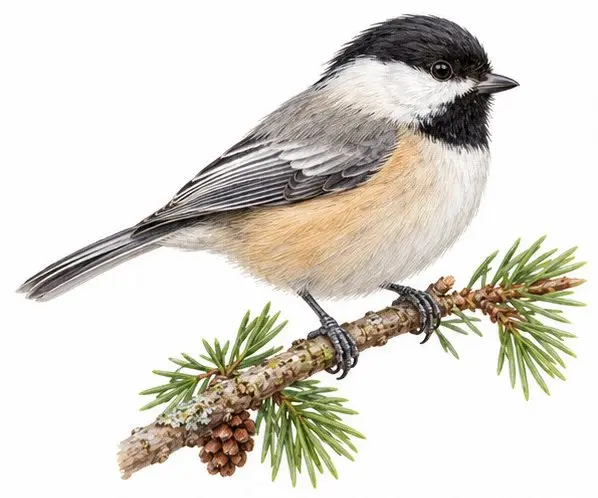
Food
Insects and spiders; more seeds and other plant food in winter.
Nest and needed cover
A cavity, usually about 5–23 feet up. May dig into soft, decaying wood. Needs nearby branches and plants for food.
White-breasted nuthatch
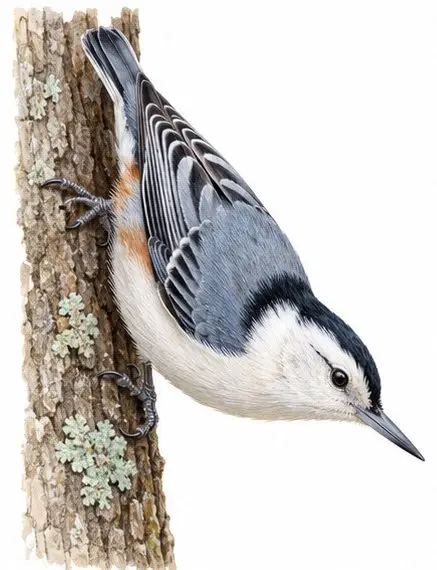
Food
Insects, seeds, and nuts.
Nest and needed cover
A natural hollow or old woodpecker hole, often 15–60 feet up. Mature trees provide food on bark and places to shelter.
House wren
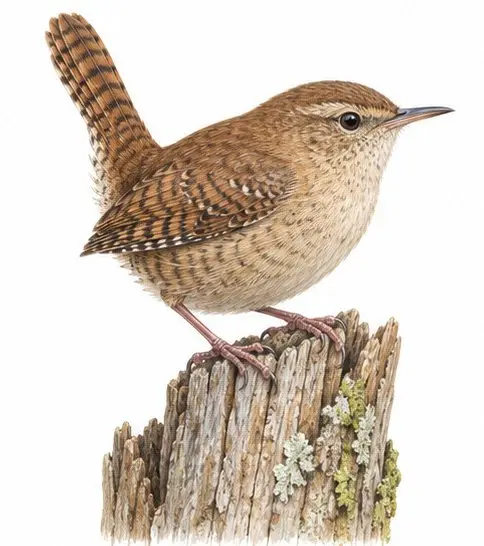
Food
Insects and spiders.
Nest and needed cover
A tree hole, crevice, or nest box above the ground; height varies. Uses woody tangles near openings. The local species is the northern house wren.
Sources: Cornell Lab of Ornithology species accounts; selected nest-height details from Audubon and NestWatch. See Sources and Notes.
The Woodpecker Neighborhood
Dead wood can contain both food and the space for a future nest.
Downy woodpecker
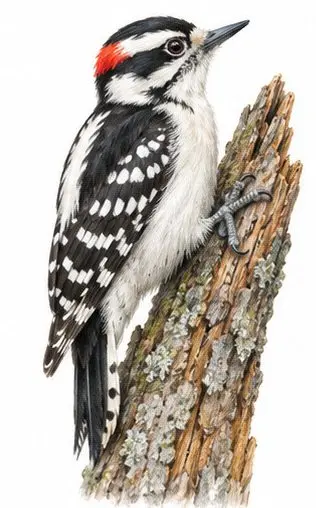
Food
Mostly insects and larvae; also some seeds and fruits.
Nest and needed cover
Excavates a cavity in dead wood above ground. Height varies with the tree. Also feeds on slender stems as well as trunks.
Red-bellied woodpecker
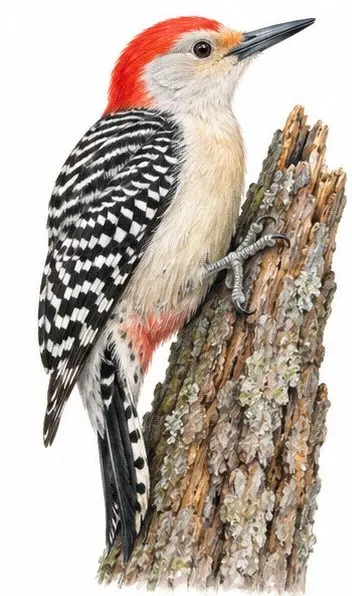
Food
Insects, spiders, nuts, seeds, and fruits.
Nest and needed cover
Excavates dead wood, usually below 50 feet, though higher sites occur. Uses wooded places with suitable trunks and limbs.
Pileated woodpecker
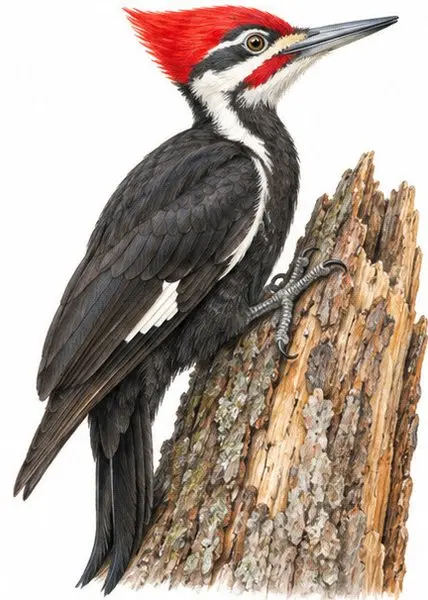
Food
Especially carpenter ants; also other insects, fruits, and nuts.
Nest and needed cover
A large cavity above ground, usually in a dead tree. Height varies. Large trees and fallen wood provide nesting and feeding resources.
Sources: Cornell Lab of Ornithology species accounts; selected nest-height details from Audubon and NestWatch. See Sources and Notes.
Branches and Wetland Stems
These birds visit several layers as they gather food and materials.
Baltimore oriole
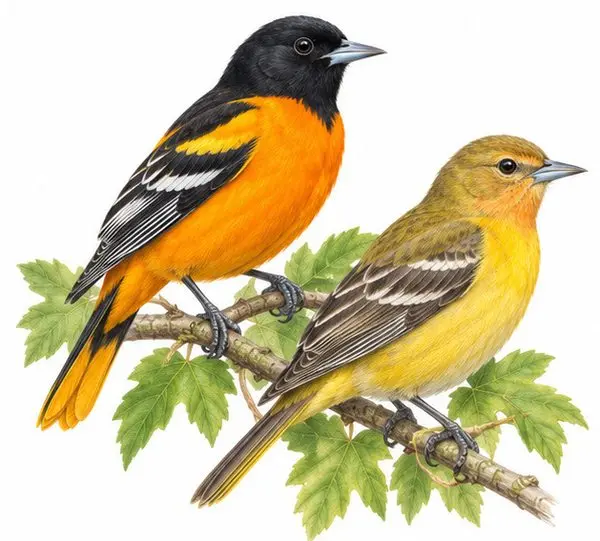
Food
Insects, fruit, and nectar; insects are important for young.
Nest and needed cover
A woven hanging pouch near a slender outer branch, often 20–30 feet up. Leafy tall trees at woodland edges are useful.
Blue jay
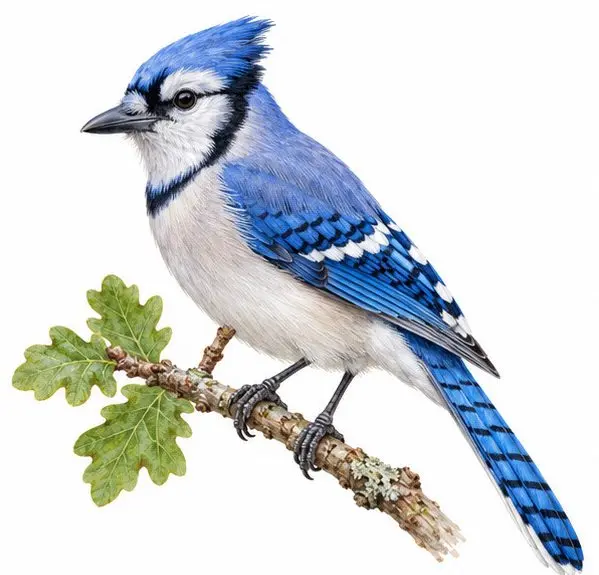
Food
Acorns, other nuts, seeds, fruits, and insects; occasional small animals.
Nest and needed cover
A twig cup in a tree fork or substantial branch, usually 10–25 feet up. Oaks and woodland edges offer food and cover.
American crow
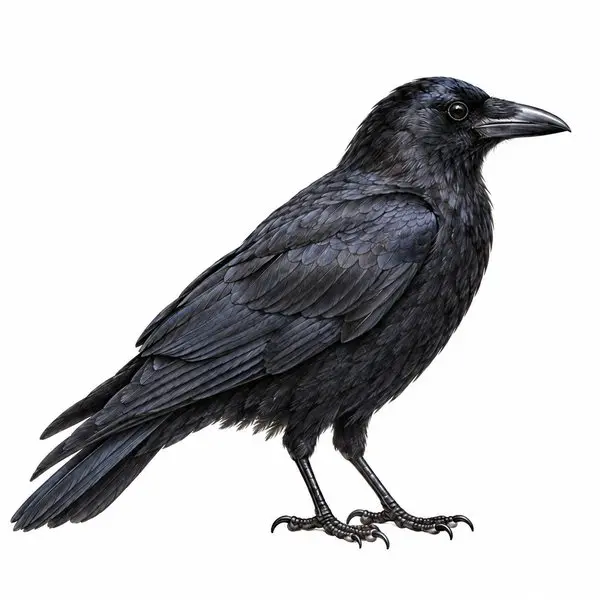
Food
Seeds, fruits, insects, small animals, and carrion.
Nest and needed cover
A stick nest near the trunk or on a branch, commonly in the top third or quarter of a tree. Uses trees together with open feeding areas.
Red-winged blackbird
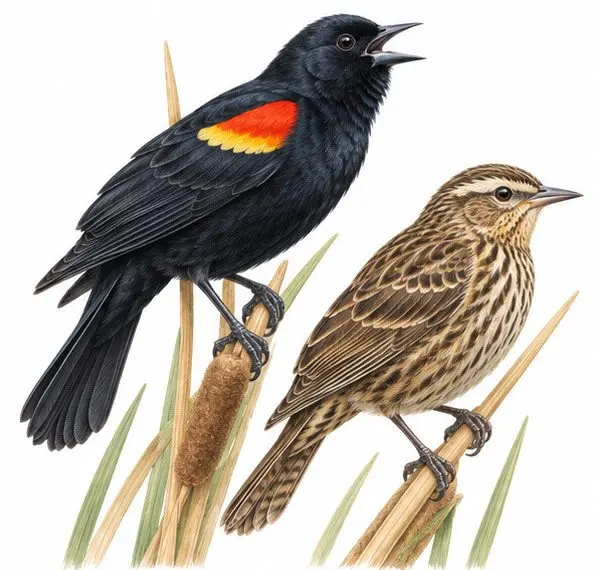
Food
Mostly insects in summer; more seeds at other times.
Nest and needed cover
A woven cup low among supporting stems, near the ground or water surface. Dense cattails, sedges, shrubs, or other vegetation can conceal it.
Sources: Cornell Lab of Ornithology species accounts; selected nest-height details from Audubon and NestWatch. See Sources and Notes.
Hunters Above the Trees
A soaring bird still needs a safe place to land and raise its young.
Red-tailed hawk
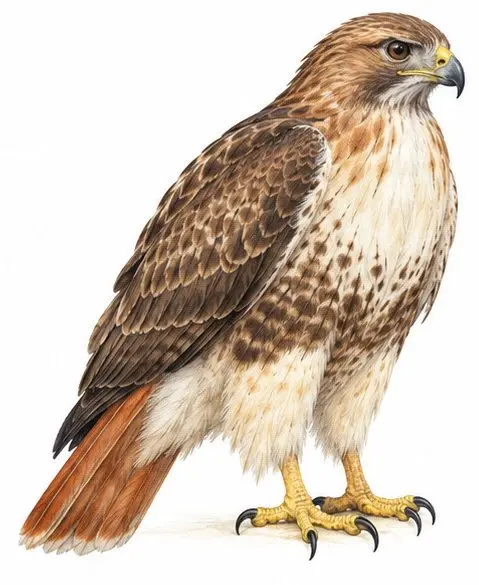
Food
Mostly mammals such as mice, voles, and rabbits; also other prey.
Nest and needed cover
A large stick nest high in a tall tree’s crown; sometimes a ledge or structure. Hunts over open areas near perches and woods.
Cooper’s hawk
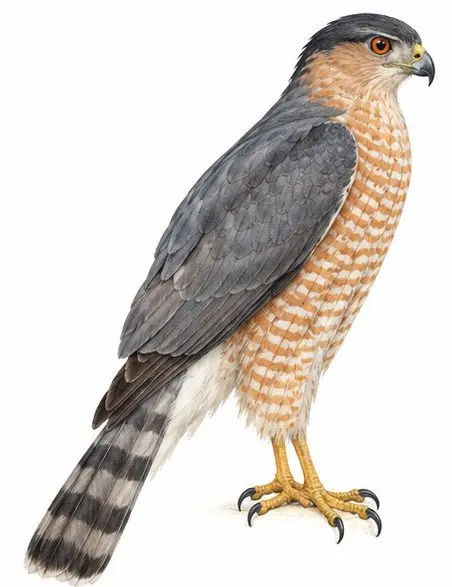
Food
Mostly birds; also some mammals.
Nest and needed cover
A stick nest usually 25–50 feet up in a tree fork or on a branch. Woodland trees provide shelter and hunting routes.
Bald eagle
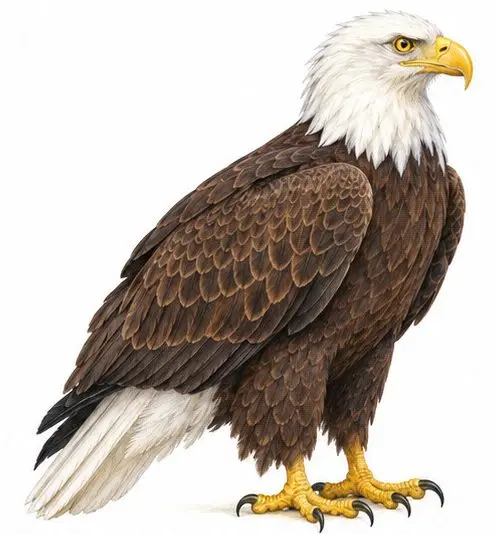
Food
Often fish; also birds, mammals, and carrion.
Nest and needed cover
A very large stick nest high in a sturdy tree, near the trunk and below the top. Often nests near substantial water and feeding areas.
Osprey
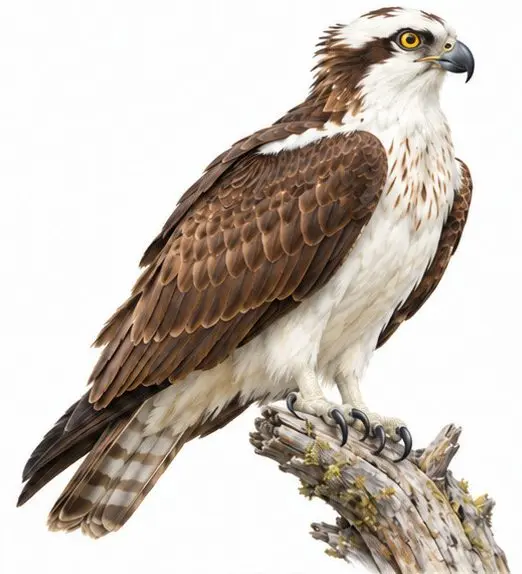
Food
Almost entirely fish.
Nest and needed cover
A large stick nest on an exposed treetop, snag, or platform; height varies. Needs clear flight access and reachable fishing water.
Sources: Cornell Lab of Ornithology species accounts; selected nest-height details from Audubon and NestWatch. See Sources and Notes.
Owls and Our Noisy Turkey
The place a bird sleeps need not be the place it lays its eggs.
Barred owl
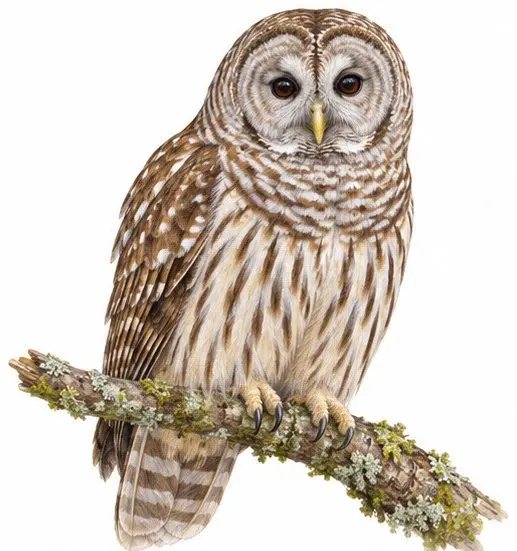
Food
Small mammals, birds, amphibians, and other small animals.
Nest and needed cover
Usually a large tree cavity 20–40 feet up. Mature forest, often near water, provides nest sites and hunting cover.
Great horned owl
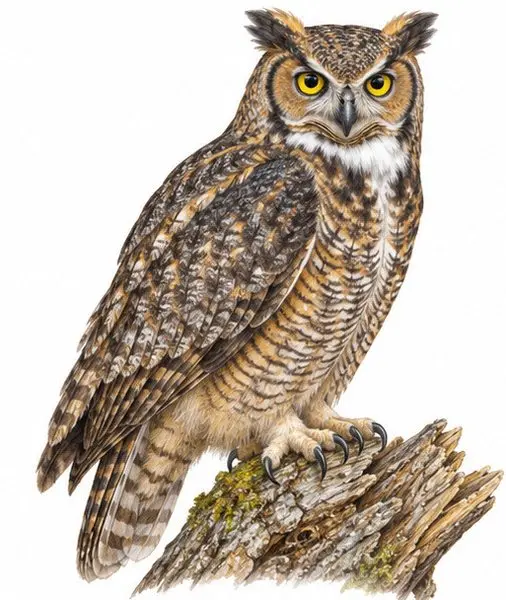
Food
Mostly mammals and birds, including rabbits and rodents.
Nest and needed cover
Often another large bird’s old stick nest. Tree sites commonly 15–45 feet up, but choices vary greatly. Uses woods and nearby openings.
Wild turkey
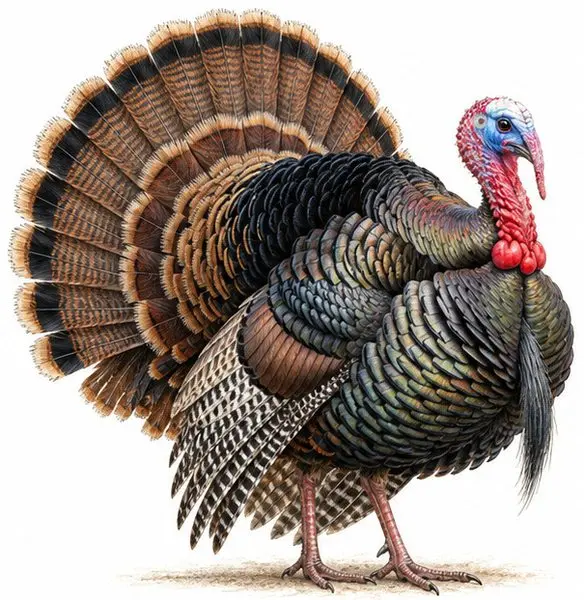
Food
Seeds, acorns, green plant material, and insects; poults need many insects.
Nest and needed cover
A shallow ground nest hidden by vegetation. Older birds usually sleep in trees. Low cover, feeding openings, and roosting trees all matter.
Sources: Cornell Lab of Ornithology species accounts; selected nest-height details from Audubon and NestWatch. See Sources and Notes.
Ducks Above and Below
The ducklings’ journey connects the nest with feeding and shelter near water.
Mallard
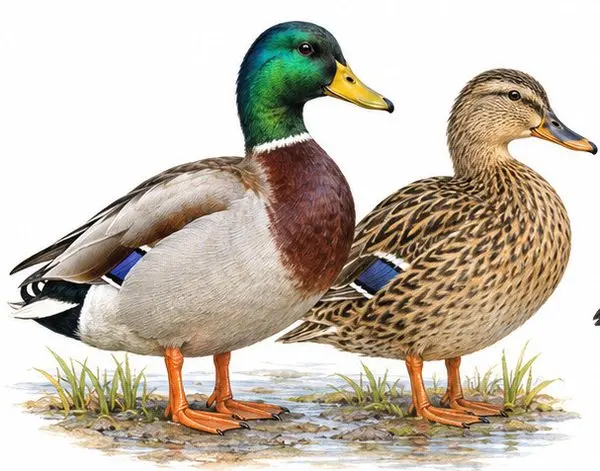
Food
Seeds, plant material, insects, and other small water animals.
Nest and needed cover
Usually a hidden ground nest among plants. May be some distance from water. Shore cover and shallow feeding areas help the family.
Wood duck
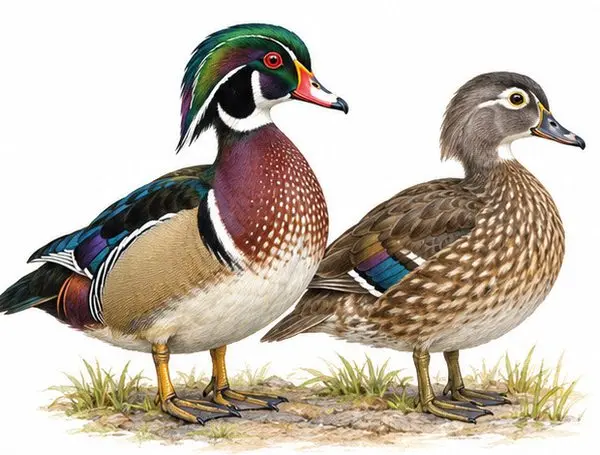
Food
Seeds, fruits, and small animals; insects are important for young.
Nest and needed cover
A tree cavity or nest box. Natural cavities may be 2–60 feet up. Wooded water and sheltered banks connect the nest with food.
Hooded merganser
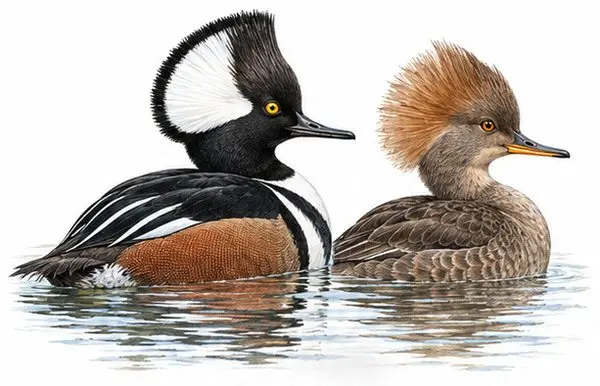
Food
Small fish, water insects, crayfish, and other small water animals.
Nest and needed cover
A tree cavity, commonly 10–50 feet up, near water. Needs suitable hollows and water where it can dive for food.
Common merganser
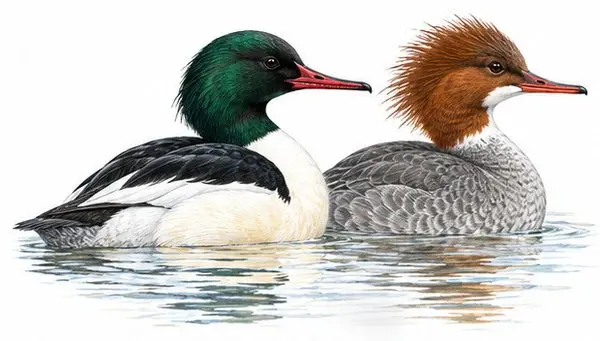
Food
Mostly fish as an adult; young begin with many water invertebrates.
Nest and needed cover
Usually a large cavity, sometimes as high as 100 feet; other sites also occur. Mature waterside trees and feeding water are important.
Sources: Cornell Lab of Ornithology species accounts; selected nest-height details from Audubon and NestWatch. See Sources and Notes.
Wetland Nests and Travelers
Seeing a bird resting or feeding does not prove it nests nearby.
Northern pintail
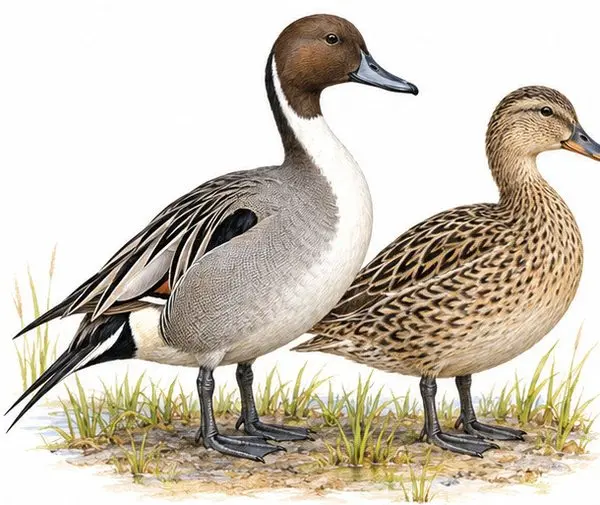
Food
Seeds, water insects, worms, snails, and other small foods.
Nest and needed cover
A ground nest among low plants in open country, often away from water. Seasonal wetlands provide nesting or migration habitat.
Red-breasted merganser
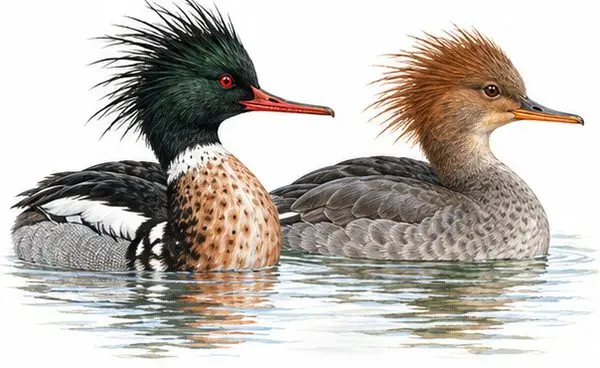
Food
Mostly small fish.
Nest and needed cover
A concealed ground nest near water in its breeding range. Sheltered shores and feeding water matter; discussed here as a comparison bird.
Great blue heron
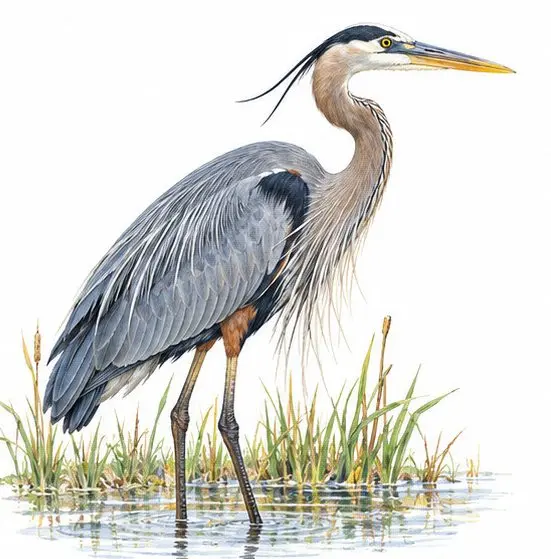
Food
Fish and other small animals.
Nest and needed cover
Often a stick platform high in a tree, sometimes over 100 feet, in a nesting colony. Needs feeding shallows and suitable nesting sites.
Sandhill crane
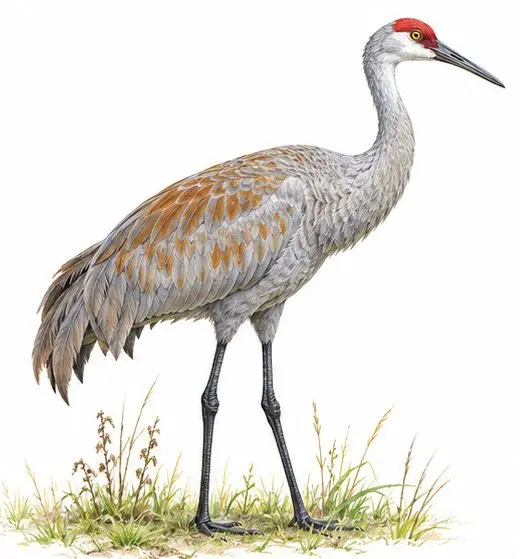
Food
Seeds, grains, roots or tubers, insects, and other small animals.
Nest and needed cover
A low mound among wetland plants, often in shallow water. Wetlands and nearby open feeding areas meet different needs.
Sources: Cornell Lab of Ornithology species accounts; selected nest-height details from Audubon and NestWatch. See Sources and Notes.
Neighbors Close to the Ground
Eastern cottontail
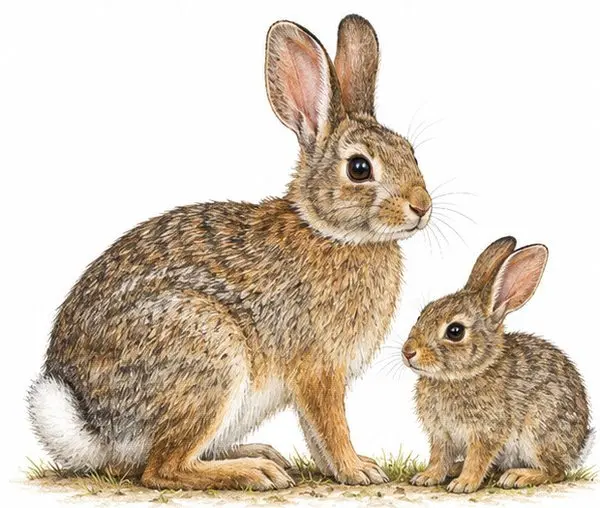
Food
Tender green plants in warm weather; twigs and bark in winter.
Shelter and family space
Brush and low plants offer hiding places near food. Young rest in a shallow ground nest lined with grass and fur.
Eastern chipmunk
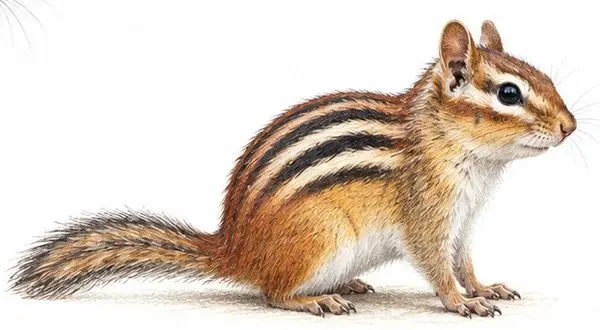
Food
Seeds, nuts, fruits, and some insects.
Shelter and family space
Often raises young and stores food in an underground burrow. Logs, roots, and low cover provide nearby shelter and travel routes.
Gray squirrel
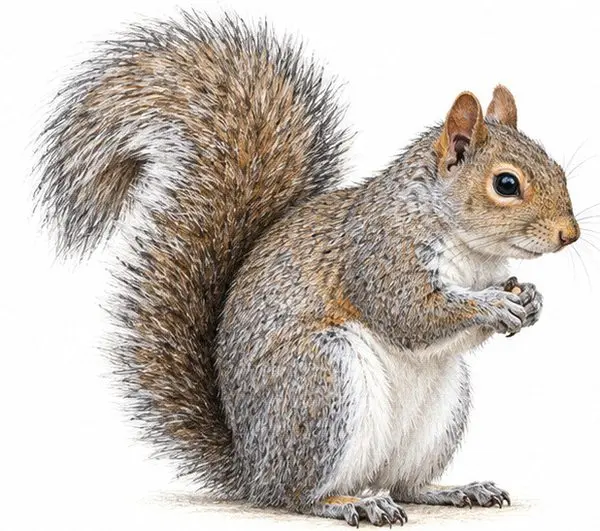
Food
Acorns, other nuts, seeds, fungi, and buds.
Shelter and family space
Uses leafy nests in branches or tree hollows. Trees offer routes and shelter; the ground offers places to gather and bury food.
White-tailed deer
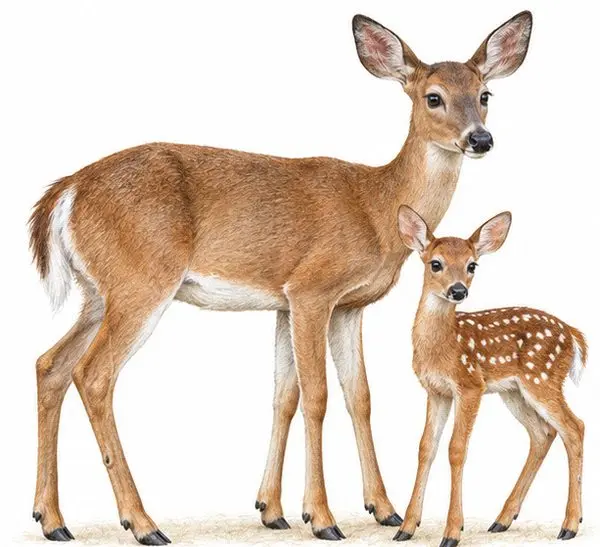
Food
Leaves, buds, twigs, acorns, fruits, and other plant foods.
Shelter and family space
Dense plants can shelter resting deer and conceal fawns. Sheltered routes connect resting places with browsing areas.
A shelter is useful even when you cannot see who uses it. Do not open a hollow log, part a nesting thicket, or follow an animal into its hiding place.
Hidden Homes and Water Edges
Coyote
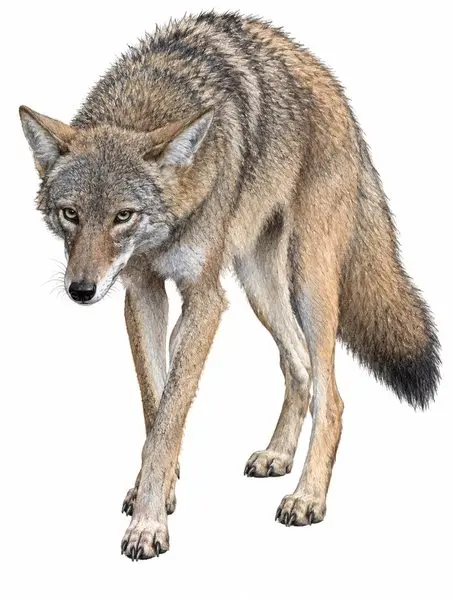
Food
Small mammals, other animals, and some fruits; diet varies by place and season.
Shelter and family space
Uses cover for resting and travel. Dens shelter young pups, while adults also rest in other sheltered places. Wiley and Maple are wild coyotes.
Raccoon
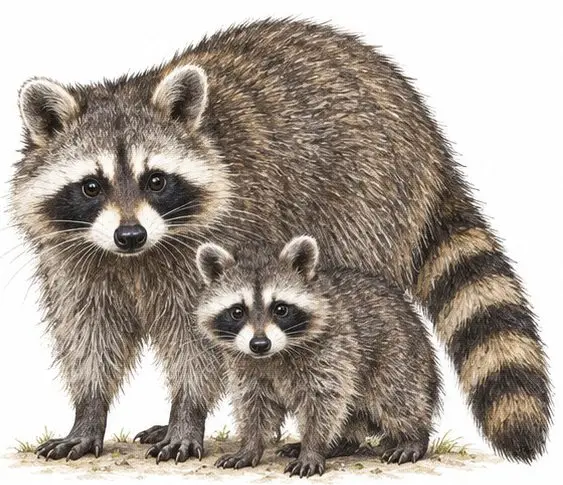
Food
Fruits, insects, crayfish, eggs, and many other foods.
Shelter and family space
Tree hollows and other protected spaces can serve as dens. Woods and water edges supply both shelter and feeding opportunities.
Virginia opossum / Striped skunk
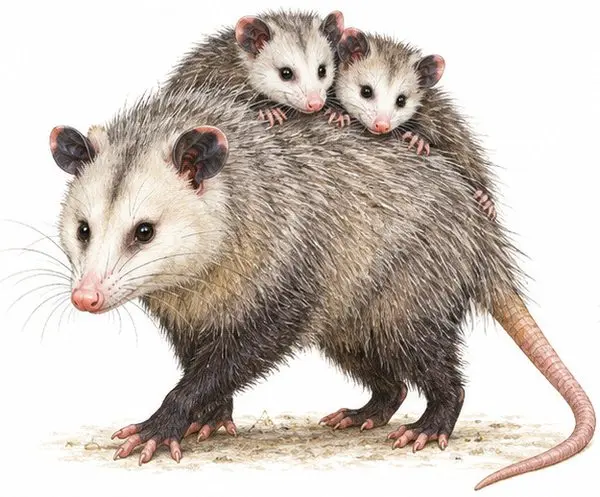
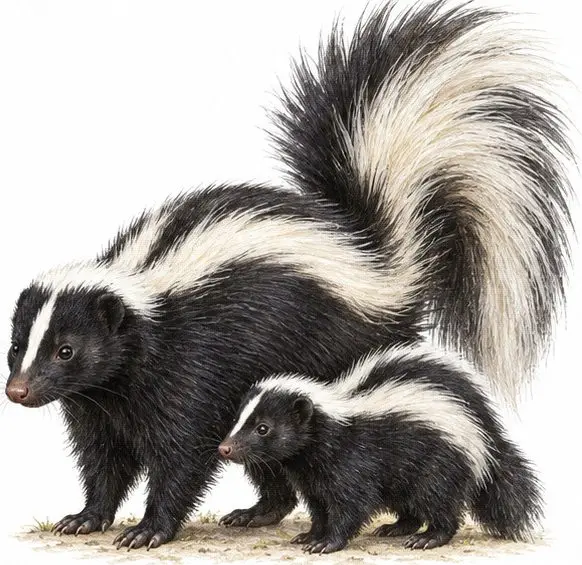
Food
Both eat varied foods. Insects, other small animals, fruits, and carrion can be part of their diets.
Shelter and family space
Protected spaces under cover, in hollows, or in burrows offer shelter. Their different habits should not be guessed from one blurry footprint.
River otter
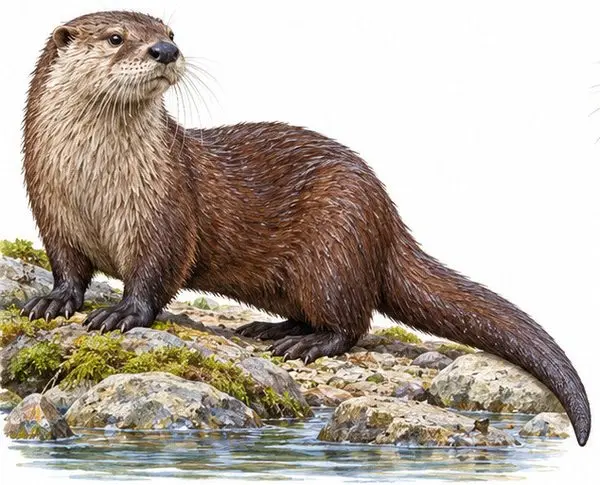
Food
Fish and other small animals in and around water.
Shelter and family space
Sheltered banks and den sites near water provide resting places. A creek’s roots, banks, water, and neighboring cover belong to one habitat.
A shelter is useful even when you cannot see who uses it. Do not open a hollow log, part a nesting thicket, or follow an animal into its hiding place.
Small Neighbors with Important Work
Northern red-bellied snake
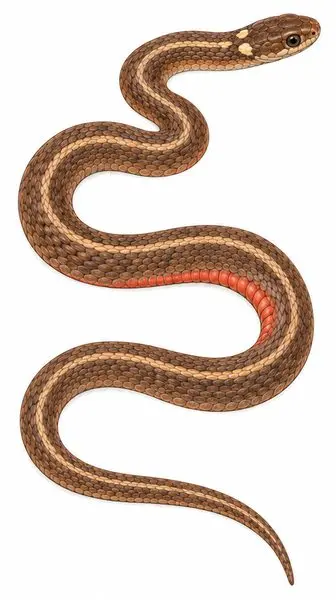
Look and food
Usually 8–10 inches long. Brown or gray above; pink to red-orange below. Three pale neck spots. Eats slugs and earthworms.
Home and care
Moist woods, leaf litter, and rotting logs provide cover. Nonvenomous. Leave leaves and logs in place; watch without picking it up.
Rusty patched bumblebee
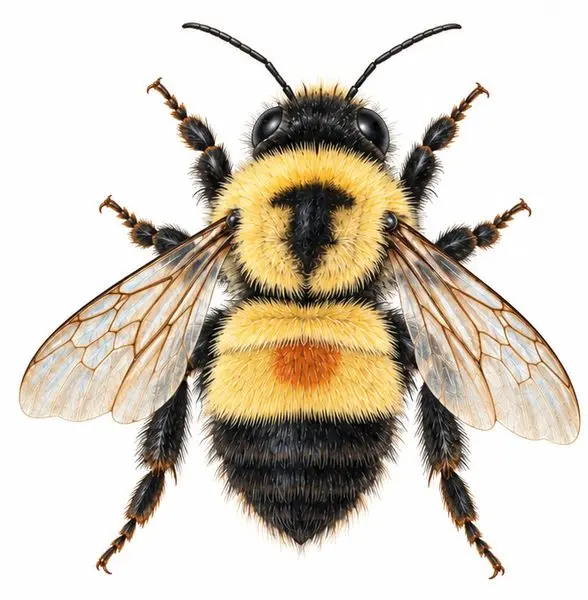
Look and food
Fuzzy black and yellow. Workers and males have a rusty patch bordered by yellow, including behind it. Feeds on nectar and pollen.
Home and care
Nests are often underground in old rodent burrows. Needs flowers from spring through fall. Federally endangered and protected. Observe; do not catch.
Pictures are not to the same scale. A queen rusty patched bumblebee has no rusty patch. Similar-looking bees can be difficult to identify; ask an expert to check a photograph. Never turn a snake over to see its belly.
Sources: Minnesota DNR; Illinois Natural History Survey; U.S. Fish and Wildlife Service; University of Minnesota Bee Lab. See Small Wildlife Sources and Notes.
Listen with Remi
Wild turkey
What your ears may notice
A sudden, powerful rush or drumming of wingbeats.
What is happening
Strong flapping lifts the bird quickly. Clucks and purrs are separate vocal sounds.
Barred owl
What your ears may notice
Very little wing noise during ordinary hunting flight; hoots can still be loud.
What is happening
Soft feather surfaces and special edges reduce flight noise. Quiet does not mean absolutely soundless.
Hawk or eagle
What your ears may notice
Sometimes little wing noise during a glide or soar; calls may carry far.
What is happening
Airflow supports the wings. The bird also flaps when needed. A call is not part of every flight.
Try a quiet minute
From a safe place on a path with an adult, stop talking for one minute. Notice one nearby sound, one distant sound, and one sound you cannot identify. Do not play bird calls to draw wildlife closer. A good question is something worth bringing home.
Remember the real voices: a red-tailed hawk gives the familiar raspy scream; a bald eagle often gives high piping or whistling calls.
Words from the Walk
Habitat
The place and conditions an animal uses to live: food, water, shelter, and enough space.
Cover
Plants or other features that help conceal or shelter an animal.
Understory
The smaller trees and shrubs growing beneath taller trees.
Canopy
The upper layer formed by the crowns of trees.
Cavity
A hollow space, often inside a tree.
Snag
A standing dead tree, which can provide food or shelter for wildlife.
Roost
A resting or sleeping place for a bird.
Fledgling
A young bird that has left its nest and is learning to live and fly outside it.
Thermal
A rising current of warm air that can help a bird soar.
Food web
The many connected feeding relationships among living things.
Migration
Regular seasonal travel between different places.
Decomposer
A living thing, such as a fungus, that breaks down dead material and helps return nutrients to the environment.
Make a Map with Room for Secrets
On your next walk with an adult, draw the kinds of places you notice. You do not need to find a nest or see every animal.
Start with places
Draw an open patch, some low plants, a fallen log, a tree, or water. Include only what you actually see.
Add connections
Which places touch? Could a small animal move between food and shelter? Draw an arrow when a connection seems possible.
Keep observation separate from guessing
“I saw a robin eat a fruit” is an observation. “There may be a nest here” is a possibility. A question mark is useful.
Add the season
Write the date and note leaves, flowers, fruits, seeds, snow, or flowing water. Return another day and compare.
Leave room
Leave nest and den locations off any map you share. The goal is to understand a home while letting its occupants use it.
Remi’s question: What looked ordinary when you arrived, but important when you left?
Sources and Notes
For grown-ups reading along
This book combines fictional dog conversations with researched natural history. The habitat layers are a teaching aid, not fixed ecological boundaries. The birds and mammals discussed do not form a verified inventory of one park. Nesting, diet, and migration vary by region, season, and individual.
Bird profiles
The Cornell Lab of Ornithology’s All About Birds life-history accounts are the main sources for foods, nesting sites, and habitat needs. Visit allaboutbirds.org/guide and search any species below. In the digital edition, each name links to its life-history account.
Song sparrow • Northern cardinal • Gray catbird
Yellow warbler • American robin • Mourning dove
American goldfinch • Dark-eyed junco • Black-capped chickadee
White-breasted nuthatch • House wren • Downy woodpecker
Red-bellied woodpecker • Pileated woodpecker • Baltimore oriole
Blue jay • American crow • Red-winged blackbird
Red-tailed hawk • Cooper’s hawk • Bald eagle
Osprey • Barred owl • Great horned owl
Wild turkey • Mallard • Wood duck
Hooded merganser • Common merganser • Northern pintail
Red-breasted merganser • Great blue heron • Sandhill crane
Selected nest-height ranges were cross-checked with Audubon’s Guide to North American Birds at audubon.org/bird-guide (American robin, American goldfinch, white-breasted nuthatch, red-bellied woodpecker, and Baltimore oriole). Great horned owl tree-nest heights use Cornell’s NestWatch account at nestwatch.org/learn/all-about-birdhouses/birds/great-horned-owl/.
More Sources and Notes
Flight, calls, and young birds
Cornell’s Wild Turkey identification and sounds pages; Bald Eagle sounds; Red-tailed Hawk accounts; Great Horned Owl and Long-eared Owl overviews; “I found a baby bird. What do I do?” These support the distinction between wing noise and vocal calls, quiet owl flight, soaring, and fledgling care.
Minnesota Department of Natural Resources species accounts for eastern cottontail, gray squirrel, chipmunk, coyote, raccoon, striped skunk, Virginia opossum, and river otter; its white-tailed deer information and “A Fawn’s First Day.” See dnr.state.mn.us/mammals.
Urban Coyote Research Project, “Coyote Diet,” at urbancoyoteresearch.com. This supports fruit as part of a varied coyote diet, not a claim that the individual coyotes in the story ate a particular berry.
Shane Bugeja, University of Minnesota Extension, “Does buckthorn fruit harm birds?” January 17, 2024. Birds eat ripe common buckthorn fruit and can disperse its seeds. That use does not erase the plant’s ability to crowd out other vegetation. No claim is made here that deer or coyotes specifically eat buckthorn fruit.
Minnesota DNR, “Monarch Butterfly,” and the Young Naturalists material on dragonfly metamorphosis; U.S. Fish and Wildlife Service, “Beavers, Otters, Muskrats, Minks, Oh My!” for comparing swimming mammals.
Sources checked October 2026. The story is for enjoying and understanding nature. Children should explore with an adult, keep pets close, and leave plants, nests, dens, and wildlife undisturbed.
Small Wildlife Sources and Notes
Purgatory Park observations
Brad Kopesky has seen northern red-bellied snakes at Purgatory Park and reports rusty patched bumblebee sightings there. Those observations inspired these fictional encounters. The dogs’ conversations and the photograph-confirmation scene are part of the story. No nest location is given.
Northern red-bellied snake
Storeria occipitomaculata. Minnesota DNR supports size, diet, live young, and nonvenomous status. The Illinois Natural History Survey describes the northern form’s three pale neck spots and its use of moist woodland cover. Wisconsin DNR describes its range of belly colors.
Minnesota DNR — Redbelly snake
Illinois Natural History Survey — Red-bellied snake
Wisconsin DNR — Red-bellied snake
Rusty patched bumblebee
Bombus affinis. The U.S. Fish and Wildlife Service lists this bee as federally endangered; protection under the Endangered Species Act took effect March 21, 2017. Its species profile and 2025 conservation guidance cover nesting, food, and seasonal shelter. The University of Minnesota Bee Lab explains worker and male markings and the different appearance of queens.
U.S. Fish and Wildlife Service — Species profile
U.S. Fish and Wildlife Service — Conservation guidance
University of Minnesota Bee Lab — Identification
Sources checked October 9, 2026. The illustrations emphasize useful features; photographs of wild bees may still need expert identification.